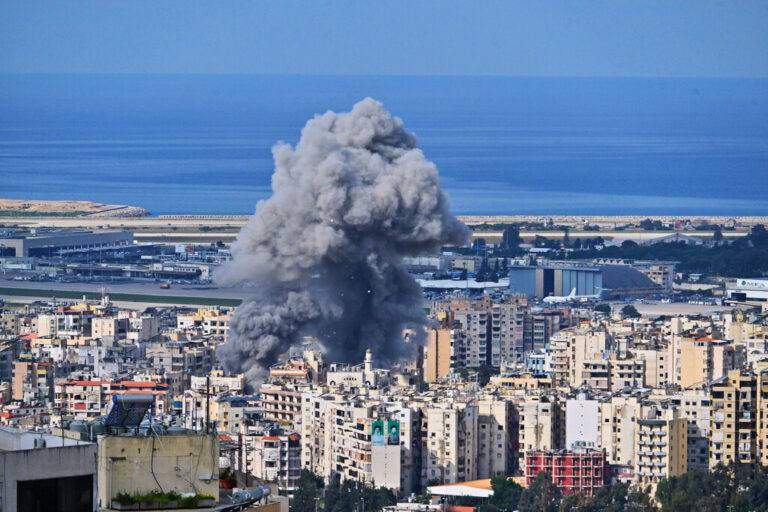
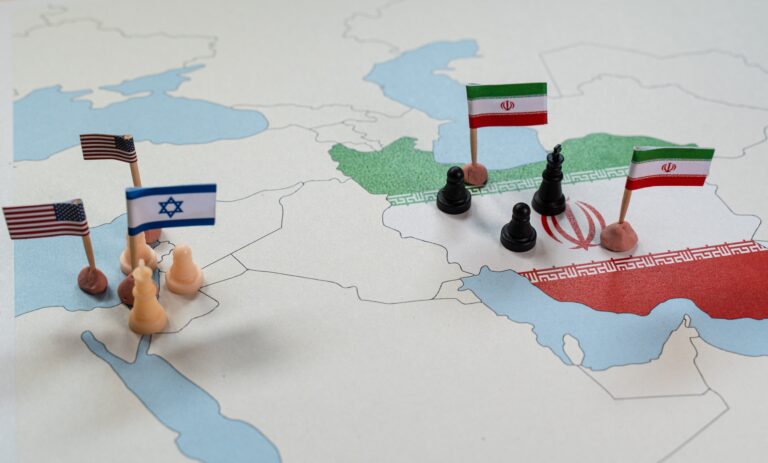





With the regional war widening after the US-Israeli strike on Iran, Iraq has been part of the conflict since its early hours. Iraq’s geographical location and political structure make it difficult to isolate the country from any major regional confrontation, even in the absence of an official decision to participate in it. During the first four days alone, more than 150 strikes – ranging from missiles to drones – were recorded inside Iraqi territory and carried out by various parties.
The paradox is that Iraq entered the war militarily without entering it politically. Weapons move across its territory through multiple actors, while the state remains outside the war decision itself. This paradox reflects the nature of the Iraqi political system, which is based on the distribution of power among several centers. The official authority in Baghdad administers the state and its institutions, but it does not have complete control over security, while armed factions close to Iran possess independent military capabilities. The autonomous Kurdistan Region, for its part, administers a security and political system that is internally divided and relatively separate from the federal authorities, while armed Iranian and Turkish Kurdish opposition groups remain active on its territory. In the event of a large-scale regional war, this distribution of power leads to a fragmentation of sovereign decision-making and transforms what is normally a chronic problem in the structure of the political system into a factor that could effectively draw Iraq into the conflict, even in the absence of an official decision to participate.
Armed Factions Begin Participating in War Outside State Sovereignty
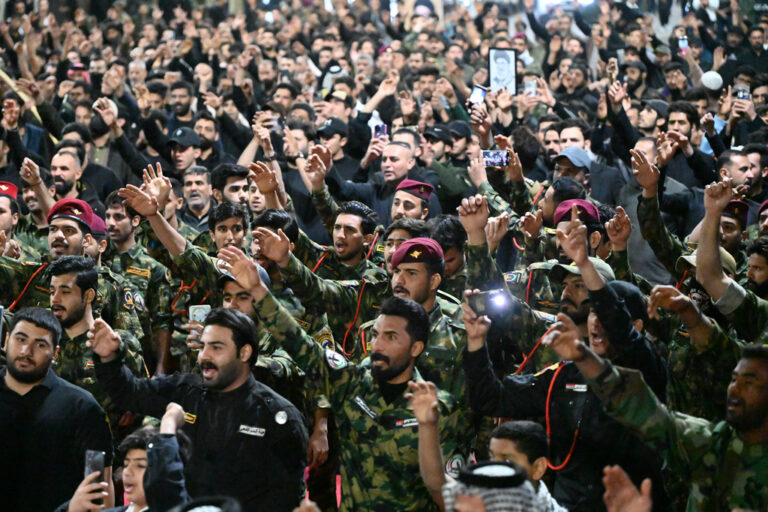
From the early days of the war, Iraqi armed factions rushed to carry out operations related to the conflict in support of Iran, including beyond Iraqi borders. In response, the caretaker government has merely emphasized that decisions regarding war and peace are the prerogative of the state. However, this position has remained limited to statements, as the authorities have not taken practical measures to neutralize the country from the war or limit the use of its territory for military operations related to it.
There were sporadic strikes inside the country; Iran and armed factions targeted the Harir base in Erbil, the Victoria base near Baghdad airport, and other facilities in the center and south of the country. In response, US airstrikes hit armed faction sites in various areas of central, western, and northern Iraq. Drones and projectiles also fell in civilian areas in the provinces of Baghdad, Basra, Sulaymaniyah, and the outskirts of Nineveh. These developments on the ground resulted from simultaneous actions by different actors, each operating according to their own calculations, while the government’s role remained largely limited to managing the repercussions. At the same time, it lacked the military power to enforce state decisions and sovereignty.
The Weapons Shifts from a Chronic Problem to a Current Crisis
The issue of weapons outside the state’s control has been one of the most pressing challenges facing the Iraqi state in recent years, even in the period leading up to the outbreak of war. This issue has remained a constant feature of political discourse and has repeatedly emerged as a factor shaping the balance of power within the political system and Iraq’s regional relations. Iran has used it as part of its regional network of influence, while at the same time it has become one of the tools the US has used to pressure Baghdad, whether through military strikes or through threats of financial sanctions linked to the activities of armed factions.
In contrast, Shiite political forces have various relationships with these armed factions, which has kept the issue of weapons outside of state control a constant source of tension within the Iraqi political system. With the spread of the ongoing regional war, this issue has returned to the forefront in a more sensitive context, as some of these factions have become directly involved in operations related to the US-Israeli-Iran conflict in the region, while there are no signs of any understanding between the factions and the government to control or limit their operations.
At the height of the escalation accompanying the Israeli war on Gaza in 2024, unofficial communication channels emerged that led to the suspension of some attacks on US forces in Iraq following Iraqi and Iranian pressure, helping to contain part of the escalation at the time. In the current war, however, such channels or understandings do not appear to be present so far. Instead, two parallel paths are emerging: While the government talks about measures to control the security situation and reassure public opinion, announcing, for example, the seizure of rocket launchers that were aimed at Kuwait and domestic targets, some factions continue to escalate their rhetoric and operations, threatening to expand their targets to include European interests if European countries become involved in the war, as well as linking the security of the region to that of the southern suburbs of Beirut after they were targeted by Israeli military operations.
Today, the military activity of the armed factions is concentrated within several more radical groups, most notably Kata’ib Hezbollah and the Nujaba Movement, which are the two factions most actively involved in operations related to the ongoing war. The fact that these factions are outside the direct control of the government has turned the issue of weapons into a crisis within the Shiite community itself, as Shiite political forces do not seem capable of containing these groups or imposing a different pace for their operations in the context of the current war.
This situation is linked to the evolution of the relationship between Shiite forces and armed factions over the past decade. During the rise of Iranian influence after 2014, these armed factions expanded their presence and strengthened their political and military legitimacy. A significant share of their forces were later integrated into the Popular Mobilization Forces and incorporated into the political process, receiving an official legal framework for their operations and allowing them to maintain their armed and political presence.
As US pressure intensified in recent years, a different debate began to emerge within some Shiite political circles about the future of these armed factions, particularly the most radical among them. The debate centers on whether it is possible to curtail these groups or strip them of the political cover that Shiite forces have provided for years, leaving them exposed to the United States and its security solutions. However, such a move remains politically fraught, as it runs counter to the narrative these forces have long promoted regarding the role of armed factions in the regional power equation tied to Iran and Shiite identity.
With Shiite forces unable to produce and reach an internal settlement, this issue has entered a state of political deadlock that has stalled any initiative to address it. As the deadlock persists, external pressure is gradually becoming a driver of change toward a solution, shaping the political debate and pushing Shiite forces to revisit their positions or scale back their demands.
However, this path does not seem imminent. Ongoing military developments suggest that the US approach is oriented toward weakening armed factions through strikes and direct pressure, rather than pursuing a prolonged negotiation process to resolve the issue of weapons operating outside the state’s authority.
Oil and the fragility of the Iraqi economy
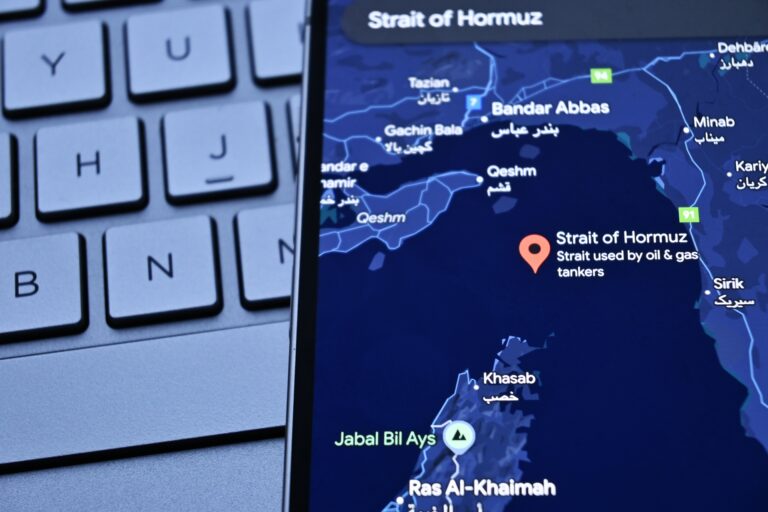
In addition to the security challenges, the ongoing war has also exposed the high degree of fragility in the Iraqi economy. Just two days after maritime traffic in the Gulf being halted and the Strait of Hormuz closing, the Ministry of Oil was forced to suspend production at some of its largest fields, most notably the Rumaila field, which produces more than one million barrels per day.
Iraq relies on oil for more than 90% of its budget revenues, yet it lacks the storage infrastructure needed to sustain production over extended periods when exports are disrupted. As storage levels at fields and depots reached capacity, operating companies were forced to rapidly reduce production to avoid operational bottlenecks across fields and transport lines.
Although it is one of the largest oil producers in the region, the disruption to production and exports has highlighted Iraq’s limited ability to cope with shocks in the energy market. For years, there have been recurrent discussions of projects to diversify export routes outside the Gulf, such as reviving the Kirkuk-Banias pipeline to the Syrian Mediterranean coast and advancing the Basra-Aqaba project through Jordan. However, none of these have materialized into functioning infrastructure capable of serving as a reliable alternative in emergencies, which means that the closure of the Strait of Hormuz was enough to disrupt the bulk of Iraq’s exports within a matter of days.
Despite the political rapprochement between Baghdad and Tehran, Iraq was among the first countries to bear the consequences of the closure of the Strait of Hormuz. Armed factions operating on its territory became involved in regional escalation, effectively placing the country within the orbit of war. However, no arrangements have emerged to allow vessels carrying Iraqi oil or goods bound for Iraq to continue transiting the strait – whether as compensation for the damage Baghdad was sustaining or on any other basis. This was despite the circulation on social media of misleading reports claiming that some Iraqi vessels had been granted limited transit exemptions. Such news was promoted by analysts close to Shiite forces and framed as plausible scenarios to mitigate the impact on the Iraqi economy, rather than acknowledged for what they are: wishful thinking dressed up as analysis.
Political deadlock and anticipation of the war’s repercussions
The Iraqi political system has demonstrated no capacity to navigate this moment, whether on the security or economic front. Since last December, political forces have been unable to agree on the formation of a new government, despite the rapidly shifting regional landscape that demands swift decision-making on security, economic, and foreign policy matters. Internal discussions among political forces have remained confined to disputes over portfolios and intra-coalition power balances, never turning into a debate about how to respond to the sweeping changes reshaping the region.
With the outbreak of war and talk of possible turmoil in the Iranian regime following the assassination of Supreme Leader Ali Khamenei, a clear sense of caution prevailed among Shiite political forces, prompting some of them to delay issuing statements of condolence, while many political actors preferred to remain silent or limit themselves to general statements. This behavior reflected a wait-and-see mood within the political elite, as they monitored shifts that could redraw the regional balance of power, while lacking the initiative to preempt them.
This wait-and-see attitude is not only related to the future of relations with Iran, but also extends to the form of political settlement within Iraq itself. For months, Shiite forces have been debating the candidate for prime minister without reaching a clear agreement. With the deadlock within the Coordination Framework worsening, Nouri al-Maliki was put forward as the candidate for the Shiite majority, even though he is one of the most divisive figures in Iraqi politics and has faced repeated objections in previous sessions.
This choice was presented within political circles through two different narratives. The first presented him as an expression of the need for a figure capable of imposing a degree of discipline within the political system at a time of regional crisis, even if this required the use of harsh pressure tactics within the state. The second narrative interpreted al-Maliki’s nomination as a direct result of the deadlock within the framework itself, since putting forward a name that provokes widespread internal and external rejection may push international parties, especially the United States, to declare a clear position on it, which in practice would impose a framework for negotiating an alternative candidate and the terms of a political settlement.
As this deadlock continued, external factors gradually entered into the debate over the premiership, effectively becoming one of the possible ways to break the deadlock, even though Shiite forces reject this in their political rhetoric and present any external factor as interference in Iraqi affairs.
The political deadlock in Iraq may also lead to a wait for internal pressure to resolve the crisis. In this context, the head of the Supreme Judicial Council, Faeq Zeidan, put forward a legal proposal that could affect the formation of political alliances within parliament. He called for a review of the Federal Court’s interpretation of the concept of the “largest bloc,” which he described as a “sin.” This is the parliamentary bloc whose candidate the president tasks with forming the government following elections. This concept derives from a Federal Court ruling in 2010, which held that the “largest bloc” is not the list that wins the elections, but rather the parliamentary alliance that forms within the House of Representatives after the results are declared. Revising this interpretation could allow for the formation of parliamentary coalitions that breaks from the formulas entrenched since 2005, opening the door to the formation of governments built on alliances that do not fall entirely along traditional sectarian lines.
The fact that this proposal has emerged from within the judiciary is itself a reflection of the degree of deadlock within the political system, as institutions that are supposed to remain distant from partisan competition are becoming a forum for discussion of the search for a way out of the political crisis. This transforms the judiciary from a body that adjudicates legal disputes into one that is effectively part of the mechanism for brokering settlements that the political system cannot produce on its own.
However, this path – which has not been widely welcomed politically – offers no quick solution to the political crisis unfolding alongside a war that is expected to expand and become more complex. Even if the door is now opened to reinterpreting the largest bloc concept, forming new political alliances would require time and broader agreements among Iraqi forces, particularly given that the political system has not yet experienced stable power rotation or a functioning opposition within parliament. However, time itself may prove to be part of the problem: any gradual realignment of political balances may risk coinciding with regional escalation that leaves the political system with little room to maneuver should the war widen or drag on.
As things stand, the ongoing regional war has exposed the limits of the Iraqi political system’s ability to manage a major crisis. Weapons are being moved across the country by multiple actors, some directly involved in the regional conflict, while the government remains unable to assert a sovereign decision that would define Iraq’s position in the war or control the use of its territory for military operations. Meanwhile, the fragility of an economy built almost entirely on oil is becoming increasingly difficult to ignore.
Yet it is the political arena itself that the war’s deepest impact is felt. The political system has spent months unable to agree on forming a new government and is now facing a rapidly changing regional moment without the internal tools to manage it. In this context, the external factor enters as one of the possible pathways to breaking the domestic deadlock. However, the current war makes this factor different from the interventions Iraq has experienced in previous crises. The regional conflict is unfolding under circumstances that go beyond the usual political rhythms, with pressure calculations shifting rapidly and taking on harsher forms: whether under a US administration inclined to use direct pressure, or under a Tehran that is itself navigating a moment of profound crisis in the wake of the assassination of Supreme Leader Ali Khamenei.
For this reason, relying on external forces may appear to some political forces as a convenient option in light of internal deadlock, offering an indirect mechanism for resolving disputes. Yet it remains one of the most fraught options available, precisely because it is linked to an open regional conflict that may impose costly compromises or pressures on Iraq.