



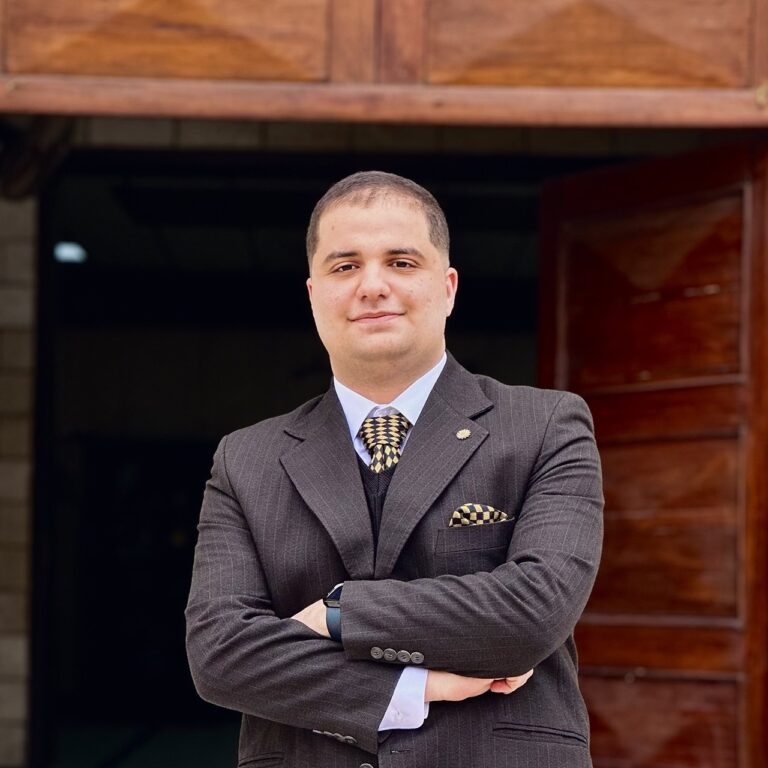
Feminist journalist Rula Asad interviews Ansar Jasim, a political scientist and food sovereignty activist, on the impact of war, displacement, and centralized control on Syria’s agricultural system, as well as the significance of grassroots seed-saving initiatives for cultural preservation and resistance. For years, Jasim has supported and connected grassroots agricultural initiatives across the region through networks that bring together farmers and community organizers committed to collective self-determination, local seed saving, agroecology, and farmer-led food systems. In this conversation, which centers on women as guardians of seeds and knowledge, Jasim offers a feminist reimagining of food systems grounded in care, collective ownership, and ecological responsibility. The interview was conducted on 25 July 2025.
Rula Asad (R.A.): To set the stage for our discussion, I would like to begin with a striking quote from Vandana Shiva, often referred to as the “Gandhi of grain”:
Food sovereignty is sovereignty over your life, livelihood, and health. We are interconnected; therefore, food sovereignty is an ecological process of co-creation with other life forms. It begins with seed sovereignty: Saving and using living seeds. It involves care for the land and soil. We cannot have food sovereignty if we do not feed the soil organisms. Food sovereignty is based on organic farming and avoids chemicals and poisons. Food sovereignty includes knowledge sovereignty, economic sovereignty, and political sovereignty 1BBC, “Vandana Shiva on Why the Food We Eat Matters”, 28 January 2021, available at https://www.bbc.com/travel/article/20210127-vandana-shiva-on-why-the-food-we-eat-matters
How does this definition resonate with your understanding of food sovereignty, and what complexities do you think it might overlook?
Ansar Jasim (A.J.): Vandana Shiva’s concept of food sovereignty is both poetic and powerful. She connects it to life, livelihood, and health, and highlights seeds and soil as key sites of ecological and political struggle. Her emphasis on living seeds and organic soil challenges the extractive logic of industrial agriculture and brings care to the forefront.
While I deeply value Shiva’s framework, I would suggest extending it through a materialist feminist lens: Care is not only ethical but also deeply tied to ownership, exploitation, and labor, which is often carried out by women in peasant communities. The idea of caring for the soil can obscure issues of dispossession and inequality; a materialist feminist approach seeks to unpack these power relations.
In Syria and Iraq, food and seed sovereignty are inseparable from war economies, authoritarian control, and the exclusion of women from land rights. Seeds are embedded in property regimes and legal infrastructures that enable both control and resistance.
Food sovereignty is often viewed through a nationalist lens, implying state-centered control and security. National approaches frequently overlook class and gender, as well as the local solidarities and informal networks that sustain food systems during times of crisis. A materialist feminist perspective instead emphasizes the redistribution of power over life, labor, and land, and advocates for grassroots, cross-border autonomy. True food sovereignty requires moving beyond nationalism and reframing it as a struggle for reproductive justice, ecological care, and class-based autonomy.
(R.A.): Building on what you shared about the importance of power, autonomy, and local agency in food systems, could you elaborate further on how food sovereignty differs from food security?
(A.J.): I would distinguish the two approaches by the different questions they ask. Food security asks: Is there any food? Food sovereignty asks: Who decides? Who owns? Who benefits?
Food security focuses on ensuring sufficient food, regardless of where it comes from, how it is produced, or who controls it. It is often framed in technocratic or humanitarian terms, emphasizing calorie counting, aid distribution, and access, without questioning underlying power structures.
Food sovereignty, by contrast, concerns who controls food systems, including land, seeds, labor, and knowledge. It centers on self-determination, collective ownership, and the right of communities to define their own agricultural practices. It prioritizes health over calories and emphasizes culturally appropriate food and dignity. It is also an analytical framework rooted in political ecology that helps us understand how food systems are structured through power. Seen this way, food sovereignty does not merely demand change; it provides the tools to analyze how agricultural infrastructures – land tenure, seed laws, irrigation systems, credit, and markets – are historically produced and politically contested. This analytical function strengthens political struggle: It clarifies where intervention is necessary and what kind of transformation is required to move beyond dependency toward collective autonomy.
In Syria, the humanitarian food regime – centered on standardized food baskets – illustrates the limits of a food security approach. Food baskets abstract food from the labor that produces it, the land on which it grows, and the gendered work of cultivation, processing, and care. They reduce food to calories while erasing the social relations that sustain life. In doing so, they risk transforming communities from producers of value into managed recipients of aid. Many food baskets were sourced from neighboring countries rather than from Syrian producers, even where local procurement would have been possible. This reflected donor logics and regional economic interests more than the needs of local agricultural economies. Instead of strengthening small farmers, aid often bypassed them, restructuring food provision around external supply chains. The food security approach in Syria, therefore, restructured local food economies, weakened small-scale producers, displaced questions of land and labor, and entrenched dependency on externally governed supply chains.
Centering dignity, a food sovereignty approach challenges whether distributing baskets to large populations constitutes adequate access to food. In the early years of the Syrian uprising, providing food was closely tied to the revolutionary demand for dignity. For local organizations such as Bahar in Afrin, where thousands of people had fled, reliance on donor-defined aid frameworks contradicted the ethos of self-determination. Their response in 2014 was modest but politically meaningful: They began planting in the camps. The scale was small, but the act of cultivation mattered; it was a refusal to remain mere recipients of humanitarian management. Such efforts were often dismissed by donors as “unsustainable,” while food baskets were treated as the norm.
Food aid is never neutral. It reorganizes relations of labor, ownership, and dependency. The question is not only whether people eat, but whether they retain the capacity to reproduce life on their own terms.
(R.A.): Can home gardening contribute to food sovereignty? If so, in what ways? Are there other alternative approaches that support the pursuit of food sovereignty?
(A.J.): Yes, home gardening can meaningfully contribute to food sovereignty, not necessarily because it feeds entire households, but because it cultivates a sense of agency, autonomy, and connection in a world that systematically separates people from the sources of their nourishment. During the war, our networks supported anyone who wanted to grow something, wherever possible; this act carried both symbolic and practical significance. In capitalist systems that separate people from food production, even small acts of cultivation can help break alienation and rebuild relationships with producers, reclaiming food as a social and political good rather than a commodity.
In contexts of displacement – where farmers suddenly find themselves in refugee camps and dependent on food baskets – this alienation becomes especially stark. Initiatives such as Syrian Eyes in Lebanon, which supported displaced people in growing food in the camps, did not eliminate dependency entirely. However, they opened up new possibilities – moments of dignity, capability, and resistance to the volatility of aid regimes, which may provide support one day and cancel it via text message the next. This is already a form of food sovereignty: Not full self-sufficiency, but a refusal to be completely disempowered. Home gardening is valuable wherever it is possible.
Food sovereignty does not mean that everyone must grow their own food. Rather, it entails disrupting processes of commodification and reconceptualizing food as a relational practice grounded in care and solidarity. Alternatives include building direct relationships between consumers and producers, thereby bypassing exploitative markets. As a feminist practice, food sovereignty recognizes care work, reproductive labor, and the gendered dynamics of food production. It challenges the invisibilization of those who grow, cook, and care and instead centers them as political actors in the struggle for autonomy and justice.
(R.A.): Given your work examining how the former Syrian regime used siege tactics and starvation to control populations, as well as the deliberate targeting of farmland, do you think seed storage facilities were intentionally targeted or destroyed as part of this broader strategy?
(A.J.): When farmers flee conflict, they often cannot take their seeds with them. Many seeds are left behind in the fields or lost entirely in the chaos of displacement. I recall a specific case from our network: We managed to recover an old, rare variety of wheat seeds (Snun al-Jamal) and brought them back to southern Idlib. For weeks, we were thrilled and spoke about it constantly. However, just as the wheat was planted, the offensive on southern Idlib began. When people had to flee, they could not take anything, and the seeds, rooted in the soil, were lost again.
This story points to a broader structural issue in Syria: Seed storage has historically been highly centralized and under state control. When that infrastructure is put under stress, whether by war, sanctions, or administrative collapse, it becomes inaccessible to nearly everyone. We must think of seed sovereignty not just in terms of preserving biodiversity, but in terms of decentralization, autonomy, and resilience. If there had been local, community-run seed banks, this vulnerability wouldn’t be as acute. Centralized systems collapse hard.
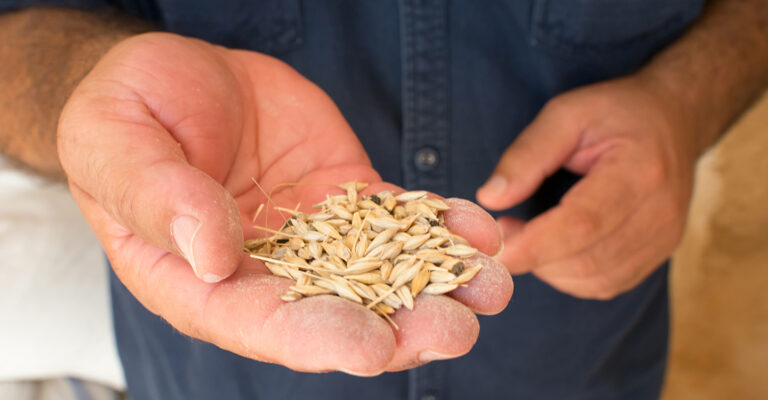
As for the International Center for Agricultural Research in the Dry Areas (ICARDA), while it played an important global role in preserving seeds by evacuating them to Lebanon, Morocco, and other countries, it was never an accessible resource for individual farmers inside Syria. There is a critical question here: What is the value of seeds if they are kept in distant storage or used only in research facilities, never returned to the hands of those who cultivate them? Seeds live fully only when they are sown by farmers, shared, and adapted, rather than planted solely for research.
What we know with certainty, and what is well documented, is that grain facilities were routinely seized as spoils of war each time territorial control shifted. This occurred across all regions of Syria. Food systems, including grain, flour, and possibly adjacent seed stocks, became embedded in the political economy of war.
(R.A.): In what ways did farmers, particularly women, manage to obtain and secure seeds throughout the war years?
(A.J.): One concrete and inspiring example comes from Faiqa, a woman originally from a village near Saraqeb in Idlib, Syria. She now manages the seed library at Buzurna Juzuruna in Lebanon. Through her, I came to understand the beauty of seeds not only in their diverse shapes and colors, but also in the possibilities they carry and the worlds they hold within them. This is the politics of care that defines the work of the seed library.
What makes Faiqa’s role so significant is that she herself is a refugee, yet she holds primary responsibility for organizing and safeguarding a shared, living resource: A seed collection that sustains both memory and future cultivation. In the context of war and displacement, where so much has been lost or uprooted, this work constitutes a form of resistance and reconstruction.
In the absence of state support or stable markets during the war, it was often women like Faiqa who became custodians of agricultural continuity – quietly, carefully, and politically.
During a recent visit to villages across Syria, we spoke with younger farmers who are now engaged primarily in industrialized agriculture. Many told us about their grandparents – often grandmothers – who reproduced seeds across generations. Once they passed away, however, the practice died with them. This underscores the importance of intergenerational knowledge transmission and demonstrates that seed saving is not only a technical practice, but also a deeply embedded social and familial bond.
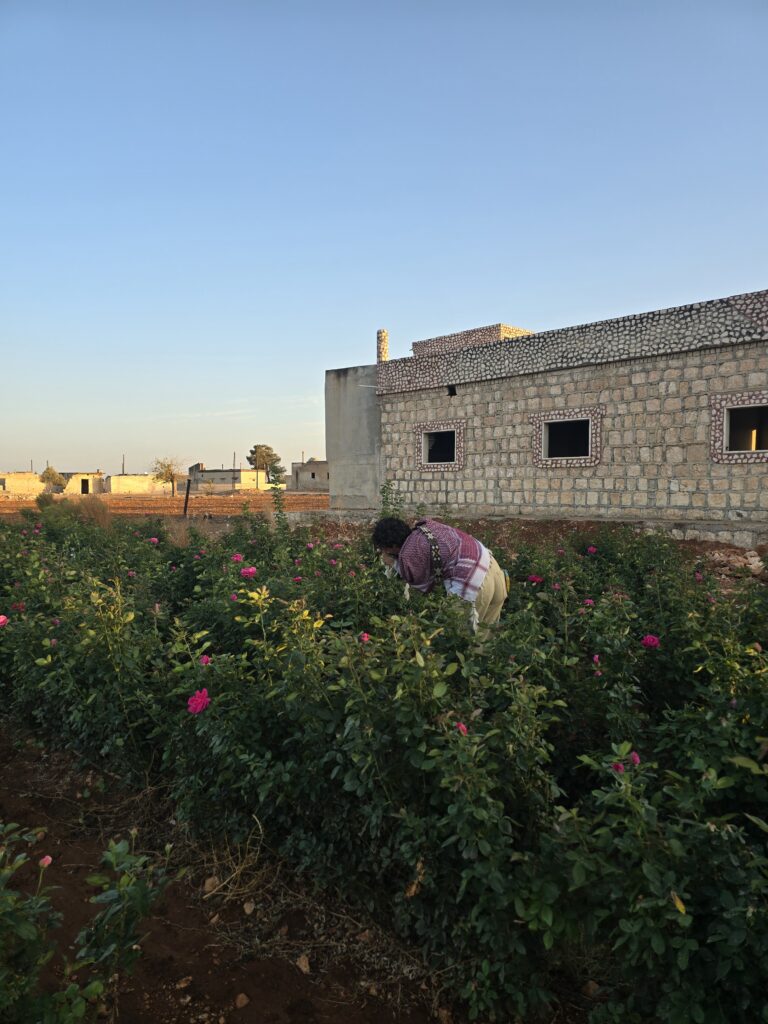
In the town of Duraykish, we were fortunate to meet an elderly woman who, though unmarried, cared for the children in her extended family. She had transformed her home into a living archive of care and cultivation: A front garden filled with vegetables and a backyard brimming with flowers. The back garden was open to neighbors and planted in old televisions and computer monitors – a joyful reclamation of the afterlife of those objects. While not everything she grew came from her own seeds, she relied entirely on her planting for her livelihood and to feed her family. This, too, is a form of the politics of care grounded in reproductive labor and community support. When we visited her, we shared seeds from Faiqa’s seed library, creating a new connection between displaced knowledge and local practice, and between women cultivating in vastly different circumstances but guided by a shared logic of care and generosity.
(R.A.): Could you explain why you refer to it as a seed library rather than a seed bank?
(A.J.): The language we use is intentional; it reflects a desire to move away from transactional, commodified relationships and instead foster reciprocity, sharing, and community stewardship. It is not about storing seeds as assets; it is about circulating life and keeping seeds alive through use, care, and trust.
(R.A.): How have the complex and harsh realities of the war, including the use of siege as a weapon and form of collective punishment, shaped seed storage and local seed production across different regions of the country?
(A.J.): My answer is necessarily partial because I have not been a farmer on the ground, and I am still learning so much about how farmers resisted. But from what we’ve seen and experienced, two political-economic aspects are particularly important when thinking about seed production in wartime Syria: State centralization and market dependency on hybrid seeds.
Even before the siege on Eastern Ghouta began in 2013, farmers were already struggling to access so-called improved varieties, namely hybrid seeds sourced from the Damascus market. Once the siege was fully in effect, these seeds became completely inaccessible. At that point, some open-pollinated, reproducible seeds were smuggled in, and local communities began developing informal systems of seed saving, exchange, and reproduction. However, this fragile autonomy was often undermined.
In many opposition-held areas, agricultural governance structures were rebuilt in direct continuity with regime-era institutions. The products distributed included hybrid seeds, pesticides, and chemical fertilizers supplied by multinational corporations such as Syngenta, DuPont, Bayer, Sumi Agro, and BASF. These are not neutral interventions; they introduce comprehensive technological packages into contexts of extreme vulnerability, locking farmers into systems of dependency and undermining efforts to rebuild agroecological autonomy.
This reflects what Naomi Klein has called “shock doctrine” logic: Crisis moments are exploited to introduce new products and market relations, while communities have little power to refuse. In such situations, local seed knowledge is not supported but displaced, and new input-based dependencies take root. Farmers are not encouraged to develop their own pest control solutions using local resources, nor to rebuild seed reproduction practices that once ensured long-term sovereignty.
Western donors often deemed seed reproduction unsustainable in war-torn countries, reinforcing aid systems that perpetuate control and dependency. We have seen how, in Syria, as in Iraq and Palestine, reconstruction plans typically maintain market-driven dynamics. War and siege therefore disrupt seed systems not only through destruction and displacement, but also by imposing hierarchical, market-based structures at precisely the moment when local autonomy is most needed.
(R.A.): How would you describe the current situation of seed storage and saving practices in Syria?
(A.J.): The situation varies significantly from region to region. In areas like Idlib, rural Aleppo, and parts of northeastern Syria, farmers have had to develop their own alternative seed systems over the past years, especially in the absence of state infrastructure. This has included informal networks of seed saving, exchange, and local experimentation, sometimes supported by grassroots initiatives or solidarity networks.
However, the situation is markedly different in areas such as Darayya, which experienced multiple sieges and extensive destruction before returning to government control. From conversations with farmers there, many describe being in a state of waiting and expectation, hoping the government would resume distributing agricultural inputs after the fall of the regime.
This mindset contrasts with that of farmers in areas outside regime control, who have been compelled to become more self-reliant and, in many cases, have developed a deeper capacity for autonomous seed practices.
It is important to emphasize that seed saving does not occur in isolation. Seeds are embedded in broader systems of agroecological knowledge. Just as hybrid seeds are part of high-input, chemically dependent farming systems, open-pollinated and heirloom seeds are embedded in low-input, knowledge-intensive, and often collective farming practices.
That said, there is growing interest in seeds across Syria, particularly following the weakening or collapse of central state authority. In part, this interest is driven by a desire to reclaim lost cultural and agricultural heritage and to restore what was deliberately destroyed, including trees, crops, and landscapes. I also view this growing seed consciousness as part of a deeper dynamic: What we might call “the seed of autonomy.”
(R.A.): In what ways does reclaiming heirloom seeds serve as both an act of cultural preservation and resistance?
(A.J.): In agriculture and in practices of care, reproduction, and adaptation, we sometimes encounter forms of resistance and imagination that are not visible within the sphere of formal politics in Syria today. Seeds carry the labor and knowledge of generations of farmers, particularly women, who selected and adapted them to thrive in specific ecological conditions. Heirloom seeds are archives of care: They have endured droughts, disease, and shifting climates. They “know” how to survive. Hybrid seeds, by contrast, are designed for stability and uniformity under ideal input conditions; they do not carry the memory of adaptation.
This matters profoundly in Syria, where the war did not merely destroy infrastructure but also targeted ecosystems. Trees were not only cut, but uprooted, as seen in both Idlib and Afrin. Agricultural life was not collateral damage; it was often deliberately attacked.
Today, the growing tendency among Syrians to reclaim seeds, restore biodiversity, and work with the land can be understood as a form of healing and grassroots reconstruction. From a materialist feminist perspective, this is also a form of politics of care: A commitment to life-making and collective survival amid loss. It is not abstract resistance; it is resistance rooted in seeds and soil.
(R.A.): Given the evolving circumstances, ongoing challenges, and Syria’s political transition, how do farmers make decisions today when choosing between hybrid seeds and heirloom varieties?
(A.J.): The situation has not changed dramatically since the fall of the former regime in December 2024. The current seed market remains in poor condition, and the state is not functioning meaningfully in this sector. There was never an official market for open-pollinated or heirloom seeds. What we do know is that organizations such as the Food and Agriculture Organization (FAO) have continued distributing F1 hybrid seeds in certain regions, particularly in the northeast, as part of agricultural support projects.
Access to non-hybrid seed varieties, however, comes almost exclusively through activist networks. Many farmers continue to rely largely on themselves. When speaking with farmers, it becomes clear that opinions are divided regarding which forms of agriculture are viable or desirable today.
On the one hand, drought and extreme weather are affecting nearly everyone this year. On the other hand, some farmers, particularly those along the coast near Tartous, remain connected to national and international markets. For them, productivity and profit are key: They grow what sells. This is important to acknowledge; we must avoid romanticizing. For many, seed choices are not only about tradition or ecology, but also about livelihood and survival.
Farmers have also told us that the way they have been farming in recent years has left their soil depleted and lifeless. Their land is no longer fertile without significant external inputs. This reveals the unsustainability of the current model and makes clear that “business as usual” is no longer an option.
(R.A.): How are Syrian farmers responding to the challenges of soil depletion and limited access to resilient seed varieties, and what role do grassroots networks play in promoting alternatives to conventional agriculture?
(A.J.): There is a growing group of farmers who recognize that change is necessary and are increasingly open to exploring alternatives to conventional agriculture. Heirloom and open-pollinated seeds, while more difficult to access, have demonstrated greater resilience in the face of climate-related extremes. However, these seeds are not available through state or official channels, but only through grassroots and activist-organized systems.
Even this season, we have seen farmers begin to organize, reproduce seeds, and share them through informal exchange networks. This kind of horizontal seed work creates new options over time. With each season, the pool of available local seed increases, as does the possibility for farmers to move beyond dependence on high-input industrial models.
(R.A.): As we look to the future and consider paths forward, particularly in the context of reconstruction, what are the most promising avenues for rebuilding Syria’s heirloom seed sector?
(A.J.): In many conversations with farmers in recent months, particularly those who lived in regime-held areas and did not experience siege or the deliberate destruction of their land, I observed a recurring response. When I raised the effects of war and crisis on agriculture, they would say: “Ah, you are talking about the crisis in former opposition areas, but now there is no crisis anymore.”
In this context, heirloom seeds are not merely a nostalgic reference to the past; they represent a form of productive autonomy. These seeds have been selected and adapted by farmers over generations to survive in varied and often difficult conditions. Their use challenges the extractive logic of input-intensive agriculture and offers a material alternative to cycles of dependency and depletion.
The reality of climate change adds another layer. Syria, like many places, is already experiencing more severe weather extremes, droughts, and ecological disruption. In this context, heirloom seeds, with their genetic diversity and historical capacity for adaptation, are not merely a cultural legacy, but a primary tool for sustaining agriculture under changing climatic conditions.
However, for farmers to regain and expand their capacity to use, reproduce, and exchange these seeds, structural protection is necessary. I believe that a legal framework may be required, one that explicitly protects heirloom seeds, guarantees farmers the right to reuse and reproduce them, and defends seed sovereignty against future enclosures.
We have seen the danger of the opposite path: In Iraq, the post-2003 Coalition Provisional Authority Order No. 81 made it illegal for farmers to reuse patented seeds. The law was not designed to protect farmers or biodiversity, but rather to protect the seed products of international corporations from farmers. Such legal regimes, concerned solely with the interests of international capital, must not be replicated in Syria.
Many of us believe that reconstructing the local seed system is part of a broader reconstruction from below: A political, ecological, and social reimagining of how food, land, and labor are organized. Seeds are not merely inputs; they are the starting point of any just and sovereign agricultural future. Rebuilding the seed system is one element of a much larger transformation that includes land justice, ecological care, and the revaluation of reproductive labor.
(R.A.): To bring our conversation full circle, as we have discussed the important role of grassroots action and alternatives in rebuilding Syria’s agricultural future, how might a feminist approach further transform the pursuit of food sovereignty? What deeper changes in land ownership, labor structures, and ecological stewardship are required, not merely to increase women’s participation, but to fundamentally reimagine and reshape the entire system for lasting justice and resilience?
(A.J.): From a materialist feminist perspective, the environment is not a neutral backdrop; it is the foundation of reproductive labor, including food cultivation, water collection, and care work. These forms of labor are often carried out by women, yet they remain structurally undervalued and invisibilized. In the agricultural sector in particular, women’s contributions are often classified as “unpaid family labor,” even though they generate clear use value and frequently contribute to commodity production. In Marxist terms, this labor is both socially necessary and surplus-generating, yet it is not recognized as wage labor, thereby allowing capital to extract value without remuneration. This devaluation is embedded in the very functioning of capitalist and patriarchal systems of accumulation.
Food sovereignty from a feminist perspective is achieved, first, by reclaiming control over land, seeds, and labor as collective and non-commodified resources. We see this happening on the ground: For example, displaced people returning to their land, women claiming roles different from those they held before displacement, and communities occupying former military bases along the coast to house those who lost homes and livelihoods during the recent coastal massacres in 2024. These are not merely acts of survival; they are political claims to space, life, and autonomy.
Second, it is achieved by valuing reproductive and care labor as central to food systems rather than peripheral. This requires recognizing that food systems do not depend solely on markets and inputs, but also on everyday acts of care, planting, watering, feeding, preserving, and sharing that are often feminized and unpaid.
Third, it is achieved by challenging extractive agricultural models that separate production from social and ecological well-being. A significant example comes from villages near al-Safsafa, where farmers and activists from nearby cities have begun coming together to form local councils and organize collectively. These spaces remain nascent, but they offer the beginnings of a shared political consciousness, a refusal of extractivism, and an effort to rebuild agriculture around relational rather than profit-driven logics.
Finally, it is achieved by building horizontal, solidarity-based relationships among farmers, communities, and ecosystems, grounded in reciprocity rather than competition. This is already happening, even if still on a small scale. It may remain limited, particularly in the face of ongoing large-scale violence and renewed displacement that make it more difficult to visit one another and to organize. Yet the continuation of these efforts is itself a form of resistance: Against authoritarianism and sectarianism, against neoliberal reconstruction, and against the return of extractive, centralized models associated with the former regime.
From this perspective, feminist food sovereignty is not a utopian dream; it is a daily practice. It involves reclaiming the means to reproduce life on our own terms and refusing to separate agriculture from care or labor from dignity.
Endnotes
| ↑1 | BBC, “Vandana Shiva on Why the Food We Eat Matters”, 28 January 2021, available at https://www.bbc.com/travel/article/20210127-vandana-shiva-on-why-the-food-we-eat-matters |
|---|