












Lebanon finds itself trapped between two impossible choices.
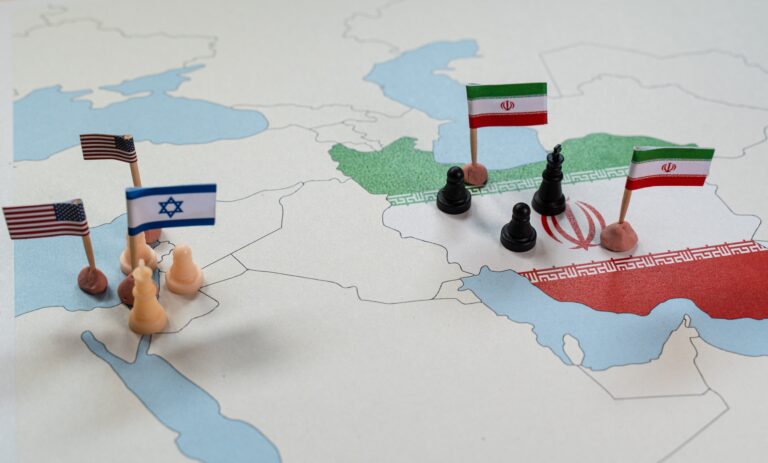
On one side stands an increasingly aggressive Israel, fully backed by the United States and led by a government that speaks openly about territorial expansion and civilizational confrontation. Prime Minister Benjamin Netanyahu, pursued by corruption charges at home and wanted by the International Criminal Court abroad, presides over a state that, having gotten away with genocide in Gaza, is now comfortable operating without any restraint. Several key members of his governing coalition articulate openly expansionist visions that involve settling parts of neighboring countries, including Lebanon.
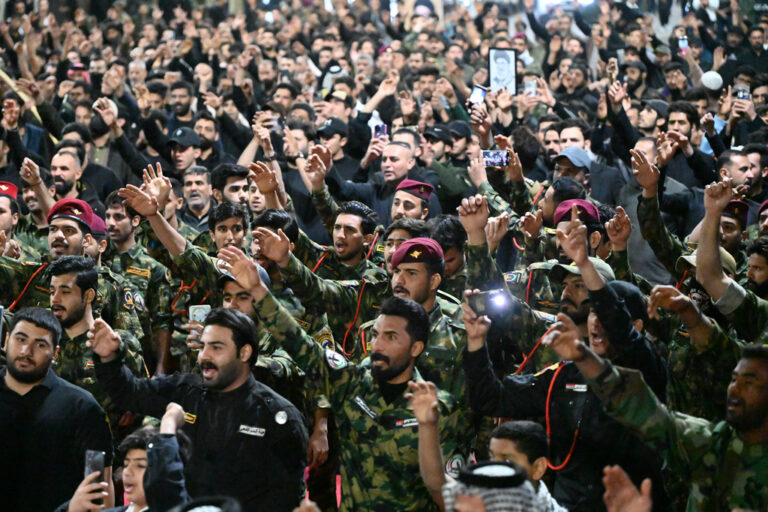
On the other side stands the Iranian-led “axis of resistance”. For decades, it has presented itself as the only credible force capable of confronting Israel’s military power. Yet its priorities have rarely aligned with the sovereignty or stability of the states in which it operates. From Syria to Iraq, Yemen to Lebanon, the result has often been devastation to local societies and weakened state institutions.
For Lebanon, this dual trap – which has been painfully clear for some time – is now an existential threat. The country is asked to choose between submission to a belligerent Israel, which may lead to permanent displacement of parts of its population, or align with a resistance axis that has brought repeated destruction, dragged Lebanon into never ending conflicts, including with neighboring Syria, and deepened internal fragmentation.
Neither path offers security. Neither promises sovereignty. Recognizing this reality requires confronting two narratives that have structured Lebanese political debate for decades and that have both proven increasingly untenable. But the challenge is no longer simply to reject the choices imposed upon it. It is to define a future beyond them.
The Failure of Asymmetrical Deterrence
The first narrative is the belief that Hezbollah’s military capabilities can deter Israel and protect Lebanon. For a time, this argument appeared plausible. Israel’s withdrawal from southern Lebanon in 2000 after years of armed resistance by Hezbollah and the uneasy equilibrium following the 2006 war created the impression that asymmetric deterrence could impose limits on Israeli military action. Hezbollah’s ability to inflict damage on Israel through guerrilla tactics and missile capabilities seemed to have established a fragile balance.
But the regional and technological context of that period no longer exists. Israel’s military doctrine has evolved dramatically over the past two decades. Its technological superiority – particularly in surveillance, cyber warfare, and artificial intelligence – has expanded the gap between Israel and non-state actors operating with asymmetrical tools. At the same time, Israel has shown increasing willingness to use overwhelming force with complete disregard for international law, and while benefiting from total impunity. The Dahiyeh Doctrine, first articulated during the 2006 war, was refined with devastating effect in Gaza and is now being applied in Lebanon in its harsher form – what might be called a “Dahiyeh Doctrine 2.0.”
Hezbollah’s domestic standing and regional alliances have also shifted. A series of decisions and actions over the past two decades has left the movement increasingly isolated, both nationally and across the region. These include its use of weapons against Lebanese political groups opposed to it during the May 2008 clashes; persistent suspicions surrounding its involvement in the assassination of Lebanese political opponents; its military intervention in Syria after 2011 in support of Bashar al-Assad’s brutal regime; its backing of the Houthis in Yemen; its decision to shield Lebanon’s corrupt political class during the 2019 uprising while helping block the investigation into the Beirut port explosion; and, most recently, its unilateral decision to open a front against Israel after October 7 without consultation with Lebanese state institutions.
Under these conditions, and given the uncertainty around Iran’s ability to continue supporting it, the notion that Hezbollah, now loathed by a large part of the Lebanese population and ring-fenced by a hostile Syria, can deter a vastly more powerful state through asymmetrical warfare is not only false, it is also dangerously delusional. The strategy of armed resistance by a non-state armed group has reached its limits.
The Illusion of a Pax Israelica
If one narrative has failed, its mirror image is equally misleading. A second belief has gained traction among some Lebanese and international observers: that Hezbollah’s disarmament alone would usher in an era of peace and stability between Lebanon and Israel.
This argument assumes that Israel’s conflict with Lebanon is primarily reactive – that if Hezbollah disappeared, the incentives for confrontation would disappear as well. But this assumption ignores the evolution of Israeli politics over the past decade.
Israel today is governed by leaders who openly articulate expansionist visions of the region. Figures such as Finance Minister Smotrich have spoken openly about territorial maximalism and demographic engineering. Prime Minister Netanyahu increasingly frames regional conflict in civilizational terms, portraying Israel as a frontline state in a broader struggle between Western civilization and its adversaries. Many of Israel’s political allies in Washington echo similar assumptions about the region’s future.
In this context, the potential of a “Pax Israelica” should be viewed with caution. It is not a vision of mutual coexistence and shared prosperity. Rather, it resembles a regional order based on hierarchy and domination – one in which weaker states like Lebanon are expected to accommodate Israeli priorities without reciprocal guarantees. One can simply take a look at Syria’s experience with Israel over the last year, where Israel expanded its control over Syrian territory and resources, despite the fact that Al-Sharaa kept sending signals of goodwill towards it.
Many in the country today – tired of Hezbollah’s never-ending wars – seem increasingly willing to flirt with the idea of peace with Israel. But there are significant parts of the country, notably the Shia, who have suffered directly and repeatedly at the hands of Israel, who find such a scenario unacceptable.
Lebanon, therefore, faces a difficult paradox: the strategy of armed resistance has shown its limits, yet the alternative of embracing a Pax Israelica would leave the country dangerously exposed and divided. Faced with such challenging choices in the past, Lebanon has traditionally shied away from staking clear positions in the hope that it can weather the storm. So can a strategy of “neither armed resistance, nor Pax Israelica” provide a path forward today?
Georges Naccache’s Warning: The Limits of “Neither, Nor”
On March 10, 1949, Georges Naccache published a column that would become one of the most quoted texts in Lebanese political thought. Criticizing the foundations of the Lebanese political system, he wrote the phrase that would define his argument: “Deux négations ne font pas une nation” – two negations do not make a nation.
Naccache was referring to the National Pact of 1943, the informal agreement that structured Lebanon’s independence. The pact rested on a delicate balance between two rejections: Christians renounced the protection of Western powers, while Muslims renounced political union with the Arab East. The formula “neither East nor West” was meant to guarantee Lebanon’s autonomy.
But Naccache warned that the union of two refusals could not substitute for a positive national project. History eventually proved him right as Lebanon experienced repeated bouts of armed conflicts as regional tensions exacerbated internal divisions. More than seventy-five years after Naccache’s article, Lebanon risks repeating a similar mistake.
Rejecting Israeli domination is necessary. Rejecting the failures of militarized resistance is equally necessary. But rejecting both without articulating a coherent alternative strategy will not produce sovereignty. Two negations, once again, cannot make a nation.
Immediate Priority: Preventing Further Devastation
So what can Lebanon do now? The immediate priority must be to limit further destruction and halt any Israeli land invasion. For an economically and socially shattered country, confronting Israel head-on under current conditions is catastrophic. Preventing, or at least limiting, a deeper Israeli ground invasion must therefore be an urgent national objective. History demonstrates that once Israeli forces entrench themselves on Lebanese territory, removing them becomes extraordinarily difficult and costly.
A ceasefire that minimizes further devastation is therefore essential, and there should be a proactive national effort around it. The President and Prime Minister seem aware of this. Even the speaker of parliament, Nabih Berri, a key and long-time ally of Hezbollah, recognizes that this current war presents an existential threat to the Shia community, who face the risk of long-term displacement from certain parts of the country.
However, diplomatic efforts to reach a ceasefire are limited so far. France has launched a last-ditch effort, but so far neither Israel nor Hezbollah appears willing to accept it. Meanwhile, other Arab states are busy dealing with Iranian attacks on their soil, and the current US administration seems intent on offering full support to Israel.
What is needed is a much larger coordinated diplomatic mobilization effort by Lebanon. Lebanon’s vast diaspora could play a critical role in mobilizing diplomatic support for such an outcome. Lebanese communities across Europe and North America are one of the country’s only remaining sources of political leverage abroad. They must overcome their divisions to drive a message that opposes a land invasion and pushes for an immediate ceasefire.
The other pillar is to support the Lebanese government and army in taking practical and immediate steps to show that they can implement the latest government decision to disarm Hezbollah and treat its weapons as illegal. To succeed, the army needs international support and guarantees, including having the army deploy to key parts of the south with international backing, equipment, and support.
The end game of such an effort should also be clear. Lebanon, having endured repeated wars, occupations, and destruction at the hands of Israel, cannot realistically be expected to normalize relations with Israel. But it can reaffirm a commitment to the 1949 armistice framework and to the respect of internationally recognized borders.
Rebuilding Sovereignty at Home
External stabilization, however, will mean little without internal reconstruction. For too long, sovereignty in Lebanon has been reduced to a single question: the disarmament of Hezbollah. While this issue is central and urgent, sovereignty ultimately depends on something deeper – the capacity of the state to command legitimacy and deliver security, justice, and public goods to its citizens.
Lebanon today lacks that capacity. The financial collapse that began in 2019 has devastated state institutions. Public administration has been hollowed out by years of patronage and economic crisis. Trust between communities has eroded.
Rebuilding sovereignty will therefore require more than security reforms. It will require a broader process of political and institutional reconstruction. Lebanon cannot wait for other countries to rebuild it.
Across Lebanese civil society and think tanks, new ideas about sovereignty and governance are already emerging. Suggestions and proposals abound regarding reforming taxation, increasing state revenue capacity, improving local municipal governance, integrating Hezbollah’s social welfare infrastructure into state institutions, and promoting an independent judiciary.1Some examples include: from The Policy Initiative, https://www.thepolicyinitiative.org/article/details/486/beyond-security-fixes-toward-a-sovereignty-based-reform-pact-in-lebanon and https://www.thepolicyinitiative.org/article/details/466/lebanon%E2%80%99s-sovereignty-battle-isn%E2%80%99t-just-over-arms; from Badil https://thebadil.com/policy/no-peace-without-process-changing-course-on-hezbollahs-arms/ ; from ARI https://ari26.arabregionhub.net/publication/which-tax-policies-for-lebanon-lessons-from-the-past-for-a-challenging-future and https://ari26.arabregionhub.net/publication/empowering-lebanons-municipalities-amid-crisis/ These efforts should accompany a national effort to monopolize the use of arms.
A genuine national reconstruction effort could become the foundation for a broader political refounding that would address Lebanon’s large challenge of offering an alternative to the Lebanese who supported Hezbollah. Ultimately, sovereignty cannot simply mean removing one armed actor; it must mean constructing institutions capable of replacing it.
A Different Form of Resistance
Acknowledging the limits of military deterrence does not mean total surrender or embrace of the Israeli-offered hegemonic model. Lebanon still has other ways to resist expansionist projects in the region.
One lies in the country’s historical identity. For centuries, the Levant functioned as a space of plural coexistence among communities and cultures. Lebanon, despite its many crises and shortcomings, still embodies the possibility of another political model: one based on pluralism, negotiated coexistence, and shared political life. In a region increasingly polarized by ethnic and sectarian nationalism and, in the case of Israel, a form of supremacism, preserving and strengthening this model is itself a form of long-term resistance.
Lebanon can also contribute diplomatically to broader regional efforts to imagine new frameworks for peace and security. It was in Beirut, in 2002, that the Arab Peace Initiative was first articulated – an ambitious attempt to outline a comprehensive regional settlement based on mutual recognition and territorial compromise.
The region will eventually need similar diplomatic imagination again. Lebanon may not have the capacity to lead such an effort, but as a frontline state, it can help shape it.
Shifting Strategy, Not Surrendering
Military solutions have shown their limits. Israel’s technological superiority and the scale of US military and diplomatic support make long-term military confrontation by weaker actors increasingly untenable. Continuing to rely on strategies that cannot realistically succeed is condemning Lebanon to cycles of destruction.
But Lebanon does not have to accept domination. It requires shifting the strategy and the terrain of resistance – from the battlefield to the political, diplomatic, and institutional arenas.
Lebanon’s path forward will be narrow and uncertain. The odds of success are low. Yet if the country can escape the trap of false choices and begin articulating a project of its own – one rooted in sovereignty, coexistence, and diplomacy – it may still offer something valuable to a region searching for new political horizons.
Endnotes