







Executive Summary
This Q&A with Diana Kaissi, Energy Governance Specialist, examines how the current crisis around the Strait of Hormuz is affecting Liquefied Natural Gas (LNG) flows, energy prices, and wider energy security in the MENA region and beyond. LNG is simply natural gas that has been cooled into liquid form so it can be transported by ship instead of having to rely on pipelines. Historically, LNG developed because many gas reserves were located far from consuming markets, while pipelines were often too costly, politically sensitive, or geographically difficult to build. Liquefaction made gas trade more flexible and more global, offering what was intended to be a more secure and adaptable way of supplying natural gas over long distances.
The Q&A’s central argument is that the present crisis is not only about the physical availability of gas, but about the disruption of the system through which gas is delivered. LNG was designed to provide flexibility compared with fixed pipeline systems, yet in practice it remains highly vulnerable when large volumes are concentrated through a single strategic choke point such as Hormuz. The main issue, therefore, is how much natural gas supply is disrupted, how much of that supply is LNG, and what effect this has on electricity prices, industrial costs, inflation, and national energy security. In this sense, the Q&A shows that LNG is both a technical delivery mechanism and a geopolitical system whose disruption can quickly affect regional and global energy markets.
This Q&A focuses primarily on the current Hormuz crisis on LNG as opposed to the broader impact on oil exports because LNG is the more structurally exposed fuel: its exports are concentrated among fewer producers, depend more heavily on a single maritime choke point, and have far fewer practical bypass options than oil. Oil remains important to the story, but LNG is where disruption to delivery routes most quickly translates into supply insecurity, price spikes, and wider effects on electricity costs, inflation, and energy sovereignty.
Why is the Strait of Hormuz so important for energy markets?
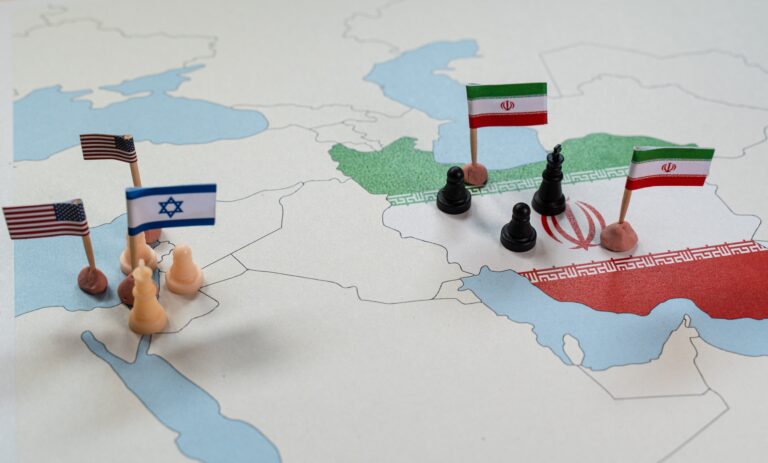
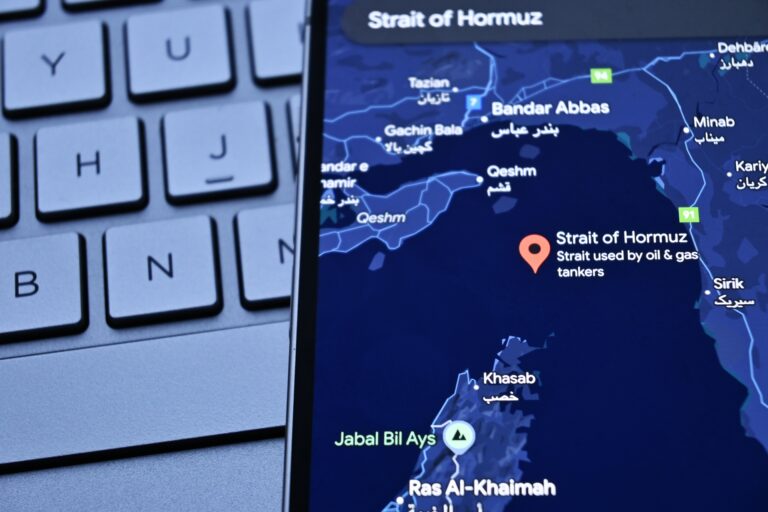
The Strait of Hormuz is one of the world’s most concentrated energy choke points. It is the narrow sea passage linking the Persian Gulf to the open sea, so a huge share of Gulf oil and LNG exports must pass through it. That matters not only if it closes completely, but even if shipping is merely threatened: insurance rises, ships reroute or delay, and prices jump quickly.
For oil, the importance of Hormuz lies in both the scale of flows passing through it and the lack of alternative routes. The U.S. Energy Information Administration (EIA) says roughly 20 million barrels per day of crude oil, condensate, and petroleum products moved through Hormuz in 2024, which is about 20% of global petroleum liquids consumption. A lot of that supply comes from Saudi Arabia, Iraq, the UAE, Kuwait, Iran, and Qatar. Some bypass capacity exists through pipelines, but the EIA stresses that very few alternative options exist to move comparable volumes out if the Strait is disrupted.
For LNG, the story is similar but even more concentrated around a smaller number of exporters. The EIA says about 20% of global LNG trade transited Hormuz in 2024, primarily from Qatar, with a smaller volume from the UAE. The EIA says that in 2025 LNG moving through Hormuz accounted for around 27% of Asia’s LNG imports and about 7% of Europe’s LNG inflows. So, LNG risk through Hormuz is especially acute for Asian buyers. If flows are disrupted, gas prices in Asia and Europe can spike quickly.
So, the current LNG shock is being driven by geography as much as by war as the Strait of Hormuz remains the indispensable maritime outlet for almost all LNG exported by Qatar and the UAE. The impact of the closure of Hormuz is also tied to the history of LNG development. Qatar’s early buildout of LNG infrastructure, and notably Qatar’s North Field and the Ras Laffan complex, which QatarEnergy says remains the world’s largest LNG production system, was anchored by long-term Asian offtake deals (its first Sales and Purchase Agreement with Japan was signed in 1992, followed by the first cargo from Ras Laffan in 1996/97) which helped lock in a commercial pattern in which Gulf LNG moved out through Hormuz to Japan, South Korea, India, China, and other Asian buyers.
How has the current conflict affected LNG supply so far?
The present conflict has converted the LNG’s structural vulnerability into a live supply disruption. Reuters reported that tanker owners, trading houses and oil majors suspended LNG movements through Hormuz after the U.S.-Israeli strikes on Iran and Tehran’s threats against navigation. By 4 March, Qatar had halted LNG output after strikes on facilities in Ras Laffan, which is the largest LNG export facility in the world, and then declared force majeure on shipments. Given that Qatar accounts for about 20% of global LNG exports in 2025 (with 80.97 million metric tons shipped last year), this has a major impact on LNG markets, especially because there are effectively no scalable alternative routes for Qatari or Emirati LNG to reach global markets. The IEA notes that, aside from limited pipeline deliveries to Kuwait and constrained intra-Gulf pipeline capacity, there are no alternative routes capable of replacing stranded LNG flows at short notice.
Can you explain the impact on the LNG supply chain?
The attacks are disrupting the LNG chain at four levels simultaneously. First, they are impairing production and loadings at source, especially in Qatar. Second, they are interrupting vessel transit through the Strait itself, where traffic nearly ground to a halt, with daily tanker movements collapsing from 37 per day before the war to almost zero by 8 March. Third, they are sharply increasing freight and risk costs: Reuters reported that Atlantic and Pacific LNG freight rates jumped more than 40%, while Middle East crude shipping rates surged to record levels. Fourth, they are forcing portfolio re-optimization across the Atlantic Basin (traders reshuffle their global LNG supply books because missing Qatari cargoes have to be replaced from somewhere else), with traders redirecting west-origin cargoes toward Asia to replace missing Qatari volumes.
This is why the current episode should be read as a supply-chain and logistics shock, not only as a commodity-price shock. The market is losing flexibility at the same time as it is losing access to LNG molecules. Asia faces the most immediate exposure, as nearly 90% of the LNG transiting the Strait of Hormuz in 2025 was destined for Asian buyers. Europe, however, is not insulated: according to the IEA, LNG linked to Hormuz still represented about 7% of Europe’s LNG imports in 2025, meaning that competition for replacement spot cargoes spreads scarcity across global markets. Early Reports are indicating that Asian benchmark LNG prices jumped nearly 40% at the start of the crisis, while forward curves for 2026 now imply materially higher LNG export prices into both Asia and Europe than previously expected.
How will this affect energy producers in the MENA region, especially the GCC and Iran?
Hormuz is not merely a trade choke point; it is the Gulf’s central energy artery. Because Qatar’s LNG exports, and part of the GCC’s own gas security, are concentrated in this single corridor, any disruption quickly becomes a regional security issue. It strains domestic power systems, raises the need for military protection of shipping, exposes the weakness of Gulf energy integration, and highlights a basic asymmetry: oil has limited bypass options, while LNG effectively does not.
Exposure within the GCC is therefore uneven. Qatar is the most vulnerable, since its LNG sector is both globally significant and overwhelmingly dependent on one export route. The UAE is also exposed on the gas side; while some crude can bypass Hormuz through Fujairah, that flexibility does little to address LNG vulnerability. Saudi Arabia is less directly exposed in LNG, but it is still affected by wider Gulf shipping disruption, storage bottlenecks, and the limited capacity of existing bypass infrastructure. Kuwait and Bahrain are particularly vulnerable through their dependence on imports, refinery exposure, and cross-border gas supply. As the IEA notes, Qatar and the UAE supplied almost 7 bcm to Kuwait in 2025, meaning that a prolonged disruption would not only undermine exports but also threaten regional supply security.
Oman is somewhat differently positioned. Its Qalhat LNG terminal lies on the Arabian Sea, outside Hormuz, which leaves it structurally less exposed than Qatar or the UAE. Even so, it remains vulnerable to spillover effects such as higher war-risk premiums, rising insurance costs, and drone activity in nearby waters.
Iran, meanwhile, derives coercive leverage from its geography, but that leverage is inherently double-edged. A sustained closure of Hormuz would deepen Iran’s own economic isolation, intensify sanctions pressure, and further damage its credibility as a future energy partner. In that sense, the crisis may strengthen Tehran’s tactical bargaining power in the short term while weakening the regional investment environment needed for any longer-term Iranian gas development.
What is the resulting LNG market change impact on the global economy?
The resulting LNG market shock is likely to reshape the global economy through three interrelated dynamics. First, all Gulf-linked cargoes will carry a higher security premium, raising prices well beyond their underlying production cost. Second, inter-basin arbitrage will widen as Atlantic LNG is redirected toward Asia to compensate for possible supply disruptions, tightening availability elsewhere, especially in Europe. Third, the crisis will deepen the divide between supply that is physically secure and supply that is simply cheaper on paper. Before the conflict, the IEA expected global LNG supply to grow by more than 7% in 2026, largely because of new North American output. That expansion may provide some medium-term relief, but it cannot fully offset the immediate effects of a Hormuz disruption. In the short term, the market is therefore likely to remain highly price-driven, volatile, and sensitive to inventories.
The macroeconomic effect is primarily inflationary, but its burden will be distributed unevenly across regions. IMF Managing Director Kristalina Georgieva has warned that a sustained 10% rise in oil prices could add 40 basis points to global inflation. The countries most vulnerable are those that depend heavily on imported fuel and have limited fiscal space to absorb higher costs. In Europe, import-dependent economies remain exposed to renewed gas and electricity price pressure, particularly where storage levels or diversification options are weaker. In Asia, major LNG buyers such as Japan, South Korea, India, and several Southeast Asian states face higher input costs, greater trade imbalances, and possible industrial slowdowns. The strain is likely to be even more severe in highly indebted countries across Africa and the MENA region, where higher energy import bills can quickly feed into inflation, currency pressure, subsidy stress, and rising sovereign debt risks. For these economies, the shock is not only about more expensive power and transport, but also about worsening food insecurity, weaker public finances, and greater social vulnerability. Even for energy exporters, the apparent upside of higher prices may be offset by lost export volumes, force majeure, rising insurance and shipping costs, and a more unstable investment climate.
Moving forward, what is the environmental outlook?
Environmentally, the outlook is deeply ambivalent. In the short term, disruption to LNG supply caused by the ongoing war is likely to worsen environmental pressures rather than ease them. When LNG becomes scarce or prohibitively expensive, many countries, especially those facing urgent electricity shortages, may delay the shift from coal and fuel oil to relatively lower-emission gas, or even revert to more polluting fuels to keep power systems running. This can lead to a rise in greenhouse gas emissions, higher local air pollution, and greater public health risks, particularly in already fragile urban and industrial areas. In some import-dependent countries, governments may also rely more heavily on diesel generators and emergency fuel imports, further increasing both emissions intensity and system inefficiency. At the same time, longer shipping routes, higher insurance risk, and supply-chain disruption add another environmental burden by increasing the carbon footprint of energy transport itself.
Over the medium to longer term, however, repeated geopolitical shocks to LNG supply may strengthen the strategic and environmental case for accelerating renewable energy transitions. The more energy-importing countries experience the vulnerability of relying on externally supplied fossil fuels, the stronger the argument becomes for investing in domestic renewable energy, battery storage, grid interconnections, and energy-efficiency measures. In this sense, the crisis may act as a catalyst for structural change, pushing governments to see renewables not only as a climate solution, but also as a matter of national resilience. This is particularly relevant in the MENA region, where the International Renewable Energy Agency projects that, under a transition pathway, renewables could provide nearly 26% of total primary energy supply and 53% of power-sector supply by 2050. The environmental direction, therefore, depends on the policy response: if governments treat the crisis as a reason for short-term fossil fuel lock-in, emissions and pollution will worsen; if they use it to accelerate clean energy deployment, the disruption could ultimately reinforce a more sustainable and secure energy future.
And finally, what is the impact of this crisis on how countries approach and ensure their energy sovereignty, especially as it relates to LNG?
On energy sovereignty, the current crisis shows that control over gas resources is not the same as control over LNG supply. A country may hold large gas reserves yet still lack real sovereignty if its LNG exports depend on a single maritime route, a limited number of liquefaction facilities, or shipping corridors vulnerable to war and disruption. The present crisis demonstrates that LNG sovereignty is shaped not only by what a country produces, but by whether it can move that gas reliably to market, protect domestic supply, and manage price volatility during conflict. When a choke point such as Hormuz becomes insecure, even major gas exporters can lose flexibility over export timing, delivery commitments, and revenues. In that sense, dependence on a single export route can hollow out the practical value of resource wealth.
For the GCC, greater energy sovereignty, in particular as it relates to LNG, now means reducing exposure to route concentration and single-node export dependence wherever possible. It also means expanding domestic, clean electricity so that more gas can be preserved for strategic use, improving storage and contractual flexibility, and strengthening the resilience of LNG export infrastructure against geopolitical shocks.
For LNG-importing countries in MENA and Asia, the lesson is equally sharp: reliance on imported LNG can quickly become a sovereignty problem when prices surge, cargoes are redirected, or supply is interrupted. In such conditions, governments lose room to protect affordability, fiscal stability, and energy access.
As a result, LNG insecurity is pushing many states to treat renewables, storage, grid upgrades, and demand management not only as climate tools, but as instruments of sovereignty. The strategic conclusion is that the current crisis has made energy security, (in particular LNG) and energy transition inseparable: the more countries remain exposed to volatile LNG routes and markets, the more energy sovereignty depends on reducing that dependence over time.