


Iraq emerged from the November 2025 elections without major electoral surprises, but the outcome confirmed the rise of a specific political elite facing questions deeper than the results of the ballot box and recycled centers of power within the same framework. As in previous cycles, the decisive moment was not election day itself, but what preceded it in terms of competition for power and what followed in terms of debate over the formation of the government, the limits of its authority, and the function of parliament, all within a turbulent regional environment that reopens questions of sovereignty, weapons, and the state.
These elections are the sixth constitutional elections since 2005. Although the Iraqi system established after the 2003 US invasion faces central and fundamental questions, the design of the electoral process and its outcomes showed that the vote, once again, continues to reproduce the traditional powers. The political system was founded on consensus, quotas, and managing the balance between competing forces. Since then, it has not entered a phase of true institutional stability, but has developed a high degree of flexibility to adapt to local and international pressures.
The elections were held with the participation of more than 12 million Iraqi voters out of a total of about 20 million, amid a series of structural changes: the boycott by the Sadrist Movement,1Renad Mansour and Benedict Roben-de Cruz, The Sadrist Movement in Iraq: Between Protest Politics and Power Politics, Chatham House, October 2022. In June 2022, Sadrist leader Muqtada al-Sadr withdrew from the political process after pro-Iranian forces blocked his attempt to form a majority government. In the October 2021 elections, which followed the October 2019 protests, al-Sadr won 73 of the 329 parliamentary seats and was widely regarded as the overall winner. the Iraqi actor most capable of shaking the political landscape; the amendment of the electoral law returning to a single constituency under the modified Sainte-Laguë Method,2Law Amending the Law on Elections for the Council of Representatives and Provincial and District Councils No. (12) of 2018 (Third Amendment), Iraqi Official Gazette, issue 4718, 8 May 2023. The amendment reinstated the modified Sainte-Laguë system (first divisor 1.7) in place of the multi-constituency and single-candidate system used in the 2021 elections. It also unified the legal framework governing elections for the Council of Representatives and provincial councils, with each province treated as a single electoral district. which shifted the balance in favor of large lists at the expense of independents and small secular parties; and increased US pressure on armed factions and on the formation of the next government. Hovering over all this is a cloud of economic indicators related to the bloated civil service, the decline in the state’s financial capacity, falling oil prices, and the rising cost of administering the system itself.
This paper approaches the 2025 elections as a mechanism for managing conflict within the political system by deconstructing their legal design, interpreting their results in terms of the reconfiguration of the balance of power, and analyzing the post-election period as a challenge to the system’s readiness to address accumulated economic, security, and regional pressures.
The Sixth Elections: Recycling the Recycled
Iraqi parliamentary elections were held on 11 November 2025 to elect 329 members to the Council of Representatives (CoR), which is constitutionally responsible for electing the president of the republic, approving the formation of the government, and subsequently monitoring and holding it accountable.
These elections differed from previous ones in terms of the political context in which they were held; they took place under a clear degree of prior control over their course and potential outcomes. While the 2005 and 2010 elections were conducted in the context of reestablishing the political system, and the 2014 and 2018 elections, amid security crises and protest movements, and the 2021 elections as a direct response to the instability of the system following the October uprising, the 2025 elections appeared as a step toward re-confining the political system to its core sectarian actors and closing the exceptional path that opened in 2021 to emerging political forces and independent individuals.
The elections took place amid a boycott by the Sadrist Movement, whose political bloc in previous cycles had constituted a disruptive factor within the system due to its size and relative discipline. The Sadrists’ parliamentary representation previously ranged in the dozens of seats, most recently securing 73 seats in the 2021 elections.3Mansour and Roben-de Cruz, The Sadrist Movement in Iraq. The study analyzes the trajectory of the Sadrist movement after the 2021 elections, arguing that its parliamentary victory represented an attempt to reshape the balance of power within the Shiite political sphere through a strategy of “controlled destabilization.” The authors suggest that al-Sadr’s withdrawal from parliament in 2022 and the subsequent protests were extensions of this approach. Sadr’s boycott contributed to reshaping the electoral environment, both by lowering the level of competition and by redistributing part of the Sadrist voting bloc within the Shiite political sphere itself, particularly in favor of the “Coordination Framework,” a coordinating council of major Iraqi Shiite parties opposed to the Sadrist Movement.
Sadr’s absence, therefore, gave his Shiite opponents, the radical pro-Iranian forces, the opportunity to expand their influence within state institutions and to control legislative and oversight decisions in the CoR. His absence also affected the civil forces that had aligned with him and, at times, supported him on fundamental issues, such as enacting a fair electoral law for emerging and secular parties, known in Iraq as civil forces.
Consequently, the civil forces entered the 2025 elections suffering from a clear weakness in organization, outreach, and vote mobilization, despite having secured approximately 12% of parliamentary seats in the 2021 elections. Their loss this time cannot be explained solely by voter abstention, but rather by a combination of structural factors, most notably the design of an electoral law that favors large blocs, the absence of unifying alliances within the civil sphere, and the vast disparity in resources and organizational capacity between them and the traditional forces. 4The Independence Party, led by former MP Sajad Salem, ran in the elections but failed to convert its media and parliamentary presence into sufficient votes to cross the threshold, ending up outside parliament. The same result applied to the Iraqi Communist Party, which fielded candidates with limited influence and won only a few thousand votes in Baghdad (around 2,600 votes for the Civil Democratic Alliance), figures that pale in comparison to the major lists that won hundreds of thousands of votes in the same constituency. Similarly, the National Civil Movement, led by former MP Shurooq al-Abbaji, participated without a broad electoral alliance, which led to its votes being scattered across multiple constituencies without translating into actual representation. The distribution of votes in Baghdad, Dhi Qar, and Nineveh shows that the total number of votes obtained by civil and independent lists—even when combined—amounted to thousands, but remained distributed among small entities without the ability to compete with organized lists that benefited from the amended Sainte-Laguë law and the accumulation of votes within constituencies. The only partial exception was the Faw-Zakho coalition, which received about 31,972 votes in Basra, enabling it to win two seats (Amer Abdul Jabbar and Sara al-Batat). However, this success does not reflect the rise of a civil force in the political or legal sense, but rather a local presence with a clear economic and service agenda, separate from the traditional civil reform discourse. Therefore, this victory does not represent a breakthrough capable of transforming into a national opposition bloc.
Return to the Modified Sainte-Laguë Method
The amendment to the vote-counting mechanism in the sixth legislative elections was one of the most decisive factors in shaping the nature of electoral competition and its outcomes, particularly for civil and independent forces, with the return to the modified Sainte-Laguë formula (with the first divisor set at 1.7)5The “modified Sainte-Laguë” system is the mechanism adopted for the 2025 elections under Law No. (4) of 2023, whereby each governorate is considered a single electoral district. The mechanism for calculating seats is to divide the votes of the lists by the first divisor (1.7) and then by consecutive odd numbers (3, 5, 7…), with the results arranged in descending order for the distribution of seats. The aim of raising the divisor to 1.7 instead of 1 is to reduce the chances of small entities in favor of large coalitions, while maintaining the “open list” system, which awards seats to the candidates with the highest number of votes within a single list, taking into account the 25 percent quota for women. for counting votes.
The modified Sainte-Laguë formula essentially rewards large lists capable of accumulating votes within a single broad constituency and penalizes lists that enter the race with votes distributed across constituencies. This makes the electoral victory prohibitively expensive for those who lack a financial structure or a broad local mobilization network. 6A number of MPs have been aware of the implications of this equation since the previous parliamentary session, with some moving from forces that emerged from the October protests to traditional forces, such as the Reconstruction and Development Alliance, as did Nour Nafeh, or Nisan al-Zayer, who joined the State of Law Coalition led by former Prime Minister Nouri al-Maliki. However, they were unable to win enough votes to secure seats, and their loss was interpreted as a punitive vote resulting from their move to the camp of the dominant forces.
The results in Baghdad, Basra, and Nineveh clearly demonstrate this effect. In Baghdad, for example, hundreds of thousands of votes obtained by the major lists were converted into clearly defined parliamentary blocs, while the votes of the civil lists – although not marginal in total – were fragmented across multiple constituencies without producing a single influential seat.
This shift in the nature of electoral competition prompted a group of Members of Parliament (MPs) who entered parliament in 2021 as “independents,” drawing on a human rights discourse that emerged during the October 2019 protests and their aftermath, to reposition themselves politically in the 2025 elections. With the transition from a system that favored voting for individual candidates in small constituencies to a single-constituency system based on party lists and the Sainte-Laguë Method, the prospects for individual victory became limited, encouraging these MPs to join traditional forces or organized blocs that reduced the risk of electoral defeat. However, this shift frustrated a segment of civil and secular supporters who believed that the new system once again tilted the balance in favor of the major parties. This was reflected in a reluctance to participate,7Mangoush Dagher, “Don’t Be Fooled by the Official Turnout Figures: An Analysis of the Iraqi Elections in Numbers”, Washington Institute for Near East Policy, 30 December 2025. In this article, the author analyzes the official turnout figures for the 2025 Iraqi elections, arguing that actual participation amounted to about 41% of Iraqis aged 18 and over rather than the officially announced 56%. The analysis attributes this gap to the decline in the number of actual voters to 21.4 million, compared with 22.1 million in 2021, despite more than four million new voters reaching voting age, which coincided with a drop in the proportion of citizens obtaining biometric voter cards to approximately 73%. and ultimately resulted in no independent civil or secular candidates winning seats in the sixth parliament.
Political Money and Fines
Unlike previous elections, the 2025 elections in Iraq did not witness major attacks or violations on polling day, but were marked by significant financial excess. Political money played a major role in bringing figures with no political history or record of civil or human rights activism into the CoR. These figures secured their victory by spending money through vote brokers known as “Arrakae’z”,8In the Iraqi electoral context, “pillars” refer to individuals who act as intermediaries between candidates and voters or influential social groups. Their role is to secure electoral support by negotiating agreements with individuals, tribes, or professional and social networks in exchange for various incentives, including financial payments, promises of government employment, service benefits, or other future privileges. intermediaries who guarantee votes for candidates through deals, incentives, and promises in exchange for support. The vote brokers purchased votes for some candidates at a cost exceeding US$100-US$150 per vote,9Vote buying was widely reported in residential neighborhoods during the 2025 elections. According to accounts from families and acquaintances of the authors in different areas of Baghdad, voters were offered sums ranging from US0 to US0 in exchange for voting for specific candidates, depending on the area and social background. In many cases, the arrangement involved swearing an oath on the Quran in front of a “pillar” to confirm that the vote had been cast as agreed before the payment was delivered. and regulatory institutions have already recorded dozens of similar cases.
The Independent High Electoral Commission (IHEC) set a ceiling for electoral spending at 250 dinars (US$0.19) per voter in the constituency, calculated theoretically at the individual candidate level, which in most constituencies results in relatively limited total amounts. However, unofficial estimates of total election spending ranged from approximately US$ 1.5 billion to US$ 3 billion.10Unofficial estimates of total election spending ranged between .5 billion and billion. In a statement on November 16, 2025, economist Manar al-Obeidi, president of the Iraq Future Foundation, estimated that spending would reach around 2–3 trillion dinars (approximately .5–2 billion at the current exchange rate). A press report published by the Nirij website on November 7, 2025, based on interviews with economists, estimated total election spending at around billion. Government Board of Directors, This reflects the high aggregate amounts spent by lists, parties, and candidates combined, particularly with more than 7,000 candidates and a variety of spending channels, including media advertising, field organization, logistics, and digital campaigns, as well as exorbitant expenditures that do not pass through official election spending channels.
The number of violations recorded during the elections rose in direct proportion to the increase in money spent. The IHEC acknowledged recording more than 540 campaign violations and imposing hundreds of fines on approximately 100 candidates and coalitions for breaching campaign regulations and the electoral silence period. However, these measures were limited to administrative and financial aspects and did not extend to decisions affecting the eligibility of lists or winning candidates, according to the Commission.
The problem is not limited to the scale of spending itself but extends to the nature of its channels. According to the Iraq Future Foundation, a private institution concerned with economic data, no accurate data are available on sources of funding and disbursement mechanisms, given the frequent reliance on non-banking channels in political financial transactions, which limits the ability of the competent authorities to track and audit election-related funds.11The structure of political financing in Iraq relies largely on cash transactions outside the formal banking system, making it institutionally difficult to track the flow of funds or verify the sources of campaign financing. This practice circumvents party regulations requiring transparency, as sales, purchases, and logistical campaign contracts are conducted outside formal oversight, turning electoral spending into a “black box” that is difficult to monitor or audit. Furthermore, the volume of spending outside official channels, coupled with weak transparency, affects not only the results but also undermines the legitimacy of the electoral process in the eyes of the public.
Victory for those in Power
The 2025 election results produced a fragmented parliament in terms of lists, yet traditional forces clearly continue to dominate within each component. Among the Shiite forces, the “Reconstruction and Development” coalition led by Prime Minister Mohammed Shia’ al-Sudani came in first, securing 46 of the 329 seats, followed by the “State of Law” coalition led by Nouri al-Maliki with 29 seats, and the Sadiqoun Bloc affiliated with Asa’ib Ahl al-Haq, led by Qais al-Khazali, with 28 seats. The forces of the “Coordination Framework” and the armed factions aligned with it shared seats in Shiite-majority areas, along with smaller parties within the Shiite political sphere, such as the Ishraqat Kanoun bloc, which is close to the religious authorities.
However, the reproduction of power centers was not confined to the Shiite camp alone. On the Sunni front, the elections did not lead to a reshuffling of leadership or the rise of new currents as much as they consolidated traditional actors within their areas of influence. The Takaddum Front, led by Mohammed al-Halbousi, won 27 seats, while other forces, such as the alliances of Khamis al-Khanjar (14 seats), remained part of the Sunni balance that was later regrouped within the “National Political Council (NPC),” with approximately 74 seats, leaving the same figures to dominate the Sunni negotiating space.
In the Kurdish region, the two main parties maintained their position as the dominant forces in political representation. The Kurdistan Democratic Party (KDP) won 26 seats, while the Patriotic Union of Kurdistan (PUK) secured 15 seats, without the elections enabling the emergence of a third Kurdish force capable of breaking the historical duality between Erbil and Sulaymaniyah.
In this sense, the overall results demonstrate the continuation of the traditional sectarian-political balance within parliament: approximately 187 seats for Shiite forces, 77 for Sunnis, 56 for Kurds, and 9 for minorities. These figures do not reflect a transformation in the structure of the system as much as they reveal a calculated redistribution within its longstanding centers, where sects remained represented by the same forces, and elections remained a means of organizing influence within the components and then distributing this influence across the state and its structure.
The decisive outcome was essentially linked to a combination of two interrelated factors: the positioning of the winning forces within the power structure and their ability to leverage this position to effectively manage votes within the constituencies.
These two factors are clearly evident in how the major lists managed their votes within the constituencies, particularly in Baghdad. The decisive difference in the 2025 elections lay not only in the size of the voting bloc but also in the ability to concentrate electoral votes and direct them toward specific candidates capable of surpassing the threshold for victory within the constituency.
In Baghdad, the Takaddum Front won approximately 277,000 votes and effectively concentrated the majority of these votes on a limited number of candidates capable of winning, foremost among them its leader, Mohammed al-Halbousi. In contrast, other candidates within the party played a secondary role aimed at dispersing the votes of rival lists and increasing the cost of an electoral seat as overall voting levels rose. This method of managing voter support enabled the party to convert its voting bloc into 10 parliamentary seats in the capital, rather than dispersing it across broad, unguaranteed candidacies.
The same pattern was repeated in the “State of Law Coalition,” led by former Prime Minister and the “Coordination Framework” candidate for the next government, Nouri al-Maliki, whose bloc received more than 228,000 votes in Baghdad, and in the case of the “Reconstruction and Development Coalition,” led by outgoing Prime Minister Mohammed Shia’ al-Sudani, who topped the capital with more than 411,000 votes, translating into 15 seats in Baghdad alone, also benefiting from his position in power and his ability to direct voters within the constituencies.
These figures, more than reflecting the size of popular support, indicate that these forces possess effective organizational, financial, and service tools that have enabled them to manage voting behavior within their bases and direct it toward specific candidates. This distinguishes forces engaged in power, which move beyond reliance on political rhetoric to the use of networks of access to the state and clientelistic relationships, allowing them to link voting to various forms of direct benefit12Data from the Iraqi Ministry of Planning and tables attached to the 2025 budget indicate that the number of permanent employees in Iraq is approximately 4.1 million, while the total number of people receiving salaries from the state—including retirees, contractors, and those covered by the social protection network—exceeds 9 million. Researchers in Iraqi political economy agree that this employment inflation is a direct result of the policy of “political patronage,” whereby public office is used as a tool to attract electoral loyalties. Instead of merit-based criteria, traditional parties rely on promises of appointments, permanent contracts, and wages before each election cycle to secure the votes of broad social groups and their families. This has turned the public budget into a consumptive “salary mass” that restricts development opportunities in exchange for continued party dominance. (such as road paving and new school openings) or deferred benefit (such as promises of employment, the conversion of agricultural land to residential use, or salary increases).
Victory as a Bargaining Chip
The election results stripped parliamentary victory of its sense of delegation and transformed it into a bargaining chip within the existing political system. The forces that topped the results did not obtain a majority that would allow them to impose a unilateral political course, nor did the number of seats they secured grant them a mandate to form alliances across sectarian divisions. In the Iraqi context, this constraint is not merely a procedural detail; the experience of the 2021 elections demonstrated that any attempt to transcend the established sectarian frameworks in forming a majority could open the door to broad political and security confrontations. 13After the October 2021 elections, the Sadrist Movement won 73 out of 329 seats, becoming the largest bloc in parliament. The movement sought to form a “national majority” government with its Sunni (Mohammed al-Halbousi) and Kurdish (Masoud Barzani) allies in order to break the logic of consensus and quotas, but it was met with the use of the “coordination framework” for the “blocking third” mechanism, leading to a long political deadlock. In June 2022, al-Sadr announced the resignation of his deputies from parliament, and the conflict moved to the streets with the storming of the Green Zone and the rejection of Mohammed Shia al-Sudani’s nomination for prime minister. The crisis culminated in armed clashes on August 29–30, 2022, before al-Sadr intervened to stop them and announced his retirement from political life. The crisis ended with the reproduction of power in a new consensual formula led by the “coordination framework,” with the Sadrist movement remaining active outside political institutions.
In this case, the victory of political forces in the elections becomes a means of consolidating their political position within one of the two main negotiating arenas, the Shiite “Coordination Framework” and the Sunni “NPC,” and then negotiating from within these arenas the size of their representation in the next government.
The Shiite “Coordination Framework”
The “Coordination Framework” is a coalition of Iraqi Shiite parties and forces formed in March 2021 as an informal parliamentary framework aimed at coordinating the positions of the main Shiite forces opposed to the rising Sadrist Movement within the CoR at the time. However, it later expanded into something resembling a Shura Council for Shiite forces, and leaders within the framework are seeking to transform it into a “Board of Directors” 14In a statement made during the “Dialogue Forum” on January 25, 2026, Hammam Hammoudi, one of the leaders of the “Coordination Framework,” said that the framework is moving from a “Council of Elders” to a “Government Board of Directors,” referring to the transition of Shiite leaders from an advisory role to one more closely linked to the work of the executive branch, a description that sparked debate about the nature of the relationship between party frameworks and the constitutional structure of the state. for any government formed in Iraq.
Today, the framework includes most of the Shiite forces engaged in the political process, including armed factions with political wings, such as the Rights “Hoquq” Movement linked to the Hezbollah Party. These forces collectively won approximately 80 seats out of roughly 180 seats15The “Coordination Framework” won approximately 187 seats in the 2025 elections, distributed among its most prominent components as follows: the Reconstruction and Development Alliance (46 seats), the State of Law Coalition (29), the Sadikoun Bloc (27), the State Forces Alliance (19), and the Badr Organization (18), in addition to seats for other allied forces. attributed to the “Coordination Framework” forces in the elections, reflecting the internal weight of the factions and parties within it compared to the rest of its components.
The “Coordination Framework” is exploiting the absence of the Sadrist Movement and its control over the levers of state power to build a project that goes beyond forming the government and seeks to reshape the identity of the political system in a way that ensures its permanence and prevents any future threats from the street or political opponents. Despite its apparent cohesion, the framework suffers from internal factional conflict between the axis of Nouri al-Maliki, leader of the State of Law Coalition seeking to regain leadership; the axis of the factions, which focuses on consolidating its military and security influence; and the axis of the so-called “moderation” current led by Prime Minister Mohammed Shia’ al-Sudani (Reconstruction and Development), Ammar al-Hakim (al-Hikma), and Haider al-Abadi (al-Nasr), which seeks to present an internationally acceptable image and avoid confrontation with Washington 16Interview conducted in Baghdad with a former security official who currently serves as an unpaid advisor to certain Iraqi political forces, January 15, 2025. .
The framework possesses a legislative project aimed at restructuring the state, led by the Popular Mobilization Forces (PMF) Law, which seeks to transform it into a force parallel to the army with broad privileges, powers, and legal immunity, comparable to the “Revolutionary Guard” model. It also seeks to pass or amend a package of laws regulating the public sphere, including a Draft Law on Freedom of Expression and Peaceful Assembly, which contains vague language granting the authorities broad powers to restrict demonstrations under the pretext of maintaining public order; the Draft Cybercrime Law, which has raised concerns about broad definitions and harsh penalties that could be used to criminalize digital expression; as well as campaigns such as the “fight against low-quality content” campaign, which is based on legally undefined descriptions and implemented through direct security measures against diverse and wide-ranging groups.
The Sunni “NPC”
In contrast, the “NPC” comprises five Sunni forces and holds approximately 74 seats in the CoR, making it the only negotiating arena within the Sunni component.
The establishment of the “NPC” came as an attempt by Sunni forces to reunify their ranks after years of deep internal divisions, benefiting from regional support provided by Turkey and Qatar, with varying levels of coordination and engagement.
The council aims to possess a weighty negotiating bloc capable of setting the terms of partnership in the 2026 government and achieving sectarian balance, particularly in ministries and security institutions. It can be observed that a number of Sunni council members tend, in their practical political behavior, to align more closely with the Shiite “Coordination Framework” than with the Sunni or independent political camps, due to their network of relations with Shiite political and armed forces that have become influential in northern and western Iraq following the battles against ISIS. These members are not presented as declared allies of the framework, but they operate within its political margins. 17Muthanna al-Samarrai, head of the Azm Alliance, is considered one of the most prominent political allies of the “coordination framework” within the Sunni component, as he operates politically within the margins allowed by the majority forces to secure balances in the liberated provinces. This pattern of coordination also applies to other Sunni political figures in Nineveh (Thabit al-Abbasi), Salah al-Din (Ahmad al-Jubouri – Abu Mazen), and Anbar (Bayt al-Karbouli), who found in direct coordination with the Framework a means to strengthen their local influence and consolidate their gains away from the traditional Sunni-Sunni axes of competition, making them a political backing for the Framework forces within the parliament that emerged from the November 2025 elections.
Kurds and Shiites Await a Decision
Negotiations to form the three branches of government after the 2025 elections took place within a closed negotiating framework, based on the logic of a “single basket” and power-sharing arrangements among political forces, rather than an open political process addressing the structural crises facing the country. This was reflected in the selection of officeholders for sovereign positions, where considerations of party balance and the candidates’ ability to manage parliamentary alignments took precedence over any criteria related to competence or governmental program.
The election of Speaker of the CoR, Haibut al-Halbousi, was the result of a compromise within the Sunni component, supported by the “Coordination Framework” and approved by the Kurdish forces, after it proved impossible to agree on a consensus candidate and amid strong opposition to the return of Mohammed al-Halbousi to the position following his prior removal by court order. The practical objective of this compromise was to ensure that no figure possessing significant political weight or a substantial bloc within parliament would assume the position, thereby preventing the imposition of negotiating conditions or the obstruction of sensitive legislative processes. Moreover, selecting a speaker with relatively limited influence reduces the likelihood of the office being used as a bargaining chip and facilitates the passage of the priorities of the “Coordination Framework,” 18Two telephone interviews with a leader and political advisor in the National Political Council (Sunni), who requested anonymity, 14 January 2026 and 18 January 2026. particularly in relation to controversial legislation such as the PMF Law, which Mohammed al-Halbousi had previously helped to block.
On the other hand, the debate within the Shiite camp focused more on the identity of the candidate capable of maintaining the framework’s internal balance than on a program to address the crises. Mohammed Shia’ al-Sudani withdrew, despite topping the results with 46 seats, following growing reservations within the framework regarding his ability to manage internal disputes. Nouri al-Maliki was then put forward as an alternative, as he is regarded within the Shiite forces as a figure with extensive experience in managing intra-Shiite conflicts and possessing a broad organizational network, particularly in the absence of the Sadrist Movement.
Maliki’s nomination coincided with pressing messages from the United States, which included demands to reorganize the banking sector, regulate the work of the Central Bank of Iraq (CBI), integrate the PMF into the Ministry of Defense, disarm the factions, and repeatedly emphasize its rejection of al-Maliki as a candidate for the premiership. The framework responded to this pressure with general statements about “reform” and “restricting weapons to the state,” without offering clear implementation commitments, while effectively maintaining the existing balance of power.
However, this option did not endure for long. The head of the Reconstruction and Development parliamentary bloc, Bahaa al-Araji, announced the withdrawal of the al-Sudani coalition’s support for al-Maliki’s candidacy, explaining that the previous support had been intended to push toward ending the political deadlock, which no longer exists at the current stage. He also pointed to regional and international objections, which necessitate a reassessment of the tools and mechanisms to ensure that obstacles are overcome and political stability is safeguarded.
On the Kurdish side, the presidency has become a central bargaining chip between the KDP and the PUK. The former retreated from the traditional understanding that the federal presidency would be allocated to the latter, linking the position to oil and gas files, regional public sector salaries, and the powers of the federal government.19Administratively, the Kurdistan Region of Iraq consists of four main governorates: Erbil (the region’s capital), Sulaymaniyah, Dohuk, and Halabja, which was established as a governorate in 2014. The region is governed by the Kurdistan Regional Government and a local parliament, and is overseen by the Presidency of the Region. The political scene is dominated by two main parties: the Kurdistan Democratic Party (KDP), led by Masoud Barzani, and the Patriotic Union of Kurdistan (PUK), which is traditionally based in Sulaymaniyah and run by the Talabani family. Administrative and political influence within the region is divided between the two parties on a clear geographical basis. The KDP dominates the administration of Erbil and Dohuk and most of the region’s sovereign institutions, including the presidency and security agencies in the western and northern areas. while the Patriotic Union of Kurdistan’s influence is concentrated in Sulaymaniyah and Halabja, where it runs a parallel security and administrative network in the east, with a presence in some parts of the regional government and federal representation in Baghdad through the office of the president and a number of federal ministries under the quota system. In contrast, the PUK. entered this electoral cycle facing internal political pressures,20 On August 22, 2025, Lahur Sheikh Janki, former leader of the Patriotic Union of Kurdistan and nephew of Jalal Talabani, was arrested in Sulaymaniyah on the basis of a judicial warrant, against the backdrop of a political conflict with Bafel Talabani that had been ongoing since 2021. which ended with his dismissal from the party leadership and his subsequent founding of the People’s Front party. some of which were reflected in the arrest of New Generation Movement leader Shaswar Abdulwahid and the confiscation of part of his property over investment-related issues, in what appeared to be political blackmail aimed at curbing the opposition in Sulaymaniyah before the realignment of alliances. It was not long before the New Generation Movement joined an alliance led by the PUK within the region.
At the federal parliamentary level, the PUK holds 15 seats, while the KDP holds 26 seats. The New Generation Movement adds only three seats, bringing the Sulaymaniyah camp’s total to 18 seats. This increase does not alter the balance of power within the Kurdish bloc in Baghdad, but it grants the PUK greater negotiating leverage in the contest over the presidency and in the files of understanding with the “Coordination Framework,” without depriving the Democratic Party of its position as the largest Kurdish bloc in the CoR.
As usual, Iraqi political forces missed the constitutional deadlines for selecting the three presidencies and exceeded the constitutional period for electing the president, which began on December 29, 2025, and ended on January 29, 2026, due to major differences between the traditional rivals in Iraqi Kurdistan, the KDP and the PUK. This delay has affected the process of forming the government and selecting its prime minister, thereby prolonging the crisis. This occurred despite an early warning from Supreme Judicial Council President Faiq Zidan that any delay could affect the country’s “political stability.”
Authorities Hamstrung by Balances amid Declining Oversight Mechanisms
Negotiations among the three presidencies in Iraq produce an authority governed by closed internal balances, managed through compromises that prioritize political stability at the expense of expanding institutional reform and transformation. The effects of this governing formula are not limited to the distribution of positions but extend to the nature of the role the executive branch will play alongside parliament in the next phase, particularly as the country enters a more restrictive fiscal path in which economic and social decisions become more sensitive and more costly.
This formula for the distribution of power raises fundamental questions, as the political system in the post-2025 election phase will need to transition from managing stability through fiscal expansion to a more austere management of resources without possessing clear economic alternatives. While the ruling forces have maintained their institutional positions, their ability to use public spending as a primary tool for containing social tensions is now being put to the test. 21With a population of nearly 46 million and approximately 4.1 million government employees, rentier spending is no longer able to cover the state’s basic expenses and employee salaries. It may shift from being a tool for absorbing social anger to a financial burden that threatens the stability of the political system, especially given the limited ability of job promises to raise voter turnout, which has remained relatively low.
The problem with this parliamentary session lies in parliament’s loss of the elements of “rights-based resistance” that, in previous sessions, were represented by individual initiatives from independent MPs who played a supervisory role in matters of freedoms, violations, and the authorities’ use of force and violence against individuals, groups, and civil society. Their absence creates a functional vacuum within the legislative institution and limits oversight over the passage of legal provisions that could later be used to criminalize political criticism, prosecute activists, or regulate the public sphere through repressive tools.
This shift is inseparable from a broader context marked by the decline of international oversight mechanisms, particularly with the end of the mandate of the United Nations Assistance Mission for Iraq (UNAMI). This coincidence between the absence of international backing and the erosion of internal pressure tools within parliament produces a dual oversight vacuum, confining the human rights file to the circles of political consensus and isolating it from the international standards and commitments to which Iraq has formally adhered in recent years.
Procedurally, the current composition of the 2025 parliament heralds a legislative phase in which the passage of laws will become less politically costly. This reality paves the way for the introduction and passage of legislation restricting freedoms, such as the “Draft Law on Freedom of Expression and Peaceful Assembly” and the “Draft Cybercrime Law”, without organized parliamentary opposition capable of amending or blocking them, as was the case in previous sessions.
These shifts take on additional significance when linked to the forthcoming economic trajectory. The authorities, preparing to manage a period of relative austerity, financial pressures, and tax measures, are doing so under a parliament aligned with policies that restrict rights and freedoms. With the narrowing of the oversight space, economic decisions become more likely to pass without broad public debate, and the management of rising social opposition becomes a security or procedural matter rather than a political issue within parliament.
Taxes and Crises
With fluctuating oil prices, rising operating costs, and the expansion of the state apparatus, the clientelist economic model governing the relationship between the Iraqi authorities and society is clearly showing its limits, as oil revenues can no longer be treated as a guaranteed long-term resource.
According to International Monetary Fund (IMF) assessments, Iraq faces medium-term fiscal risks as a result of its budget’s near-total dependence on oil revenues and high current spending, which could lead to a widening fiscal deficit in the event of falling oil prices or an external shock. The IMF has called for urgent corrective measures, including reducing the wage bill and expanding non-oil revenues, to avoid a worsening deficit or pressure on sovereign reserves.
The options available to the next government are limited and politically costly. Either it continues with the same spending policy, with all that this implies in terms of deepening the deficit and depleting reserves, or it shifts to a reform path based on increasing non-oil revenues through taxes and fees, reducing certain forms of support, and controlling government employment. However, this latter option directly clashes with a fragile social structure and the near-total absence of the concept of tax justice.
Unlike in countries with productive economies, taxes in Iraq are not imposed on a balanced social base but are instead borne by the middle and lower classes, particularly government employees, who number more than 4 million. This makes any government move to impose additional taxes or fees fraught with the risk of social unrest and protests, especially in provinces with high poverty rates, most of which have a Shiite-majority population. 22For about two months, Iraq has been witnessing a rising wave of sectoral protests, involving graduates of the medical sector, university and higher education employees, and other professional groups, in protest against government decisions to cut jobs or allowances or to rearrange financial privileges. These protests are likely to spread as the impact of the cuts or new tax policies widens, as seen in the protests by merchants and goldsmiths following the implementation of customs tariffs, and in the strikes by professors and university employees after the cancellation of university service allowances, which led to salary reductions and prompted affiliates at more than one university to declare a strike and take to the streets in open demonstrations.
Arms Outside the State: The Deferred Cost
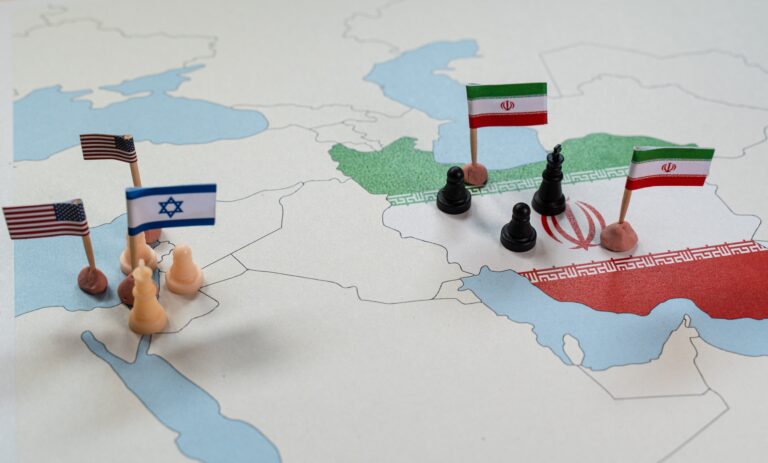
In addition to internal challenges, the government that will emerge from the 2025 elections will operate within a pressing external context that is growing heavier amid rapid regional transformations. The issue of weapons outside the framework of the state is no longer a purely Iraqi concern but has become part of Iraq’s position within a turbulent regional equation, in which mutual targeting is increasing and the potential for crises to spill over between different arenas is expanding.
In recent years, this issue has been managed within Iraq as part of the political system’s own settlements, through balances that prevent full-scale confrontation and allow the state to continue operating within its functional limits. However, the 2025 elections came at a moment when the external cost of this balance was escalating, amid rising international concern that Iraq could become an extended arena of friction, capable of generating security tensions that transcend borders and impose repercussions on Iraq’s economy and its financial and diplomatic relations.
The sensitivity of this issue is linked to the nature of the Iraqi economy itself. The state relies almost entirely on oil as its central resource and depends on the regular functioning of external financial channels to ensure currency stability and finance current spending. Therefore, any escalation linked to factions or any broad security breach could become an additional burden on a fragile financial environment already facing bureaucratic bloat and rising state operating costs.
As things stand, the issue of weapons in Iraq has become a risk factor that cannot be separated from political and economic stability, especially after the United States administration linked, before and after the elections, the future of relations with Baghdad to the issue of armed factions. This makes it more than a purely internal security matter; rather, it has become part of a broader equation involving sanctions, the financial sector, and dealings with the CBI, placing the next government before a challenge that exceeds its traditional capacity to maneuver.
The equation is further complicated by the intertwined relationship with Iran, where political and security balances have formed over the past two decades that render forces linked to Tehran part of the governing structure itself. Therefore, any future government will approach this issue from a position of managing balances rather than decisiveness, in a country that has no margin for open internal confrontation and no practical capacity to dismantle the structure that produced these weapons.
This reality became evident after the elections, with the emergence of public divisions within the armed sphere itself. Some factions, such as Asa’ib Ahl al-Haq and Kata’ib Imam Ali, spoke of their willingness to commit to a path of “weapons regulation” or to place it within legal arrangements, in the context of arrangements whose details have not been disclosed, in which the judiciary would intervene as a potential regulatory framework for reorganizing this file without resorting to confrontation.
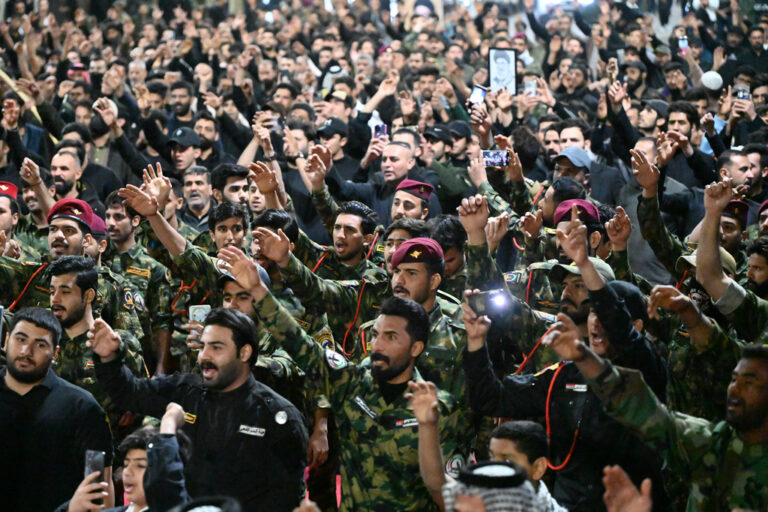
However, this trend did not evolve into a consensus position within the armed establishment. Instead, it was met with explicit rejection by other, more hardline forces, such as the Hezbollah Party and the Al-Nujaba Movement, which declared their adherence to arms and rejected any proposal that would lead to their disarmament or a reduction of their role.
Most significantly, one day after the “Coordination Framework” nominated Nouri al-Maliki, the Hezbollah Party signaled the possibility of engaging in any confrontation involving Iran in the event of a wider regional conflict.23In a statement distributed to the media on January 25, 2026, Hezbollah announced its commitment to arms, indicating its readiness to engage in any confrontation with Iran in the event of an expansion of the regional conflict. The statement was issued about 24 hours after the “Coordination Framework” announced the nomination of Nouri al-Maliki for prime minister. This was followed by statements affirming their readiness to fight if Tehran were subjected to any attack. All of this coincided with divisions within the factions themselves, as their parties exchanged indirect accusations of yielding to United States pressure or jeopardizing the internal situation.
In addition, regional and international considerations intersect in the factions’ issues, with deeply rooted domestic interests. These factions are not only linked to a regional axis but also possess administrative, security, and economic networks of influence within state institutions and society. Some have even penetrated financial extortion networks. To date, no clear vision has been presented for how to reorganize these networks or integrate them into new legal frameworks while stripping them of their weapons, which constitute their primary capital in managing the struggle for hegemony within Iraq.
Conclusions
The sixth elections in Iraq were less a moment of political transition than a moment of readjustment of the system to its familiar form. Centers of power within each component were reproduced, and the path that had opened in 2021 to emerging forces and independents was closed through an electoral law that favored the major blocs and a financial and regulatory environment that transformed competition into a race for resources rather than a contest of programs.
This has produced a less diverse parliament, more disciplined in its adherence to the logic of closed political balances, while “victory” has been transformed from a popular mandate for representatives into a bargaining asset within predetermined arenas, where the government is managed as a compromise between centers of power rather than as a unifying political project.
In the Iraqi experience, this formula produces short-term stability, but it does not produce institutional consolidation. The 2025 parliament, in its current composition, is more likely to pass legislation regulating the public sphere and expanding the powers of the authorities at a time when international oversight is declining, and internal pressure is shrinking.
However, the deeper challenge lies not only in politics but also in the economy, whose margin is narrowing. The rentier model, which for years allowed tensions to be absorbed through fiscal expansion, is facing increasing pressure to shift toward taxes, fees, and corrective measures that affect the middle and lower classes. The regime is testing its ability to manage potential austerity without possessing a fair tax contract or a productive economy capable of cushioning the shock. As the fiscal margin narrows, the cost of maintaining social stability – long based on spending at the expense of reform – rises.
Amid all this, the issue of weapons outside the framework of the state stands as the most sensitive determinant in the equation of the coming phase. Any attempt at decisive resolution risks internal confrontation, while any continuation of the status quo doubles the cost of external pressure, leaving the next government operating within a narrower margin than its predecessors.
The 2025 elections cemented a system that once again proved its ability to reproduce itself electorally, but allowed structural crises to accumulate like a snowball.
Endnotes
| ↑1 | Renad Mansour and Benedict Roben-de Cruz, The Sadrist Movement in Iraq: Between Protest Politics and Power Politics, Chatham House, October 2022. In June 2022, Sadrist leader Muqtada al-Sadr withdrew from the political process after pro-Iranian forces blocked his attempt to form a majority government. In the October 2021 elections, which followed the October 2019 protests, al-Sadr won 73 of the 329 parliamentary seats and was widely regarded as the overall winner. |
|---|---|
| ↑2 | Law Amending the Law on Elections for the Council of Representatives and Provincial and District Councils No. (12) of 2018 (Third Amendment), Iraqi Official Gazette, issue 4718, 8 May 2023. The amendment reinstated the modified Sainte-Laguë system (first divisor 1.7) in place of the multi-constituency and single-candidate system used in the 2021 elections. It also unified the legal framework governing elections for the Council of Representatives and provincial councils, with each province treated as a single electoral district. |
| ↑3 | Mansour and Roben-de Cruz, The Sadrist Movement in Iraq. The study analyzes the trajectory of the Sadrist movement after the 2021 elections, arguing that its parliamentary victory represented an attempt to reshape the balance of power within the Shiite political sphere through a strategy of “controlled destabilization.” The authors suggest that al-Sadr’s withdrawal from parliament in 2022 and the subsequent protests were extensions of this approach. |
| ↑4 | The Independence Party, led by former MP Sajad Salem, ran in the elections but failed to convert its media and parliamentary presence into sufficient votes to cross the threshold, ending up outside parliament. The same result applied to the Iraqi Communist Party, which fielded candidates with limited influence and won only a few thousand votes in Baghdad (around 2,600 votes for the Civil Democratic Alliance), figures that pale in comparison to the major lists that won hundreds of thousands of votes in the same constituency. Similarly, the National Civil Movement, led by former MP Shurooq al-Abbaji, participated without a broad electoral alliance, which led to its votes being scattered across multiple constituencies without translating into actual representation. The distribution of votes in Baghdad, Dhi Qar, and Nineveh shows that the total number of votes obtained by civil and independent lists—even when combined—amounted to thousands, but remained distributed among small entities without the ability to compete with organized lists that benefited from the amended Sainte-Laguë law and the accumulation of votes within constituencies. The only partial exception was the Faw-Zakho coalition, which received about 31,972 votes in Basra, enabling it to win two seats (Amer Abdul Jabbar and Sara al-Batat). However, this success does not reflect the rise of a civil force in the political or legal sense, but rather a local presence with a clear economic and service agenda, separate from the traditional civil reform discourse. Therefore, this victory does not represent a breakthrough capable of transforming into a national opposition bloc. |
| ↑5 | The “modified Sainte-Laguë” system is the mechanism adopted for the 2025 elections under Law No. (4) of 2023, whereby each governorate is considered a single electoral district. The mechanism for calculating seats is to divide the votes of the lists by the first divisor (1.7) and then by consecutive odd numbers (3, 5, 7…), with the results arranged in descending order for the distribution of seats. The aim of raising the divisor to 1.7 instead of 1 is to reduce the chances of small entities in favor of large coalitions, while maintaining the “open list” system, which awards seats to the candidates with the highest number of votes within a single list, taking into account the 25 percent quota for women. |
| ↑6 | A number of MPs have been aware of the implications of this equation since the previous parliamentary session, with some moving from forces that emerged from the October protests to traditional forces, such as the Reconstruction and Development Alliance, as did Nour Nafeh, or Nisan al-Zayer, who joined the State of Law Coalition led by former Prime Minister Nouri al-Maliki. However, they were unable to win enough votes to secure seats, and their loss was interpreted as a punitive vote resulting from their move to the camp of the dominant forces. |
| ↑7 | Mangoush Dagher, “Don’t Be Fooled by the Official Turnout Figures: An Analysis of the Iraqi Elections in Numbers”, Washington Institute for Near East Policy, 30 December 2025. In this article, the author analyzes the official turnout figures for the 2025 Iraqi elections, arguing that actual participation amounted to about 41% of Iraqis aged 18 and over rather than the officially announced 56%. The analysis attributes this gap to the decline in the number of actual voters to 21.4 million, compared with 22.1 million in 2021, despite more than four million new voters reaching voting age, which coincided with a drop in the proportion of citizens obtaining biometric voter cards to approximately 73%. |
| ↑8 | In the Iraqi electoral context, “pillars” refer to individuals who act as intermediaries between candidates and voters or influential social groups. Their role is to secure electoral support by negotiating agreements with individuals, tribes, or professional and social networks in exchange for various incentives, including financial payments, promises of government employment, service benefits, or other future privileges. |
| ↑9 | Vote buying was widely reported in residential neighborhoods during the 2025 elections. According to accounts from families and acquaintances of the authors in different areas of Baghdad, voters were offered sums ranging from US0 to US0 in exchange for voting for specific candidates, depending on the area and social background. In many cases, the arrangement involved swearing an oath on the Quran in front of a “pillar” to confirm that the vote had been cast as agreed before the payment was delivered. |
| ↑10 | Unofficial estimates of total election spending ranged between .5 billion and billion. In a statement on November 16, 2025, economist Manar al-Obeidi, president of the Iraq Future Foundation, estimated that spending would reach around 2–3 trillion dinars (approximately .5–2 billion at the current exchange rate). A press report published by the Nirij website on November 7, 2025, based on interviews with economists, estimated total election spending at around billion. Government Board of Directors, |
| ↑11 | The structure of political financing in Iraq relies largely on cash transactions outside the formal banking system, making it institutionally difficult to track the flow of funds or verify the sources of campaign financing. This practice circumvents party regulations requiring transparency, as sales, purchases, and logistical campaign contracts are conducted outside formal oversight, turning electoral spending into a “black box” that is difficult to monitor or audit. |
| ↑12 | Data from the Iraqi Ministry of Planning and tables attached to the 2025 budget indicate that the number of permanent employees in Iraq is approximately 4.1 million, while the total number of people receiving salaries from the state—including retirees, contractors, and those covered by the social protection network—exceeds 9 million. Researchers in Iraqi political economy agree that this employment inflation is a direct result of the policy of “political patronage,” whereby public office is used as a tool to attract electoral loyalties. Instead of merit-based criteria, traditional parties rely on promises of appointments, permanent contracts, and wages before each election cycle to secure the votes of broad social groups and their families. This has turned the public budget into a consumptive “salary mass” that restricts development opportunities in exchange for continued party dominance. |
| ↑13 | After the October 2021 elections, the Sadrist Movement won 73 out of 329 seats, becoming the largest bloc in parliament. The movement sought to form a “national majority” government with its Sunni (Mohammed al-Halbousi) and Kurdish (Masoud Barzani) allies in order to break the logic of consensus and quotas, but it was met with the use of the “coordination framework” for the “blocking third” mechanism, leading to a long political deadlock. In June 2022, al-Sadr announced the resignation of his deputies from parliament, and the conflict moved to the streets with the storming of the Green Zone and the rejection of Mohammed Shia al-Sudani’s nomination for prime minister. The crisis culminated in armed clashes on August 29–30, 2022, before al-Sadr intervened to stop them and announced his retirement from political life. The crisis ended with the reproduction of power in a new consensual formula led by the “coordination framework,” with the Sadrist movement remaining active outside political institutions. |
| ↑14 | In a statement made during the “Dialogue Forum” on January 25, 2026, Hammam Hammoudi, one of the leaders of the “Coordination Framework,” said that the framework is moving from a “Council of Elders” to a “Government Board of Directors,” referring to the transition of Shiite leaders from an advisory role to one more closely linked to the work of the executive branch, a description that sparked debate about the nature of the relationship between party frameworks and the constitutional structure of the state. |
| ↑15 | The “Coordination Framework” won approximately 187 seats in the 2025 elections, distributed among its most prominent components as follows: the Reconstruction and Development Alliance (46 seats), the State of Law Coalition (29), the Sadikoun Bloc (27), the State Forces Alliance (19), and the Badr Organization (18), in addition to seats for other allied forces. |
| ↑16 | Interview conducted in Baghdad with a former security official who currently serves as an unpaid advisor to certain Iraqi political forces, January 15, 2025. |
| ↑17 | Muthanna al-Samarrai, head of the Azm Alliance, is considered one of the most prominent political allies of the “coordination framework” within the Sunni component, as he operates politically within the margins allowed by the majority forces to secure balances in the liberated provinces. This pattern of coordination also applies to other Sunni political figures in Nineveh (Thabit al-Abbasi), Salah al-Din (Ahmad al-Jubouri – Abu Mazen), and Anbar (Bayt al-Karbouli), who found in direct coordination with the Framework a means to strengthen their local influence and consolidate their gains away from the traditional Sunni-Sunni axes of competition, making them a political backing for the Framework forces within the parliament that emerged from the November 2025 elections. |
| ↑18 | Two telephone interviews with a leader and political advisor in the National Political Council (Sunni), who requested anonymity, 14 January 2026 and 18 January 2026. |
| ↑19 | Administratively, the Kurdistan Region of Iraq consists of four main governorates: Erbil (the region’s capital), Sulaymaniyah, Dohuk, and Halabja, which was established as a governorate in 2014. The region is governed by the Kurdistan Regional Government and a local parliament, and is overseen by the Presidency of the Region. The political scene is dominated by two main parties: the Kurdistan Democratic Party (KDP), led by Masoud Barzani, and the Patriotic Union of Kurdistan (PUK), which is traditionally based in Sulaymaniyah and run by the Talabani family. Administrative and political influence within the region is divided between the two parties on a clear geographical basis. The KDP dominates the administration of Erbil and Dohuk and most of the region’s sovereign institutions, including the presidency and security agencies in the western and northern areas. while the Patriotic Union of Kurdistan’s influence is concentrated in Sulaymaniyah and Halabja, where it runs a parallel security and administrative network in the east, with a presence in some parts of the regional government and federal representation in Baghdad through the office of the president and a number of federal ministries under the quota system. |
| ↑20 | On August 22, 2025, Lahur Sheikh Janki, former leader of the Patriotic Union of Kurdistan and nephew of Jalal Talabani, was arrested in Sulaymaniyah on the basis of a judicial warrant, against the backdrop of a political conflict with Bafel Talabani that had been ongoing since 2021. which ended with his dismissal from the party leadership and his subsequent founding of the People’s Front party. |
| ↑21 | With a population of nearly 46 million and approximately 4.1 million government employees, rentier spending is no longer able to cover the state’s basic expenses and employee salaries. It may shift from being a tool for absorbing social anger to a financial burden that threatens the stability of the political system, especially given the limited ability of job promises to raise voter turnout, which has remained relatively low. |
| ↑22 | For about two months, Iraq has been witnessing a rising wave of sectoral protests, involving graduates of the medical sector, university and higher education employees, and other professional groups, in protest against government decisions to cut jobs or allowances or to rearrange financial privileges. These protests are likely to spread as the impact of the cuts or new tax policies widens, as seen in the protests by merchants and goldsmiths following the implementation of customs tariffs, and in the strikes by professors and university employees after the cancellation of university service allowances, which led to salary reductions and prompted affiliates at more than one university to declare a strike and take to the streets in open demonstrations. |
| ↑23 | In a statement distributed to the media on January 25, 2026, Hezbollah announced its commitment to arms, indicating its readiness to engage in any confrontation with Iran in the event of an expansion of the regional conflict. The statement was issued about 24 hours after the “Coordination Framework” announced the nomination of Nouri al-Maliki for prime minister. |