







The Middle East is living through the exhaustion of an old security order without yet having built a viable replacement. In recent years, Arab states pursued survival through separate bargains: some relied on U.S. protection, some normalized with Israel, some hedged between Washington and Iran, and others, like Syria under Assad, sought alliances with Russia. But this mix of external dependence, competitive alignments, and fragmented regional diplomacy has failed to produce either security or stability. It has instead left the region more militarized, more economically disjointed, and more vulnerable to coercion from both state and non-state actors. In 2024, military spending in the Middle East reached an estimated $243 billion, up 15 percent in a single year, even as the region remained among the least integrated economically and one of the most affected by displacement in the world.
A new regional order is therefore needed: not an offensive alliance, and not a revival of rhetorical Arabism that has failed the region’s peoples, but a practical regional security doctrine built around the defense of national sovereignty, territorial integrity, and economic well-being. Such a doctrine should be developed by the principal Arab states most directly affected by today’s disorder – the GCC countries, Syria, Lebanon, Jordan, and Egypt – working in coordination with Türkiye. Other Arab countries, such as Iraq, Libya, Yemen, and Sudan, could gradually be integrated if this can help them achieve a durable and functioning political settlement. Türkiye is not an Arab state, but it is now too deeply implicated in the security and economy of Syria, Iraq, the Eastern Mediterranean, and the wider regional balance to be treated as external to any new architecture. The purpose of this pact would not be to initiate confrontation, but to contain it: to oppose Israeli military aggressiveness and impunity, stop Iranian externalization strategies, reduce intra-regional rivalries, support a just outcome for Palestinians, and give the region greater collective agency in a world increasingly shaped by U.S.-China competition and a broader drift toward multipolarity.
Yet any new regional order must also confront a deeper problem that interstate diplomacy alone cannot address: the crisis of legitimacy facing many Arab states in the region. Real stability cannot rest only on new alignments among governments or improved deterrence against Israel and Iran. It also requires more legitimate representation, renewed social contracts, and forms of governance capable of delivering dignity, protection, and economic security to citizens. A more protective regional state system is therefore not an end in itself, but a necessary condition for allowing societies to chart their own paths. In that sense, a new regional pact will help create space for states to recover agency, but it will only endure if that external rebalancing is matched by more credible internal political orders.
The case for such a rethinking rests on three propositions. First, the current regional order has failed the Arab states. This failure was already obvious for countries neighboring Israel, but it has now become clear that even the GCC countries will not be spared. Second, a more coherent regional pact is possible if it is anchored in deterrence, non-aggression, and economic cooperation rather than ideological bloc politics. Third, the path to such a pact will be difficult, but the costs of preserving the status quo are now higher than the risks of trying to change it.
I. The Failure of the Current Regional Order
The regional order that took shape over the last decade has had three main pillars. The first has been a U.S.-Israeli-dominated order in which strategic primacy is granted to Israel and regional diplomacy is organized around accommodating its interests and aggressive ambitions. The Abraham Accords were the clearest expression of this approach. Their premise was that normalization, trade, technology, and intelligence cooperation could stabilize the region while bypassing the Palestinian question. The UAE was the leading Arab proponent of this model, presenting the Accords as a transformative framework for expanded trade and commerce. The apex of this approach was probably the 2023 address of Benjamin Netanyahu to the UN General Assembly, where he lifted a map of his “new Middle East” that erased Palestine completely and sidelined Lebanon, Syria, Oman, Yemen, and Iraq.
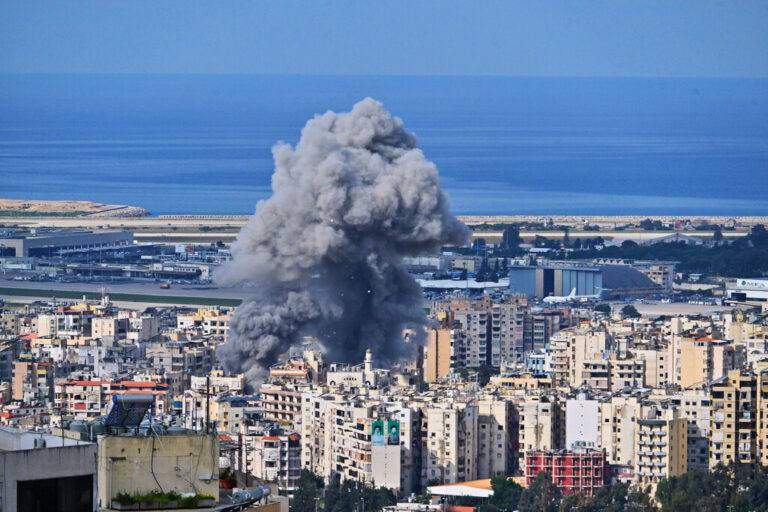
That order has not only failed to produce peace; it has emboldened Israel to seek to impose facts by brute and unlawful force with dire consequences for all its immediate neighbors. The genocide in Gaza, and the acceleration of settlement expansion and annexationist policies in the West Bank, have not only threatened the existence of Palestinians as a people, they have also threatened Jordan’s vital interest in preserving the territorial basis for a Palestinian state and endangered Egyptian national security by seeking to forcibly and permanently expel Gazans to Sinai. Lebanon has once again paid the price of repeated attacks on its territory, with Israel committing more than 10,000 air and ground violations of the November 2024 Lebanon ceasefire agreement in a climate of total impunity. Syria, meanwhile, has been subjected to further Israeli territorial invasion and recurring airstrikes, including the destruction of key army assets, attacks on Damascus, and explicit warnings that Syrian forces would not be permitted to deploy south of the capital without Israeli acquiescence.
This “new Middle East” was actually built on a geography of exclusion. The economic imagination behind it was one of corridors linking the Gulf, Israel, and Europe, with Tel Aviv and Dubai as the main beneficiaries, while much of the Levant was treated as a security problem to be bypassed, controlled, and bombed from the air, rather than rebuilt. For the so-called flyover states – Palestine, Lebanon, Syria, and to some extent Jordan – this was always a broken model.
The second pillar of the current order has been intra-regional competition. The post-Arab Spring saw rivalry pitting Saudi Arabia, the UAE, and Egypt against Türkiye and Qatar across a number of proxy arenas, leading up to a 3-year boycott of Qatar by its neighbors. Yemen, Libya, and Sudan continue to suffer from this regional competition and fragmentation.
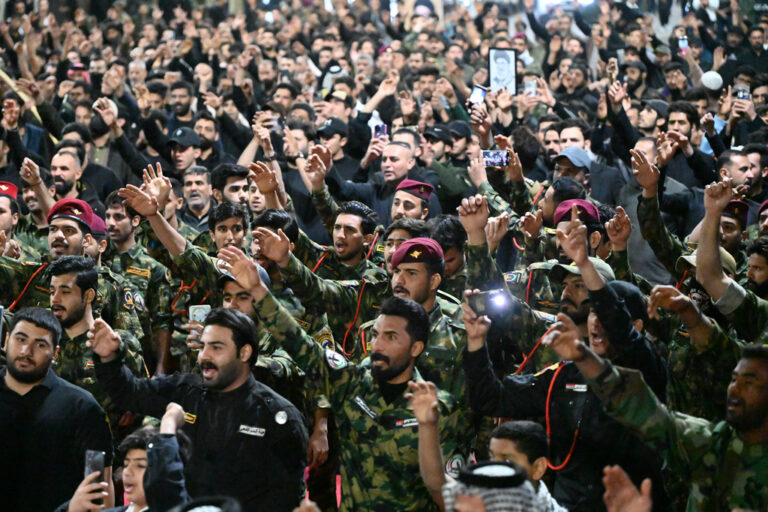
The third pillar has been Iran’s own pursuit of regional influence, built not through formal alliances among states but through non-state armed actors. Iranian officials even boasted in 2015 that “three Arab capitals – Baghdad, Damascus, and Beirut – had ended up in the hands of Iran,” with Sanaa on its way to their orbit. While Iran’s reliance on non-state actors to expand its influence came at a relatively low cost for Tehran, it fundamentally weakened the impacted Arab states, leading them into cycles of insecurity and weak governance that continue to cripple them. Hezbollah, the Houthis, and Iranian-aligned Iraqi factions have not only extended Iran’s influence in their countries, they have also served as instruments through which Iran can project leverage regionally and threaten the weak points of the regional and international system: energy routes, shipping lanes, and the infrastructural vulnerabilities of Gulf economies.
The failure of this regional order is stark. The Middle East has never spent so much on defense, and yet it has rarely felt so insecure and fragile. SIPRI’s latest figures show a major regional surge in military expenditure in 2024, including steep increases by Israel and Turkiye as well as persistently high spending by the Gulf. At the same time, the region remains badly under-integrated economically, with IMF data showing that intra-regional trade in MENA represented only 17.8 percent of total trade in 2021, despite geographic proximity and a common language across much of the region. UN ESCWA has more recently stressed that unresolved structural weaknesses continue to leave Arab economies vulnerable to external shocks, while inadequate supply chains and weak regional coordination expose the fragility of current trade and food-security patterns. But more importantly, misery and human suffering are at an all-time high for the region, with UNHCR reporting that by mid-2025, more than 17.8 million people remained forcibly displaced or stateless across the Middle East and North Africa.
The failure of the current order is not only geopolitical. It is also domestic. Across much of the region, weak legitimacy has pushed regimes to seek support from outside powers not simply to defend the state from external threats, but to secure themselves against their own populations. The Assad regime’s survival depended heavily on Russian and Iranian intervention against a mass uprising, while Mubarak’s Egypt relied for decades on U.S. backing as a source of regime stability amid growing domestic discontent. In this sense, external dependence has been both a symptom of and a consequence of internal fragility and weak domestic legitimacy. Accordingly, any effort for a new regional order that stabilizes borders while leaving states internally hollow, repressive, distrusted, and unable to provide just social outcomes will remain fundamentally fragile, and such weakness will become an invitation to renewed outside interference.
Even the GCC states, which long believed they could hedge, diversify, and buy security, now face the limits of the old system. The September 2025 Israeli missile strike on Doha was already a turning point as the attack breached established understandings about regional security and the U.S. umbrella, amplifying the fact that threats to the Gulf can emanate not only from Iran but also from Israel. The subsequent decision of the U.S. and Israel to attack Iran despite Gulf countries expressing reservations, and the limited support received from the U.S. when Iran began attacking them, carries a stark lesson: Gulf alliances with the US and Israel do not eliminate strategic vulnerability. They may, in fact, generate new forms of vulnerabilities.
II. The Potential Pillars of a New Regional Pact
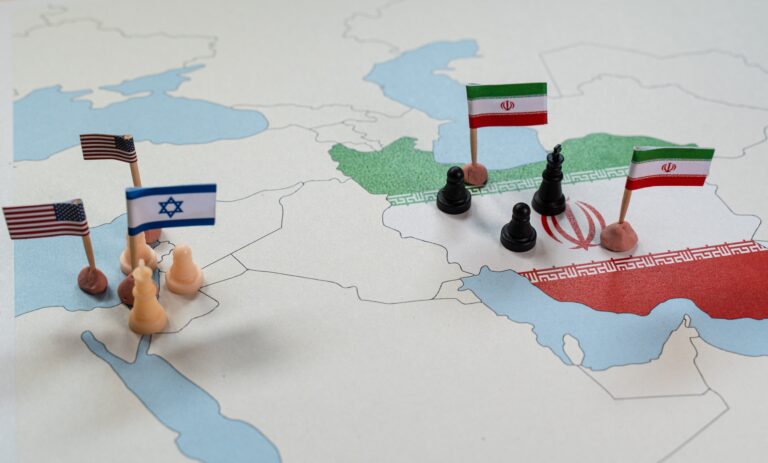
A new regional order should begin from a sober premise: the region faces threats from both Israel and Iran, but those threats are not identical and therefore cannot be addressed through identical tools. The Israeli project today is one of military hegemony, territorial expansion and encroachment, and the attempt to reorder the region by force, notably by ending Palestinian claims to statehood and potentially annexing parts of Lebanon and Syria. The Iranian approach is the power of asymmetric disruption, proxy warfare, and the externalization of domestic and strategic pressure. The new regional pact must therefore be defensive, context-specific, and nuanced.
Its first pillar should be collective opposition to Israeli aggression. This means moving beyond issuing condemnations to rebuilding a regional position around a principle that Arab states themselves once articulated clearly but since diluted through the Abraham Accords: the 2002 Arab Peace Initiative. That initiative offered Israel full normalization in exchange for withdrawal from the territories occupied in 1967, a just settlement of the Palestinian refugee question, and the establishment of a Palestinian state with East Jerusalem as its capital. It remains the best baseline available. The point is not to repeat the 2002 formula as a mere ritual. It is to recover the logic that normalization should follow a just settlement, not replace it, especially since this principle of land for peace has only become more urgent as Israel is expanding its territorial ambitions to Syria and Lebanon. This would mean a stronger collective effort by the Arab countries in support of the ongoing Saudi-EU initiative on Palestine (which led to the creation of Global Alliance for the Implementation of the Two-State Solution) but also support for Lebanon and Syria in their efforts to roll back Israeli invasion of their territory, including proposing security arrangements to ensure a durable and sustainable ceasefire that would include stopping Israeli repeated violations of these two countries’ sovereignty.
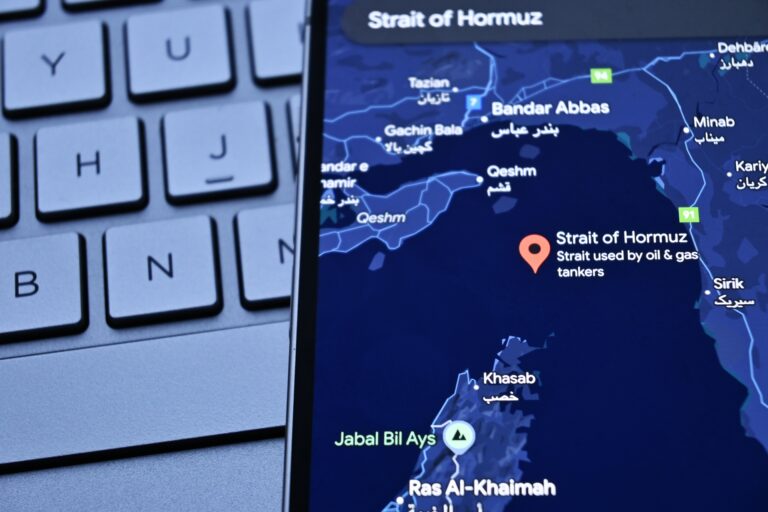
The second pillar should be a regional doctrine for dealing with a wounded but likely to remain aggressive Iran. Here, the challenge is different. While the current conflict trajectory is not yet certain, the Iranian regime appears to be on track to survive the current attacks by the US and Israel but will likely emerge sanctioned and domestically insecure. That creates a strong incentive for Tehran to externalize pressure rather than absorb it internally. Iran’s new Supreme Leader, Mojtaba Khamenei, said the Strait of Hormuz should remain shut as a tool of pressure and called for U.S. bases in the region to be closed, warning they would be targeted. The Gulf states and other Arab countries like Iraq, Lebanon, and Yemen, know that they remain the pressure points through which Iran can threaten the wider regional and international system.
The answer, however, should not be an open-ended hostility towards Iran, as Gulf states have wisely recognized so far. A better strategy would be to seek a formal pact of non-aggression with Iran, centered on non-interference, maritime de-escalation, protection of key infrastructure (notably energy, transport, and desalination), and the renunciation of proxy attacks by non-state actors. Such a framework would not eliminate conflict nor address the issue of the presence of U.S. bases in many Arab countries, but it would create a more robust channel to de-escalate when new sources of tension emerge.
The third pillar should be to start developing the capacity to negotiate as a regional bloc to strengthen the region’s bargaining position in a world of competing great powers. The post-Cold War order is fading, the U.S. is no longer a guarantor of stability, and rising powers across the board are expanding their maneuvering space in the current interregnum. Arab countries, at least those with strong states, have already adopted their behavior: they try to hedge between Washington and Beijing, develop strong economic ties with India while maintaining strategic ties to Pakistan, manage Russia selectively, and diversify defense and technology partnerships. But hedging without collective coordination risks reproducing fragmentation or at least weakening the bargaining position of Arab states. A new pact should therefore include regular strategic consultation on extra-regional alignments and fora for discussing collaboration on strategic challenges facing the region. The issue is not choosing between the United States and China but rather ensuring that the region is not forced to follow the priorities of outside powers.
A viable pact would also need a real economic and environmental dimension. It should include a regional agenda on energy interconnection, reconstruction finance for the Levant, and trade integration linking the Gulf to Jordan, Syria, Lebanon, Egypt, and Türkiye. It should treat environmental issues, including water security and food sovereignty, as core strategic and existential questions. The Gulf’s dependence on desalination is no longer a hypothetical risk; it is a front-line strategic vulnerability.
Ultimately, such a pact should not be approached as a purely militaristic endeavor. On the contrary, its credibility would come from combining hard and soft components: an Arab-Turkish air and missile defense dialogue; joint maritime monitoring in the Gulf and Red Sea; coordinated red lines against attacks on civilians and civilian infrastructure; joint initiatives for the displaced; new regional fund for environmental adaptation; Arab and Turkish support for the stabilization and rebuilding of Syria, Lebanon and Gaza; and a renewed regional push to end the wars in Yemen, Libya, and Sudan. The purpose would be to narrow the zones in which external actors and non-state militias can exploit fragmentation.
III. How to Get There
This is the hardest part, because the ingredients of a new order exist, but so do the actors and habits that have prevented one so far. Saudi-Turkish distrust has not disappeared. Egyptian-Turkish normalization is still relatively recent. Saudi-Emirati rivalry remains acute. Syria is very fragile. Lebanon’s state remains extremely weak. The GCC itself continues to suffer from internal rivalries that have limited its capacity to collaborate strategically. And perhaps most importantly, Washington and Tel Aviv will likely view any regional framework that is not subordinated to their preferences as a threat, even if the framework is articulated in defensive terms.
Yet there are also signs of maturation. Erdogan’s 2024 visit to Egypt marked the end of a decade of bitter estrangement and was explicitly framed by both sides as a turning point in bilateral relations. In November 2025, the Turkish and Egyptian foreign ministers issued a joint statement institutionalizing strategic coordination. Erdogan reportedly told Mohammed bin Salman in February 2026 that Ankara would continue supporting stability in Syria and work in cooperation with Saudi Arabia there. The GCC’s own record since the Al-Ula declaration in January 2021, when the GCC states plus Egypt ended the rift for Qatar, has shown that even major fractures can be politically contained when leaders decide the alternative is too costly. And finally, despite decades of mistrust, Lebanon and Syria are showing some encouraging signs towards a more cooperative and mature relationship.
The most realistic pathway is not a grand treaty at the outset, but a phased process. It could begin with a core group of countries, with others joining progressively as their situation allows. The first phase should be functional rather than declaratory: a regional security forum on air defense, maritime security, and civilian and critical infrastructure protection. The second phase should focus on conflict files where coordination is long overdue to deter further Israeli aggression (Syria, Lebanon, and Palestine) or to stop harmful regional competition (Sudan, Yemen, and Libya). The third should institutionalize an economic pillar through reconstruction financing, trade facilitation, and infrastructure connectivity that includes rather than bypasses the Levant.
One major obstacle will be foreign pressure from the U.S. and Israel. Another will be the lack of political trust and the temptation of each state to keep playing its own balancing game, as we have seen in Yemen or Sudan. But there is also a deeper obstacle: many states in the region remain brittle, with weak internal legitimacy, fragile institutions, and strained social contracts. That fragility makes strategic coordination harder, because governments that feel insecure at home often prefer short-term external bargains over longer-term regional frameworks. Any new pact will therefore have to be accompanied by efforts to strengthen state legitimacy, inclusivity, and responsiveness at home.
But the hope is that after years in which governments in the region assumed they could manage insecurity through bilateral ties to Washington, selective normalization with Israel, or ad hoc understandings with Tehran, they have now reached a moment of realization that even the most powerful among themselves remain, in crucial moments, second-tier partners whose security and priorities can be traded off by larger powers. A more coordinated regional doctrine grounded in stronger domestic legitimacy and better regional coordination would not eliminate dependence overnight, but it would address some of the asymmetry through which outside actors currently shape the region.
Conclusion
This is a moment of profound disruption, and it demands equally profound rethinking. The region has absorbed extraordinary human, economic, and environmental costs over the last two decades: the U.S. invasion of Iraq; prolonged war in Syria; state collapse in parts of Libya, Yemen, and Sudan; genocide in Gaza; repeated wars in Lebanon; mass displacement across multiple fronts, and repeated bouts of insecurity in the Gulf and Red Sea. The old order has not contained these crises. In most respects, it has deepened them.
For too long, Arab states have tried to survive by outsourcing their security: to Washington, through tacit understandings with Israel, or temporary de-escalations or accommodations with Iran. That logic was already broken for many countries in the region, but it has now suffered a full breakdown. The question is whether the region can articulate and produce a more serious alternative before it is reorganized again by others.
But it would be equally mistaken to imagine that a new pact at the level of the state system is sufficient on its own. The region does not only need a new balance among states; it also needs states that are more legitimate, inclusive, and capable of delivering security and well-being to their populations. Without that, even a more autonomous regional framework would risk reproducing the old fragilities. The value of a new regional order, then, is not simply that it may make the region safer for states. It is that it could create the political and strategic space for better state-society relations, more credible governance, and an appropriate conception of human security that responds to local needs.
It is increasingly clear through interactions in the streets or in conference halls that there is a growing recognition – among both elites and the general public – that the present order is not protecting the region’s core interests. The challenge now is to turn that recognition into a project: one that defends sovereignty, resists external coercion, and begins to rebuild the relationship between states and societies on firmer ground.