









Executive Summary
Yemen’s energy sector is currently facing a severe crisis. For millions of Yemenis, accessing reliable electricity is a daily struggle, characterized by prolonged blackouts, limited fuel supplies, and deteriorating infrastructure, which in turn exacerbate the country’s humanitarian conditions. This policy brief underscores the importance of a just and conflict-sensitive energy transition in Yemen, addressing the interconnected challenges of conflict, economic instability, and energy poverty. It emphasizes the urgent need for an energy transition that enhances energy access, promotes decarbonization, and supports peace building and socio-economic recovery.
The brief outlines the current energy landscape in Yemen, identifies critical policy gaps, and highlights both top-down and grassroots opportunities for sustainable energy development. It acknowledges the significant challenges in the energy sector, including its fragmentation, weak institutional capacity, and limited resources, further compounded by the lack of coordinated governance structures since the war, and the rise of multiple centers of power, including the internationally recognized government, the Houthi group (Ansar Allah), and other armed groups.
Despite these challenges, the study identifies key opportunities for transformative action, particularly at the community and local levels. Experience in Yemen shows that interventions in rural areas encounter fewer technical, political, and financial challenges.1John M. Cohen et al., “Development from Below: Local Development Associations in the Yemen Arab Republic,” World Development 9, no. 11 (1981): 1039–61, https://doi.org/10.1016/0305-750X(81)90019-X; Benoit Challand and Joshua Rogers, “The Political Economy of Local Governance in Yemen: Past and Present,” Contemporary Arab Affairs 13, no. 4 (2020): 45–69, https://doi.org/10.1525/caa.2020.13.4.45. Rural areas are remote from power and influence centers, are home to the majority of the country’s population, and are largely disconnected from public energy networks. They also offer a more conducive environment for piloting energy projects compared to urban centers, providing successful examples that help build momentum for broader reform.
To guide Yemen’s energy transition, the development of a comprehensive, evidence-based framework is essential. This framework should prioritize components such as equitable access to energy, institutional capacity, and economic recovery, all of which should be analyzed through a conflict-sensitive lens. It must also ensure meaningful participation from marginalized groups, particularly women and youth, in both policy and implementation processes.
Realizing these objectives will also require coordinated action from multiple actors. The government should reform energy subsidies in a phased and socially sensitive manner, while creating incentives for decentralized and community-led energy projects. International and regional partners should adopt flexible and conflict-sensitive funding mechanisms and promote energy as a tool for peace building by supporting collaboration across conflict divides. Civil society actors, meanwhile, can play a vital role by facilitating community participation and raising public awareness on energy–climate–justice issues, with a strong emphasis on the needs and voices of rural populations. Finally, the private sector should actively engage in developing technical standards and aligning business models with conflict-sensitive approaches that enhance equitable access for underserved and remote communities.
Introduction
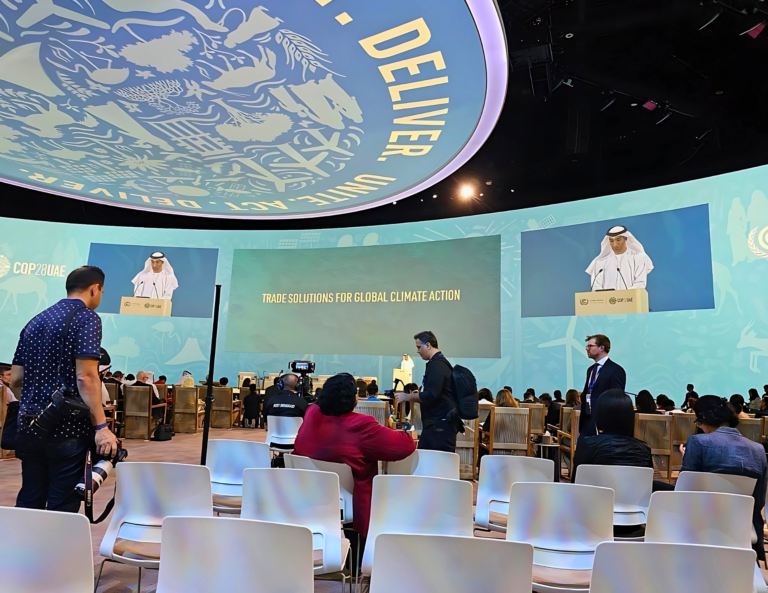
The Paris Agreement, adopted in 2015, set the goal of limiting global temperature rise to 1.5 degrees Celsius above pre-industrial levels. Numerous countries, including Yemen,2Yemen signed the Paris Agreement in September 2016 but has not ratified it, a requisite step to make it legally binding under national law. See: https://unfccc.int/node/91445 endorsed this agreement, committing to Nationally Determined Contributions (NDCs) aimed at reducing global carbon emissions. It was not until the 2022 United Nations Climate Change Conference (COP27), held in Sharm El-Sheikh, Egypt, that the concept of a “just transition” was explicitly incorporated into the final declaration, highlighting the need to balance climate action with social and economic equity.3“COP27 Reaches Breakthrough Agreement on New ‘Loss and Damage’ Fund for Vulnerable Countries,” UN Climate Change News, November 20, 2022, https://unfccc.int/news/cop27-reaches-breakthrough-agreement-on-new-loss-and-damage-fund-for-vulnerable-countries At the subsequent COP28, hosted by the United Arab Emirates in December 2023, the focus shifted toward the urgency of climate action. The final declaration emphasized the urgent need to transition away from fossil fuels and ensure a just, orderly, and equitable transition to sustainable energy systems. 4“COP28 Agreement Signals ‘Beginning of the End’ of the Fossil Fuel Era,” UN Climate Change News, December 13, 2023, https://unfccc.int/news/cop28-agreement-signals-beginning-of-the-end-of-the-fossil-fuel-era
The Intergovernmental Panel on Climate Change defines a just transition as “a set of principles, processes, and practices that aim to ensure that no people, workers, places, sectors, countries, or regions are left behind in the transition from a high-carbon to a low-carbon economy.”5Qaraman Hasan, Raphael J. Heffron, Soran Mohtadi, Brian D. Blankenship, Indra Overland, Johannes Urpelainen, “Stepping into the just transition journey: The energy transition in petrostates,” Energy Research & Social Science, Volume 113 (July 2024), p.2, https://doi.org/10.1016/j.erss.2024.103553 Across the globe, countries are faced with the challenge of achieving an energy transition that addresses two critical challenges: climate change and economic development.6Xinxin Wang and Kevin Lo, “Just Transition: A Conceptual Review,” Energy Research & Social Science, Volume 82 (December 2021), https://doi.org/10.1016/j.erss.2021.102291
Achieving a just environmental transition in conflict-affected or fragile settings, such as Yemen, demands approaches that balance urgent needs with long-term justice and sustainability. Key guiding principles include inclusive and participatory governance7In the current context of conflict and political fragmentation in Yemen, the entry point of participatory governance could be through local councils and organizations, civil society, private sector actors, and others. that ensures all stakeholders, especially marginalized and conflict-affected groups, are involved in decision-making;8“What Do Just Energy Transition Processes Look Like in Practice? Five Case Studies from Asia and South America,” Just Energy Transition in Coal Regions Knowledge Hub, International Institute for Sustainable Development, August 16, 2024, https://www.jetknowledge.org/insights/giz-what-do-just-energy-transition-processes-look-like-in-practice-five-case-studies-asia-south-america/ equitable distribution of both the benefits and burdens of transition;9“Just Transitions: Conceptual Tools for Policy Reflection,” Netherlands Environmental Assessment Agency, Report no. 5599, December 11, 2024, https://www.pbl.nl/system/files/document/2024-12/pbl-2024-just-transitions-conceptual-tools-for-policy-reflection-5599.pdf conflict-sensitive resource mobilization, such as redirecting international and climate funding toward green sectors while addressing systemic inequalities; decentralized renewable energy systems; and adaptable policies sensitive to local dynamics.10“What Do Just Energy Transition Processes Look Like in Practice? Five Case Studies from Asia and South America,” Just Energy Transition in Coal Regions Knowledge Hub, International Institute for Sustainable Development, August 16, 2024, https://www.jetknowledge.org/insights/giz-what-do-just-energy-transition-processes-look-like-in-practice-five-case-studies-asia-south-america/ Strengthening institutions and legal frameworks, addressing harms from past wars and mismanagement, and empowering local communities11“Green Economy: Just Transitions in Fragile States – The Case of Ukraine,” Beyond Group Impact Blog, February 3, 2025, https://beyondgroupconsulting.com/impact-blog/green-economy-in-ukraine are fundamental principles that should guide policymakers and practitioners aiming to steer environmental transitions toward equity and stability in the world’s most challenging contexts.
Against this backdrop, this policy brief marks an initial step toward developing a comprehensive framework for Yemen’s energy transition. Grounded in equity, decentralization, multi-sectoral integration, and participatory decision-making, the proposed approach aims to address critical policy gaps and establish the conceptual and analytical foundations for a broader, collaborative effort to support the creation of a just and conflict-sensitive energy transition framework that is applicable at both the policy and grassroots levels.
The brief draws on a multi-method qualitative research approach. The analysis is informed by primary data collected through key informant interviews (KIIs), focus group discussions,12Based on the Yemen Energy Charter and insights from key informant interviews (KIIs) conducted as part of this study between November 2024 and June 2025. and outcomes from the third Yemen International Forum.13“Yemen International Forum 2025 Report: Dialogue for a Stable Yemen and a Secure Region,” Sana’a Center for Strategic Studies, August 4, 2025, https://sanaacenter.org/publications/main-publications/25152 It also incorporates a range of secondary sources, including official and policy documents, conflict datasets, economic indicators, and energy sector statistics. The researchers have additionally reviewed existing governance frameworks, drawing on data from sources such as the Green Climate Fund (GCF) Readiness and Preparatory Support Program, International Renewable Energy Agency (IRENA) reports, the Ministry of Electricity and Energy, and the UN.
Endnotes
| ↑1 | John M. Cohen et al., “Development from Below: Local Development Associations in the Yemen Arab Republic,” World Development 9, no. 11 (1981): 1039–61, https://doi.org/10.1016/0305-750X(81)90019-X; Benoit Challand and Joshua Rogers, “The Political Economy of Local Governance in Yemen: Past and Present,” Contemporary Arab Affairs 13, no. 4 (2020): 45–69, https://doi.org/10.1525/caa.2020.13.4.45. |
|---|---|
| ↑2 | Yemen signed the Paris Agreement in September 2016 but has not ratified it, a requisite step to make it legally binding under national law. See: https://unfccc.int/node/91445 |
| ↑3 | “COP27 Reaches Breakthrough Agreement on New ‘Loss and Damage’ Fund for Vulnerable Countries,” UN Climate Change News, November 20, 2022, https://unfccc.int/news/cop27-reaches-breakthrough-agreement-on-new-loss-and-damage-fund-for-vulnerable-countries |
| ↑4 | “COP28 Agreement Signals ‘Beginning of the End’ of the Fossil Fuel Era,” UN Climate Change News, December 13, 2023, https://unfccc.int/news/cop28-agreement-signals-beginning-of-the-end-of-the-fossil-fuel-era |
| ↑5 | Qaraman Hasan, Raphael J. Heffron, Soran Mohtadi, Brian D. Blankenship, Indra Overland, Johannes Urpelainen, “Stepping into the just transition journey: The energy transition in petrostates,” Energy Research & Social Science, Volume 113 (July 2024), p.2, https://doi.org/10.1016/j.erss.2024.103553 |
| ↑6 | Xinxin Wang and Kevin Lo, “Just Transition: A Conceptual Review,” Energy Research & Social Science, Volume 82 (December 2021), https://doi.org/10.1016/j.erss.2021.102291 |
| ↑7 | In the current context of conflict and political fragmentation in Yemen, the entry point of participatory governance could be through local councils and organizations, civil society, private sector actors, and others. |
| ↑8 | “What Do Just Energy Transition Processes Look Like in Practice? Five Case Studies from Asia and South America,” Just Energy Transition in Coal Regions Knowledge Hub, International Institute for Sustainable Development, August 16, 2024, https://www.jetknowledge.org/insights/giz-what-do-just-energy-transition-processes-look-like-in-practice-five-case-studies-asia-south-america/ |
| ↑9 | “Just Transitions: Conceptual Tools for Policy Reflection,” Netherlands Environmental Assessment Agency, Report no. 5599, December 11, 2024, https://www.pbl.nl/system/files/document/2024-12/pbl-2024-just-transitions-conceptual-tools-for-policy-reflection-5599.pdf |
| ↑10 | “What Do Just Energy Transition Processes Look Like in Practice? Five Case Studies from Asia and South America,” Just Energy Transition in Coal Regions Knowledge Hub, International Institute for Sustainable Development, August 16, 2024, https://www.jetknowledge.org/insights/giz-what-do-just-energy-transition-processes-look-like-in-practice-five-case-studies-asia-south-america/ |
| ↑11 | “Green Economy: Just Transitions in Fragile States – The Case of Ukraine,” Beyond Group Impact Blog, February 3, 2025, https://beyondgroupconsulting.com/impact-blog/green-economy-in-ukraine |
| ↑12 | Based on the Yemen Energy Charter and insights from key informant interviews (KIIs) conducted as part of this study between November 2024 and June 2025. |
| ↑13 | “Yemen International Forum 2025 Report: Dialogue for a Stable Yemen and a Secure Region,” Sana’a Center for Strategic Studies, August 4, 2025, https://sanaacenter.org/publications/main-publications/25152 |