






Amid a flurry of multi-billion-dollar memoranda of understanding (MoUs), the Syrian Transitional Government is positioning private investment as the engine of reconstruction. The recent announcements for new investments and mega-projects in Syria were welcomed by many as a clear sign that Syria is now on the road to economic recovery. However, the announcements leave a number of questions unanswered. Little information is being made available about the process by which these deals are being negotiated, how the partners are being selected, and the exact details concerning long-term ownership and operation. A lack of public consultation further threatens the viability of these proposed projects. The deals also seem to indicate a prioritization of certain sectors that do not have the capacity to significantly contribute to national development and the provision of long-term employment. While everyone can agree that Syria is in need of investments, there needs to be transparent and meaningful discussions around the nature of public-private partnerships and a strategic rebalancing toward productive sectors that create durable jobs.
A New Wave of Investment Announcements
On 6 August, the Syrian Transitional Government announced the signing of several MoUs with a number of international companies for major projects all over Syria. In a ceremony that took place in the People’s Palace in Damascus, with Syrian President Ahmad al-Sharaa in attendance, 12 projects were announced with investors pledging to invest a total of $14 billion.
Although this was the largest package of investments announced to date, it followed a number of similar announcements of agreements signed between the government and investors. In May, a modified deal with French shipping giant CMA CGM was announced for the Port of Latakia. The company, which has operated the port since 2009, pledged to invest $260 million for the further development of the port in exchange for a renewed 30-year concession. That month also saw the announcement of an MoU with a consortium led by Qatar-based UCC Holding to develop five power plants across Syria worth $7 billion. And after canceling an existing contract for the management of the Tartus port with the Russian firm Stroytransgaz, Syria announced in July an agreement with Dubai-based logistics company DP World for a 30-year concession to modernize and operate the port. And at the end of the same month, the Syrian-Saudi Investment Forum concluded by announcing 47 new deals had been signed worth $6.4 billion, much of which is focused on the development of real estate and infrastructure.
The Priorities: Infrastructure, Real Estate, and Tourism
Many of the investments announced on 6 August were similarly for projects focused on infrastructure and transportation: a $4 billion investment to redevelop Damascus International Airport, led again by Qatar’s UCC Holding but also involving a number of Turkish companies; and a $2 billion pledge to construct a Damascus metro system by Abu Dhabi’s National Investment Corporation. Beyond infrastructure, several of the MoUs were for investments in the real estate and tourism sectors. In Tartus, a plan was announced to develop a marina that features a dock for yachts, high-rise towers, and a resort. In Latakia, there are plans for a project dubbed “Marina Shams,” described by an adviser to the Higher Commission for Economic Development in Syria as a “massive tourism project.” These follow the announcement of another MoU supposedly worth $8 billion signed between the Ministry of Tourism and private equity firm Inventure Group in July for the development of tourism in Syria. The August announcements also included the $2 billion Damascus Towers high-rise project, and the “Boulevard of Victory” urban redevelopment scheme in Homs that will allegedly provide 4500 units of housing. A further $560 million was pledged for high-rises and a mall in the Damascus neighborhood of al-Baramkeh.
Opaque Processes and Questionable Partners
The mechanisms by which these deals were agreed and the conditions of the agreements themselves remain rather opaque. What we do know from the public signing ceremonies and media reports is that the responsibility for decision-making on the government side is attributed to two governmental bodies: the Higher Council for Economic Development and the Syrian Investment Authority. The council was established by presidential decree no. 115 on 24 June 2025, and is composed of the president, various relevant government ministers, the head of the Syrian Investment Authority, and a number of experts to be appointed by the president. The Syrian Investment Authority is a body that was originally established in 2021 to facilitate investments in Syria, and was modified by presidential decree no. 114, also issued on 24 June 2025. The decree establishes that the Syrian Investment Authority (SIA) is composed of a director general, various representatives from different government agencies, and two representatives for investors, all of whom are appointed by the president. Front and center announcing the new investments in August was Talal Hilali, the newly appointed director general of the SIA. Hilali is the CEO of Hilali Group, an Emirati-based company that specializes in the manufacture of cleaning goods.
In general, the process by which each firm was chosen for a particular project has generally not been made public, and it seems that companies have been selected without much of a competitive process. This perhaps is not so controversial for some of the larger, more well-known companies. But some of the companies involved seem to have little reputation or experience. For example, one agreement that has attracted particular attention on social media is the contract for the Damascus Towers project, awarded to Italy-based firm UBAKO. According to its website, UBAKO has only existed for three years and seems to have little relevant experience executing projects of this magnitude. Why a little-known Italian company was selected for this project remains a mystery, although it seems that the company is owned by a Syrian national. Many of the other companies awarded contracts are similarly unknown, and it is uncertain whether they have the experience or capacity to execute projects of this scale.
Missing Oversight, Community Impact, and Community Pushback
The project plans themselves also seemed not to have undergone any formal review process from experts or the communities affected. This lack of transparency is particularly acute when the projects are in dense urban areas, where the desire for the government to attract private investment by granting companies concessions may clash with local residents’ concerns and priorities. For example, without oversight and regulations, the development of tourist infrastructure and resorts in the coastal cities of Tartus and Latakia may lead to a de facto privatization of Syria’s coastline. Many of the other infrastructure and construction projects may also affect existing communities.
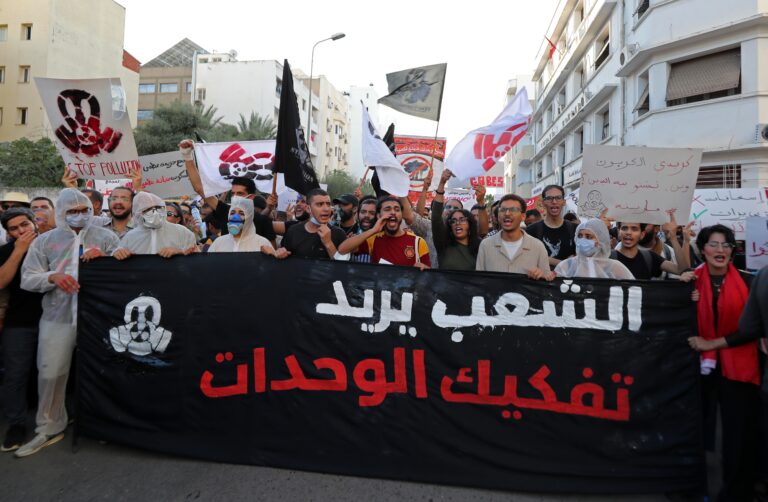
In fact, in Homs, we have already seen community resistance to the “Boulevard of Victory” urban development initiative. Even before the August ceremony, billboards had announced the new project around the city in early June. This immediately spurred outcry, with residents in the al-Qarabis neighborhood of Homs organizing a protest with banners that read “No boulevard, no to displacement.” Critics have drawn comparisons between the proposed Boulevard of Victory and the urban redevelopment plan for the city devised under Bashar al-Assad’s regime known as the “Homs Dream.” That plan was despised by residents and engendered a rare display of popular protest in Homs at a time when doing so was much riskier. For this latest project, the new governor of Homs has attempted to mediate between the residents of al-Qarabis and the company behind the Boulevard of Victory plan, the Kuwait-based Al-Omran Real Estate Development Co., which is owned by a Syrian businessman. This led the company to eventually announce that it would cancel the part of its plans that ran through the contested neighborhood. While this outcome hopefully addresses residents’ concerns, this entire episode exhibits the perils of granting companies development contracts in dense urban areas without subjecting the proposals to community review and input. We may yet see more local resistance to other proposed developments, particularly once more details emerge for the Damascus projects.
Partnerships for Reconstruction or Privatization?
Overall, the proposed projects reflect the stated desire of the Syrian authorities to rely on private investment as the engine of economic development and reconstruction. War, sanctions, and corruption have no doubt contributed to the hollowing out of state institutions over the last few decades. Given this weakened state capacity, the appeal of partnerships with private firms at this stage to reconstruct vital infrastructure in transportation and energy is understandable. However, are these investments short-term solutions to the problem of reconstruction, or are they part of a long-term plan to privatize vital sectors of the economy?
In order to answer this question, one would need to examine the substance of the agreements. Unfortunately, few details have been made public. Will these projects be developed under a Build-Own-Operate (BOO) model, a Build-Operate-Transfer (BOT) model, or some other public-private-partnership arrangement? These are important details for the general public to know – for the sake of transparency, the relevant ministries should be publishing exactly what the government has agreed to with each new deal. What little we do know comes from media reports and the announcement of the companies themselves. For example, we know from information announced by the consortium that signed the agreement to build five power plants in May that the projects will involve elements of both BOO and BOT. In this case, a BOO agreement would be a de facto step toward the privatization of electricity production, as the company would not only build the power plants, but also own and operate them indefinitely. A BOT agreement, on the other hand, implies that the power plants would eventually be handed back to the public sector. This ambiguity, therefore, has huge implications. Syrians have a right to know the nature of the agreements being signed, particularly when international firms are involved. The transitional government’s stated mandate is, after all, five years, yet it is signing away concessions to companies that well exceed that time frame. At the very least, this should be a transparent process, subject to public discussion and deliberation.
Even with its current approach, the government could attempt to balance between reconstruction and development, on the one hand, and protection of long-term national interest, on the other. One way to do this would be to only offer limited BOT contracts, whereby private firms construct new infrastructure and benefit from operating them for a limited time, thereby recouping their investments, after which the infrastructure would be transferred back to public ownership. Such a model would facilitate the urgent construction of vital infrastructure while also ensuring Syrian consumers are not exploited and state revenues are not depleted in the long term.
Rebalancing Toward Productive Sectors
Lastly, many of the announced investments are concentrated in sectors that will not contribute much in terms of national development and employment. It is true that some of the projects are crucial to getting the Syrian economy back on its feet, such as the development of transportation infrastructure, the modernization of the ports, and electricity generation. But others, such as the development of luxury real estate and tourist resorts, are more of a reflection of the desires of private investors than the needs of the Syrian economy. The media announcements have touted the number of jobs that will be created by some of these projects; the Damascus Towers project, for example, claims that it will provide “more than 200,000 job opportunities.” But if the majority of these are in construction, that means these jobs will be temporary. In addition, the excessive focus on the development of tourism is similarly misguided. Tourism can bring in needed foreign currency, but the Lebanese experience shows the perils of relying on tourism revenues for economic security in a region subject to political volatility. And in any case, only so many people can be employed in the tourism sector.
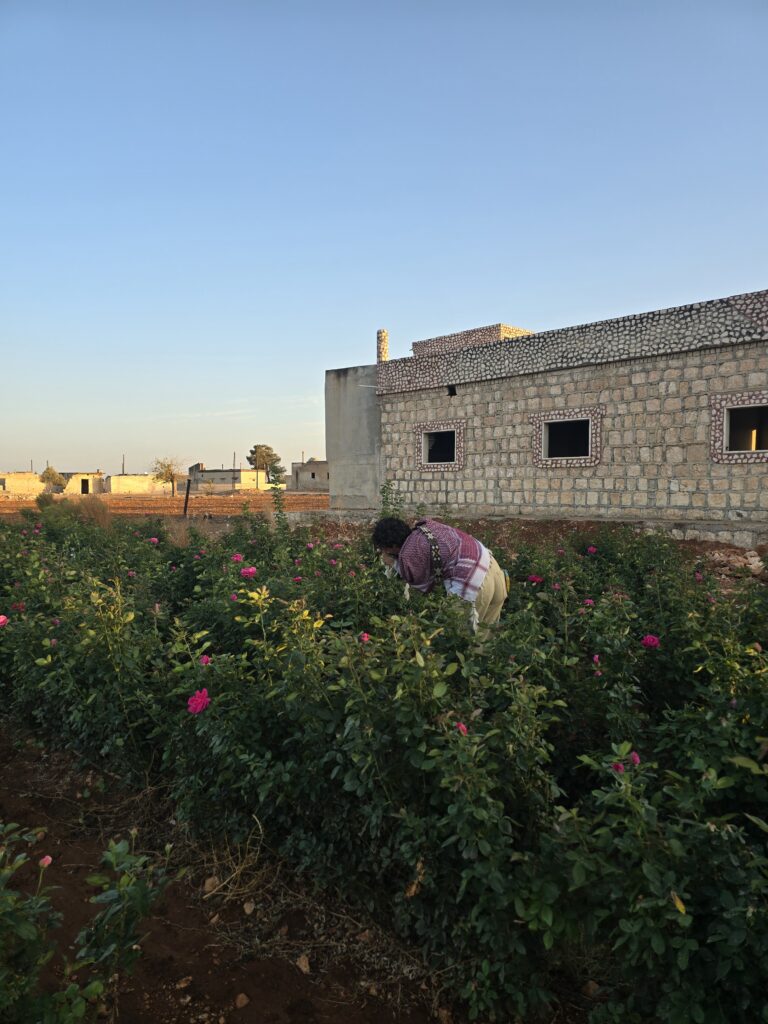
Prioritizing the agricultural and industrial sectors would be more likely to generate economic benefits in the long term. These sectors contribute to national development and have the capacity to absorb the large amounts of Syrians looking for work by providing long-lasting jobs. Thus far, few of the announced investments have been in these sectors – one notable exception being the Al-Muhaidib Group’s stated intention to invest “$200 million in heavy industries linked to the industrial and agricultural sectors.” The government need not submit to the whims of private investors’ priorities in order to attract investment. It can choose to channel resources toward certain sectors it determines contribute to national development and employment by signaling its priorities and offering incentives. It can demonstrate its commitment to its rural population – around 42% of the population according to estimates—by channeling investments, resources, and expertise toward the development of the agricultural sector and stave off the rural-urban migration that leads to a life of informal employment for many rural migrants. In particular, in the midst of one of the worst droughts in decades, the state could prioritize the development of irrigation and encourage farmers to adopt climate-resilient crops. It can partner with private actors on these initiatives, but in order to do so, the government must take the first step in signaling the agricultural sector as a priority.
New investments in industry can also contribute to providing jobs for people across Syria’s governorates. Unlike the tourist and real estate projects that are concentrated in the large cities or on the coast, the state can funnel industrial investments toward peripheral areas where communities are most in need of employment, particularly the smaller cities like Hama and Deir Ez-Zor. Industrial initiatives focused on food processing can also generate a boost in demand for local agriculture, leading to benefits for both sectors. All in all, Syria is in dire need of investments to rebuild its economy. But despite this urgency, the government can still choose to set priorities that ensure long-term economic benefits for all Syrians, rather than letting the priorities of private investors solely determine the shape of economic development.