









Two months after Beirut’s municipal elections, widely described by commentators as signaling the downfall of the “change” movement because the main list associated with the anti-establishment movement fared poorly, this commentary seeks to critically engage with questions about the future of Lebanon’s anti-establishment political formations/actors. Though still loosely defined and fragmented – secular, progressive, reformist, radical, grassroots, urban/rural, national, feminist, environmentalist, or democratic – these actors have an opportunity to learn from electoral defeat to rebuild their momentum, clarify their identity and vision, and re-ground their practical work.
This commentary is written from the perspective of an urbanist-researcher and former candidate in the May 2025 Beirut municipal council elections.
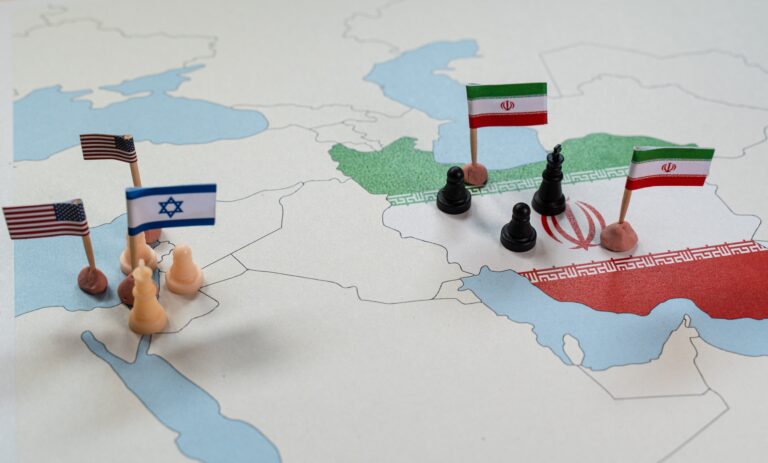
Three weeks after Beirut’s municipal elections held on 18 May 2025, and just as anti-establishment political groups had started reflecting on their poor results, an 11-day war between Israel and Iran broke out, reigniting discussions about the future of the Middle East and throwing the Lebanese political landscape into disarray once again. Instead of continuing internal reflection about their recent inability to connect with local voters, political groups found themselves thinking of how to respond to regional events — an arena in which they had never articulated a clear stance and lacked the clout to have any real influence.
This is not new. For decades, Lebanon has been part of regional conflicts that have repeatedly disrupted daily life, inflicted atrocities on large segments of the population, and undermined political efforts to reform or change the domestic political system. While a small number of politically active, anti-establishment actors have tried to navigate the intersections of local, regional, and global politics, sectarian parties have steadily maintained their presence across all levels, providing their supporters with a discourse and worldview that bridges local service delivery, regional powers’ alignment, and international politics.1Al-Manar (2024). The municipalities of the southern suburbs are removing the rubble of the aggression and awaiting the state’s influence. https://archive.almanar.com.lb/12901033
If there is one lesson to draw from both the Beirut election results and broader efforts to oppose the established sectarian parties, it is this: without organized political parties and movements that stay locally engaged between electoral cycles and bridge local political work with a clear positioning and approach to regional issues, political work, just like electoral performance, remains fragile and unsustainable.
Some of the key symptoms of this absence of organization in the anti-establishment camp were evident during and in the aftermath of municipal elections: supporter apathy and disengagement; the absence of a clear political discourse; an inability to communicate in ways that resonate with the public; unclear decision-making processes; limited resources; disorganized electoral operations; and a persistent tendency toward blame and scapegoating.
Although many anti-establishment political groups have only recently recognized the importance of building political movements and parties, they continue to lack a long-term political vision: one that sees political work as more than just winning the next round of elections, whether parliamentary, municipal, or syndicate. Linking one election to the next, rather than linking elections to broader movement building, is in itself a political failure. It reflects a prioritization of leadership and access to power for particular individuals over collective organizing. While political representation and movement building should go hand in hand, the reality of anti-establishment politics over the past three years has shown a persistent disconnection between the two. The question now is: how do we learn from this reality and its symptoms to build meaningful paths forward?
First, anti-establishment groups must challenge the dominant narrative of failure, which stems from temporary shortcomings. Second, they need to engage with urban and rural margins as sites of political strategy. Third, they must recognize existing economic power structures as central obstacles to anti-establishment political work and keep confronting them as they continue to dominate political discourses. Finally, they need to situate their local work within broader national, regional, and global political frameworks that can translate their values and principles into coherent political projects. This recipe, of course, requires a great deal of work and unpacking.
Contesting the Narrative of Failure: Political Work as a Process of Maturation
The end of the “change” era is not the end of anti-establishment politics. “Change” was never a self-defined identity for most of these movements; rather, it was a label coined by mainstream media and later adopted by certain political actors. Framing all anti-establishment actors as part of a singular, coherent “change movement” is misleading. While “change” and “anti-establishment” may share an oppositional tone, both terms lack clarity when it comes to long-term vision, goals, and pathways. Political groups need to mature beyond the language of opposition, if they are to respond to the frustrations of their base, many of whom are experiencing political fatigue, inactivity, and numbness.
Part of that maturation involves recognizing that decline is a natural part of any political lifecycle. Accepting decline also requires a willingness to mature, not reinvent. This does not necessarily mean rebranding, building entirely new structures, or recycling old initiatives. In Beirut, for example, efforts at both rebranding and structural reinvention have fragmented political efforts (e.g., Beirut Tuqawem rebranded as Majmouat A’amal,2LBeirut (2023). Majmouat A’amal launches its political program to “regain initiative”. https://lbeirut.com/2023/07/23/ or recycling Beirut Madinati from 2016 to 2025).3Edde, N. (2025). ‘Beirut Madinati 2025’ presents its list ‘against coalition of parties’. L’Orient Today. https://today.lorientlejour.com/article/1459222/ Instead, there’s a need for clear political, economic, and social goals that can either give substance to existing structures and “brands” or justify the creation of new ones before going out to the public or even attempt to go back to the ground to reclaim traditional spaces of protest (e.g., Martyrs’ Square) or claim new ones within marginalized communities where real political and economic struggle exists.
Engaging Urban and Rural Margins as a Political Strategy
One major claim that emerged after the 2025 municipal elections is that the political discourse of anti-establishment groups became disconnected from the realities on the ground. According to discussions with activists and voters, many felt that their economic interests had been largely neglected over the past three years. Too little had been achieved in terms of addressing their basic needs (mostly housing and job opportunities) and restoring the rights taken from them during the crisis (e.g., depreciation of retirement pensions; banks withholding depositors’ funds). This was compounded by a lack of direct communication with the public, even though anti-establishment political actors had been actively addressing these issues in an attempt to mitigate the effects of the crises and the war. This shows a need for anti-establishment groups to connect with a broader base by first redefining “marginalized communities,” particularly in an urban center like Beirut, where marginalization is shaped both spatially and socially. It also calls for a clearer understanding of what is meant by “the ground,” whose realities need to be addressed, particularly in Lebanon, where eligible voters are not defined by their place of residence but by the place of their family’s place of origin. These questions can be addressed by drawing on the interactions and socio-spatial dynamics during and post-elections in a metropolitan area as complex and layered as Beirut.
Large urban centers like Beirut are composed of smaller, distinct communities or neighborhoods (referred here as urban margins) that often function like independent towns.4Jacobs, J. (1961). The Death and Life of Great American Cities; Castells, M. (2011). The rise of the network society. John wiley & sons Each of them has its own identity, cultural norms, and social networks. These margins are not limited to migrant workers and refugees; they also include mid-to-lower class citizens that social scientists have described as “the missing middle.”5ILO (2003). Extension of Social Security to All. report These people are not privileged enough to benefit from the existing socio-economic system, and not underprivileged enough to qualify for aid. As a result, they fall through the cracks of social safety nets. These groups often live in or have been displaced to “urban pockets of poverty” or in what is commonly referred to as “popular neighborhoods” (exposed in the repeated references to Tariq El Jdide during the elections) or in peripheral suburbs (like Bchamoun, Aramoun, and Zalka) which remain administratively outside Beirut’s official boundaries.6Harb el-Kak, M. (2000). Post-war Beirut: resources, negotiations, and contestations in the Elyssar Project. The Arab World Geographer, 3(4), 272-288. Anti-establishment political groups must engage with these communities not as a voter base, but as structurally marginalized groups that are central to political thinking, organizing, and transformation; especially given how effective sectarian political parties have been at mobilizing them through clientelist networks and sectarian incitement.
In recent years, anti-establishment activists have struggled to meaningfully engage with these communities. They were either seen as strongholds for traditional sectarian political parties which maintain extensive clientelist networks for service provision in these communities or as areas of conservative thinking that may reject some of the more socially liberal norms that many anti-establishment activists represent. Expanding the political base to include these communities is not, however, that challenging if political activists recognize that these communities have anti-establishment individuals (evident in the results of the 2022 parliamentary elections) who have not yet been invited into political circles. This requires confronting existing misconceptions, particularly those tied to family networks, gender dynamics, and social class. While extended families are often seen as reinforcing patriarchal structures and economic inequality, they also serve as systems of mutual aid and solidarity,7One example can be seen in how a prominent Beiruti family, which runs its own NGO, welcomed candidates from the anti-establishment list during the municipal elections. particularly in a place like Lebanon.8Example from similar contexts: Simone, A. M. (2004). For the city yet to come: Changing African life in four cities. Duke University Press. Example from similar contexts: Bayat, A. (2013). Life as politics: How ordinary people change the Middle East. Stanford University Press A deeper understanding of these dynamics requires open-mindedness that allows anti-establishment political activists to connect with these networks and identify local allies and potential activists who can navigate these traditional networks.
This re-reading of the city as a collage of overlapping communities does not mean sidelining mid-to-upper-class political activists already involved in political organizing. Rather, it calls for expanding political work to include new political actors from diverse socio-economic backgrounds, just as it has already sought to include people from diverse sectarian and religious backgrounds within secular spaces. Such inclusion is not simply about building electoral coalitions; rather, it is central to inclusive political organizing.
Confronting Existing Economic Power Structures
Confronting existing economic power structures is as essential to winning elections as it is to progressive movement building. While secular and liberal values that prioritize individual freedom (e.g., freedom of speech) have often gone unquestioned within anti-establishment groups, the individuals within these groups have remained divided between those who want to challenge entrenched economic systems and those who do not necessarily oppose the current economic model of Lebanon. This was evident during the Beirut municipal elections.
Engaging with urban peripheries often implies working with communities that are either beneficiaries of, or embedded within, the production of existing clientelist-sectarian-economic networks, whether directly (through aid) or indirectly (through employment). Accordingly, anti-establishment groups have to articulate how they would address the marginalized economic situation of these communities, and they must include and mobilize specific class groups that are willing to challenge these existing structures, rather than reinforce them.
Recognizing that these economic power structures are deeply rooted in and an integral element of sectarian social structures is a necessary step toward confronting them. Beirut’s municipal elections have offered several lessons in this regard. For example, the case of Solidere, a real estate company responsible for rebuilding downtown Beirut after the civil war, became once again a controversial issue for anti-establishment candidates of Beirut’s municipal council, regardless of whether they were on the same electoral list.9Based on discussions between candidates and social media negative campaigns. Some argued that the agreement allowing Solidere to manage the city’s core should be renewed due to the aesthetic success of its reconstruction. Others believed that renewing this agreement would mean an undesirable privatization of public space, especially given Solidere’s failure to bring back life to the city center, and its historic role in displacing residents and shop owners to the city’s peripheries.10Makdisi, S. (1997). Laying claim to Beirut: Urban narrative and spatial identity in the age of Solidere. Critical inquiry, 23(3), 661-705.
To critically address such controversial topics, it is important to acknowledge both the successes and failures of these institutions. The case of Solidere is similar to the ongoing battle against the Lebanese banking lobby.11Noureddine, A. (2022). Of Money and Policymaking: Examples from the Banking Sector. Fanack. Creating controversy around these economic power structures is in itself a success for the movement, one that must be built upon with a clear way forward. However, confrontation requires a sufficiently resourced political organizing to counter negative campaigns led by the ruling class, and more importantly, a broader, long-term political and economic vision that defines the basis of opposition and proposes an alternative that resonates with large segments of the population. When such organizing and a political vision exist, how we respond to cases like Solidere becomes part of a larger, bold political-economic project.
Situating Local Work Within National, Regional, and Global Politics
Municipalities and local-level work are essential to achieving national, regional, and global political goals. While some may argue that the focus should be on the developmental rather than the political role of municipalities, this distinction is misleading. Local development is inherently political. Whether it is the governance model a municipality adopts, its approach to public service recovery, the kinds of events it supports or organizes, the projects it chooses to invest in, or the partners it engages with (be they NGOs, political groups, individuals, or foreign governments), these are all deeply political decisions.
Sectarian political parties in Lebanon have long understood the interplay between different scales of politics and have skillfully navigated among them. In contrast, anti-establishment groups must do more to translate their global or regional visions into concrete projects at the local level. In what follows, I present examples of how local political work can be situated within national, regional, and global frameworks, through the lenses of decentralization, anti-privatization, anti-colonialism, and feminism.
Improving infrastructure and transportation systems in Beirut requires implementing proposed decentralization and governance reforms that establish a Greater Beirut area (a combination of administrative Beirut and its suburbs), which disrupts the city’s current sectarian divisions, segmentation, and territorialization. Municipalities that are currently located within the imagined boundaries of Greater Beirut have consistently failed to improve transportation and infrastructure, largely because they have been unable to agree on responsibilities, with each prioritizing the economic interests of its own group. Creating a unified and inclusive city governed by a single municipal council is an attempt to weaken the grip of sectarian parties over Beirut. While this means clear national and regional implications, it also improves service provision. Public service recovery, in this context, also requires political approaches that challenge national economic models as mentioned earlier (e.g., communist, social democrat).
Similarly to governance reform, which affects both service provision and national and regional politics, there is, as previously stated, a pressing need to define the economic model that will guide local action. This goes beyond merely confronting existing economic power structures. It is essential because it will determine what types of services are provided, how they are delivered, and to whom. Moreover, it has global implications: it can either limit or shape the involvement of financial institutions and investors by clarifying who will invest, under what terms, and who the global partners will be. This is not only crucial for public service recovery but also for building strategic international alliances that achieve global goals. This has been evident in the role of global actors in post-war reconstruction, and the same logic applies to any funding directed toward service provision.
Among the regional and global issues where local action can play a meaningful role are anti-colonialism and solidarity with Palestine. This addresses a local need expressed by various communities who seek to engage in these political struggles without participating in armed conflict. In a city like Beirut, the municipality can support anti-colonial cultural events and spaces, and build alliances with global actors, many of whom have emerged over the past two years, who share a commitment to anti-colonialism and solidarity with Palestine. While the short-term impact has so far been limited, there is a pressing need to begin building these alliances as part of a longer-term strategy for liberation.
Another global struggle that can be linked to local political work is the feminist struggle. The Municipality of Beirut, for example, can establish shelters for survivors of domestic violence, create safe public spaces, and recruit more women in its departments (especially in municipal police), as part of broader global feminist goals. This responds not only to urgent local needs (shelters and security) but also aligns with regional and international feminist movements.
This section presented examples of how local work can be linked to national, regional, and global goals. However, it is not intended as a fixed guideline for anti-establishment political groups to adopt wholesale, but rather as illustrations of what is possible when local action is guided by a multi-scalar political agenda.
Ways Forward: Visionary Political Transformation
What has been written so far offers a recipe for reimagining and repositioning local politics within broader political frameworks. It is a political statement that says: symbolic presence is not enough, and shifts the focus from “representation” to building stronger and more coherent political movements. The coherence of these political movements will come in part from a stronger alignment and engagement with local communities and a clearer positioning across multiple scales to provide a more consistent approach to divisive issues. A positioning that is visionary, confrontational, and translates principles, beliefs, and values into political projects for clearly defined groups of interest will help build a movement that offers tangible solutions and alternatives based on a coherent long-term vision.
This vision views urban and rural margins not merely as voters to be mobilized during elections, but as integral elements of political life: a political life that locally engages with national, regional, and global challenges by presenting a clearly defined project, one in which local politics are not isolated or defined by quick wins, but are part of broader political transformation.
This approach is one way forward for anti-establishment groups to mature beyond the reactive stance of being “anti.” It is a pathway toward building sustained political relevance anchored in vision and the capacity to govern differently.
Endnotes
| ↑1 | Al-Manar (2024). The municipalities of the southern suburbs are removing the rubble of the aggression and awaiting the state’s influence. https://archive.almanar.com.lb/12901033 |
|---|---|
| ↑2 | LBeirut (2023). Majmouat A’amal launches its political program to “regain initiative”. https://lbeirut.com/2023/07/23/ |
| ↑3 | Edde, N. (2025). ‘Beirut Madinati 2025’ presents its list ‘against coalition of parties’. L’Orient Today. https://today.lorientlejour.com/article/1459222/ |
| ↑4 | Jacobs, J. (1961). The Death and Life of Great American Cities; Castells, M. (2011). The rise of the network society. John wiley & sons |
| ↑5 | ILO (2003). Extension of Social Security to All. report |
| ↑6 | Harb el-Kak, M. (2000). Post-war Beirut: resources, negotiations, and contestations in the Elyssar Project. The Arab World Geographer, 3(4), 272-288. |
| ↑7 | One example can be seen in how a prominent Beiruti family, which runs its own NGO, welcomed candidates from the anti-establishment list during the municipal elections. |
| ↑8 | Example from similar contexts: Simone, A. M. (2004). For the city yet to come: Changing African life in four cities. Duke University Press. Example from similar contexts: Bayat, A. (2013). Life as politics: How ordinary people change the Middle East. Stanford University Press |
| ↑9 | Based on discussions between candidates and social media negative campaigns. |
| ↑10 | Makdisi, S. (1997). Laying claim to Beirut: Urban narrative and spatial identity in the age of Solidere. Critical inquiry, 23(3), 661-705. |
| ↑11 | Noureddine, A. (2022). Of Money and Policymaking: Examples from the Banking Sector. Fanack. |