

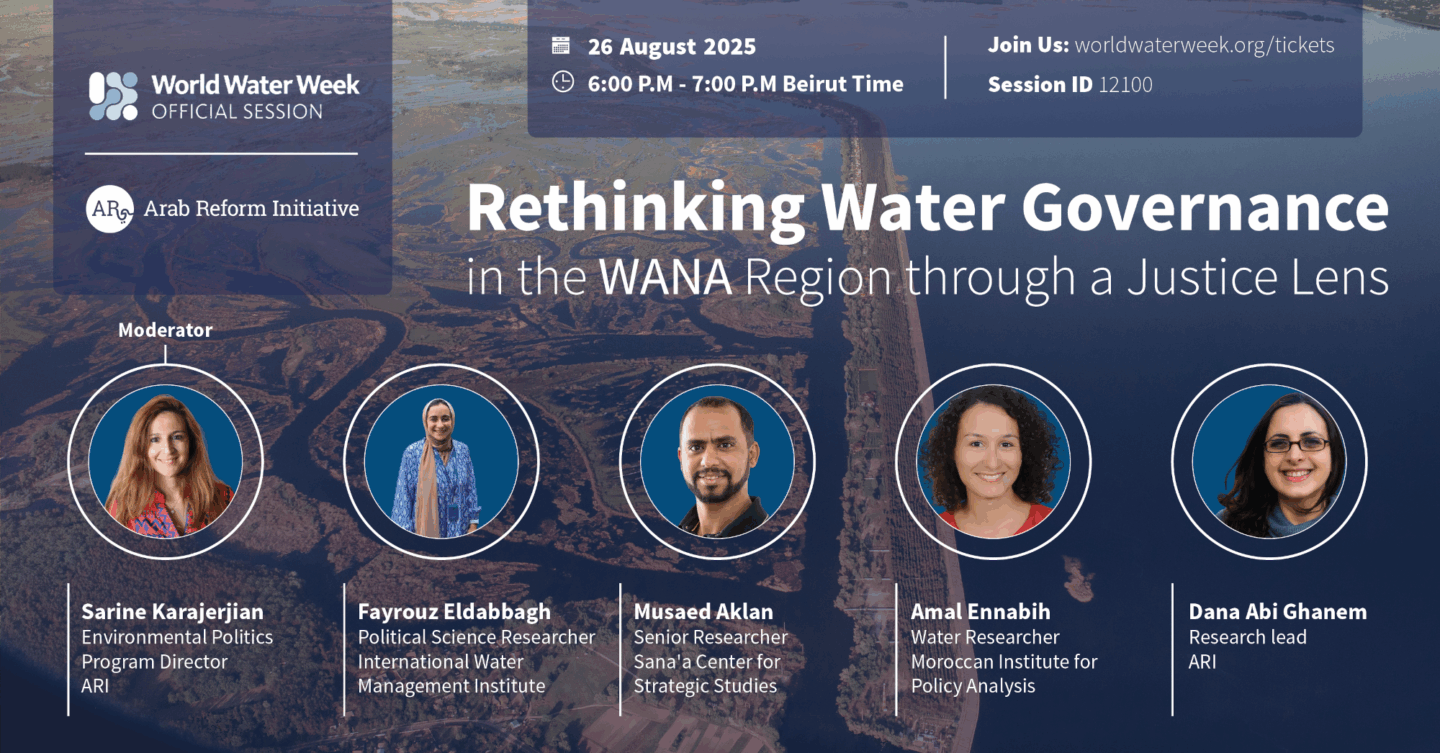
This webinar is part of ARI’s participation in World Water Week 2025, organized by the Stockholm International Water Institute (SIWI). To attend, please complete your registration through the official World Water Week website using this link.
World Water Week is the leading conference on global water issues, held every year since 1991. A non-profit event, co-created with leading organizations, World Water Week attracts a diverse mix of participants from many professional backgrounds and every corner of the world. Together we develop solutions to the world’s greatest water-related challenges, with topics ranging from food security and health to agriculture, technology, biodiversity, and the climate crisis.
World Water Week 2025: Water for Climate Action
World Water Week 2025 focuses on addressing the linked emergencies of climate change, environment degradation and biodiversity loss, emphasizing both mitigation and adaptation alongside the broader goal of enhancing resilience.
Session overview:
Water in the West Asia and North Africa (WANA) region is an environmental and social matter.
The region is characterised by water scarcity, mismanagement, with the foreseen climate change impacts exacerbating problems. These challenges strain the region’s capacity to meet increasing demands from a growing population and threaten its environmental sustainability, food security and economic development.
The region lacks equitable access to water, particularly for marginalised communities and weaker socio-economic groups.To meet their climate commitments and manage their water resources effectively, countries in the WANA region need to rethink their approach to water governance through a water justice lens. Such an approach entails: (1) safe and sufficient infrastructure; (2) responsible policy making; (3) fair access and affordability; (4) empowered communities; (5) diversity of voices and perspectives, and (6) resilient systems that protect against and prepare for emergencies.
In this session we emphasise a justice framework for water governance, presenting a critical analysis of how it can support mechanisms for fairness and resilience.
Our panel will discuss and shed light on a region going through significant changes in water management, expanding on new technologies and the green transition, and grappling with conflict. By underscoring a holistic approach informed by justice principles, our goal is to identify ways forward that mean prosperity, community empowerment and protected water resources.