



You can register to attend by following this link. You will receive a Zoom confirmation email should your registration be successful. Alternatively, you can watch the event live here on our Facebook page.
To attend in-person, please register using this link.
This conference will take place at the Elite World İstanbul Taksim Hotel, on the June 30-July 2 – Istanbul
The years 2024 and 2025 witnessed intense armed conflicts across several MENA countries, including Gaza, Lebanon, Libya, Sudan, Syria and Yemen. In each of these contexts, the conflicts have directly harmed the environment and weakened the capacity of these countries and societies to cope and adapt to environmental changes. Meanwhile, efforts toward environmental recovery face major challenges, especially amid persistent political fragmentation, economic crises, reduced international funding and institutional collapses.
Organized by the Arab Reform Initiative and the Robert Bosch Stiftung, this conference broadly explores the nexus between conflict, climate change, and environmental degradation in the MENA region. Topics include legal debates around the emerging concept of ecocide, the correlation between labor and conflict economies, commonalities between the Iraqi and Syrian contexts, the toll of warfare on Gaza and reconstruction plans for a greener recovery and the environmental aftermath of war.
Day 1
9:45:11:15 Panel 1: Iraq and Syria: Knowledge Exchange between Neighbors
As neighbors, Syria and Iraq share a geography and a common history, marked in recent decades by a long history in both countries of civil conflict, foreign invasions and of the deliberate destruction of the natural environment. While the causes and the dynamics of the conflicts in Syria and Iraq are distinct, there are several commonalities in both countries with regards to how the environment was impacted by the conflict, especially with regards to water resources and to agriculture lands. There is hence an opportunity for dialogue and for cooperation between activists and stakeholders in both countries on knowledge sharing on how to address those common issues and on how to build and develop cooperation and coalitions between Iraqis and Syrians. Additionally, while Syria’s post conflict reconstruction and environmental rehabilitation is in its early phases, Iraq is at a much more advanced stage, and there is here an opportunity for an exchange and discussion on the lessons learned from the Iraqi context.
This panel will convene activists, researchers and academics from Iraq and Syria to discuss and to share perspective, knowledge and experience on the environmental impact of conflict and on post conflict reconstruction and rehabilitation between both countries. Panelists will ask what can Syrians learn from Iraq’s reconstruction efforts? How to form coalitions between both countries to share knowledge and strategies? How to encourage cooperation between both countries on issues related to the impact of conflict on the environment?
Moderator: Sarine Karajerjian, Environmental Politics Program Director, Arab Reform Initiative
Speakers:
- Ansar Jassim – PhD Candidate, Freie Universität Berlin
- Dellair Youssef – independent Syrian journalist
- Bassam al Obaidi – Program Officer Hummat Dijl
11:15-11:30: Coffee Break
11:30- 13:00: Panel 2: Ecocide: From Environmental Reality to Legal Concept
In recent years, there has been growing international momentum to recognize and pursue accountability for environmental harm inflicted during armed conflicts—an often-overlooked dimension of warfare with long-lasting consequences for ecosystems and humans. From the deliberate burning of agricultural land and oil infrastructure in Syria, to the destruction of wastewater treatment plants in Gaza, environmental degradation has increasingly become both a byproduct and a tactic of war in the MENA region. Similar patterns have been observed globally, with Ukraine explicitly invoking the term ecocide to describe the widespread environmental destruction caused by the Russian invasion, including the destruction of the Kakhovka Dam. These developments have renewed calls to strengthen legal protections for the environment in conflict zones, including efforts to formally recognize ecocide as an international crime. This session explores the evolving legal, ethical, and political debates surrounding accountability for environmental harm in war in MENA, comparing experiences across MENA, Ukraine, and beyond, and examining what mechanisms—both existing and emerging—can be leveraged to address these violations.
This panel will bring together legal practitioners and environmental experts to critically examine the viability and usefulness of pursuing accountability for environmental harm through legal frameworks such as international humanitarian law, environmental law, and emerging ecocide proposals. Panelists will explore key questions: What forms of justice or redress are realistically attainable for affected communities and ecosystems? Can such legal avenues meaningfully deter future violations? And how can the MENA region, with its unique environmental vulnerabilities and protracted conflicts, contribute to shaping global norms in this field? The discussion aims to ground abstract legal concepts in real-world cases, offering a nuanced assessment of both the potential and the limits of accountability-driven approaches.
Moderator: Maud Sarlieve, Head of the secretariat of the Climate Research Forum, Oxford Sustainable Law Programme
Speakers:
-
- Stavros-Evdokimos Pantazopoulos – National and Kapodistrian University of Athens School of Law, Teaching Fellow
- Rinata Kazak – Linköping University, Lecturer (waiting confirmation)
- Farah Imad Al Haddad – Arab Protection of Nature
Ali Swaidan –Legal Agenda
13:00:14:30- Lunch Break
14:30- 16:00: Panel 3: Water transboundary issues between Lebanon and Syria: Case of Al- Assi
Water, and control of water resources, have long been a source of tension between Lebanon and Syria along the Orontes River (also known as Al-Assi). Although the river begins in Lebanon’s Bekaa Valley, it quickly crosses into Syria, making it a shared resource shaped by both natural geography and political boundaries. For decades, Syria has held the upper hand in managing this river, often limiting Lebanon’s access to its own water resources. Agreements signed in the 1990s and 2000s, including one that technically allows Lebanon to build a dam, have been criticized by some for favoring Syrian interests and downplaying Lebanese needs and sovereignty.
In recent years, Lebanon has launched large-scale projects, such as dams and irrigation schemes, developed with foreign funding and contractors. These projects are often presented as solutions to local water shortages or economic challenges. But they also reflect a broader logic: one that sees water as a commodity to be controlled, maximized, and monetized. This approach prioritizes big infrastructure over local farming or sustainable management and often benefits politically connected companies.
The panel will explore how water resources become entangled with politics, war, and international development agendas and will ask: What kinds of water futures are being built in Lebanon and in Syria, and for whom? How do regional power imbalances, international donors, and local elites shape the way water is governed and distributed? How can disputes over the sharing of water resources between Lebanon and Syria be resolved going forward?
Moderator: Mustafa Haid – Dawlaty, Co Founder
Speakers:
- Ahmed el Haj Asaad – Geo Expertise, Geopolitics of Water & GIS Expert
- Raya Stephan – Deputy Editor in Chief, International Water Resources Association
- Roland Riachi – Assistant Professor of Political Economy and Political Ecology, American University of Beirut
Day 2:
9:30- 11:00 Panel 4: Practical usages of GIS technology in analyzing the nexus of conflict, climate and environment in the MENA
Across the MENA, public and private institutions are increasingly turning to Geographic Information System (GIS) technology to monitor the short- and long-term impacts of conflicts on the environment. GIS is an opportunity to gather crucial data that can be used to assess the extent of the damage during the conflict, to identify the specific actions committed by each armed belligerent, report potential war crimes, and support civilian protection efforts, including evacuation from conflict zones. Through GIS, agencies and government can also detect forest fires, oil spills, mass graves, domicides, and signs of soil and of water pollution, amongst others. The use of GIS technology informs policy on a local level by governmental and international agencies to devise plans and strategies, confront the environmental impact of a conflict, protect civilians and wildlife, and lay the groundwork for post conflict processes to reconstruct and rehabilitate the land. On an international level it can also lay the foundation for eventual ecocide litigations, as the images could be used as evidence and as a basis to form a case.
This panel will gather GIS experts and practitioners from different parts of the MENA to discuss how they are using GIS in their own work in their respective countries and contexts, what are in their experience the practical outcomes of the use of such a technology during and after conflicts, what are its limitations from a technical, ethical and political perspective, and whether it can also be used to support post conflict environmental litigation?
Moderator: Hania Zaatari
Speakers:
- Dr. Chadi Abdallah, Secretary General, National Council for Scientific Research, Lebanon
- Lina Eklund, associate senior lecturer at the department of Physical Geography and Ecosystem Science at Lund University
- Eoghan Darbyshire, Researcher, The Conflict and Environment Observatory
11:00-11:30: Coffee Break
11:30: 13:00 Panel 5: Labor, conflict and Climate Change:
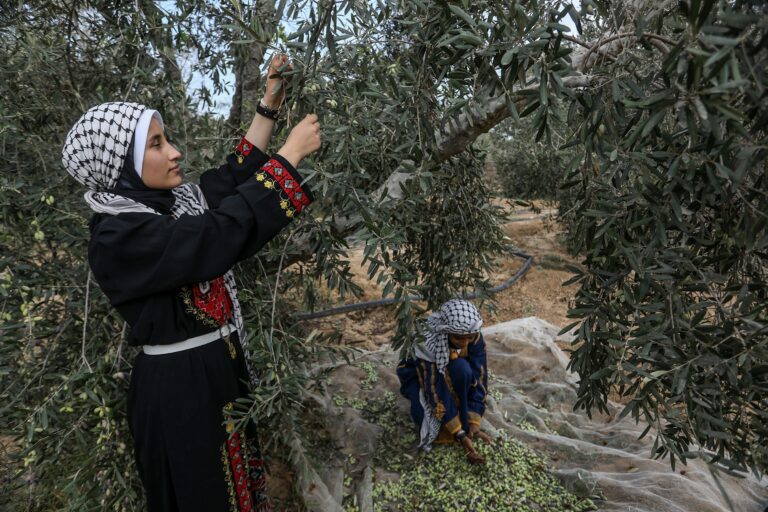
Farmers and agricultural workers are particularly affected by the nexus of conflict, climate change and environment, as they have traditionally been on the periphery of policymaking and live at the mercy of political decisions that don’t include them. In many cases, they come from marginalized communities, such as Syrian refugees in Lebanon. Hence, this marginalization combined with the economic effects of climate change, has led to major social crises that need to be addressed during and after conflicts. This panel will discuss how does the nexus of climate change, environment and conflict affects agriculture and the status of agricultural workers in MENA countries, and how to ensure that environmental factors and conflict are accounted for when discussing recovery of farming systems and communities in MENA countries. The panel will also explore how to protect vulnerable farming communities from the nexus of conflict, climate and environment, and to push for labor reforms in MENA countries. A specific focus will also be placed on the labor unions representing farmers and agricultural workers and the role that they play in protecting those communities and in representing their interests in post conflict situations.
Moderator: Abeer Butmeh, PENGON Coordinator
- Lina Ismail – Co founder, Palestinian Agro-Ecological Forum
- Jessy Nassar – Save the Children International, Project Specialist – Humanitarian Access
- Kindah Ibrahim – Czech University of Life Sciences Prague, Researcher
- Abuelgasim Abdalla Adam Ahmed – Environment and Natural Resource Expert
13:00:14:30: Lunch Break
14:30- 16:00: Panel 6 Lessons and Experiences from Beyond the MENA Region: Documenting Conflict-Driven Environmental Destruction
Across the globe, civil society organizations, researchers, and activists have developed innovative approaches to documenting the environmental impacts of war and conflict. This panel offers a space to learn from experiences outside the MENA region, particularly from countries in Africa and Latin America, where communities have faced similar challenges in addressing the environmental consequences of prolonged violence.
This roundtable will feature four speakers from outside the region who will share how they have worked to document environmental harm in conflict settings, built strategic alliances, and leveraged their findings in processes of post-conflict reconstruction, litigation, and transitional justice.
Moderator: From Chile: Rodrigo Yáñez Rojas – RIMISP, Researcher
Speakers:
- From Nigeria: Ukoha Ukiwo – Strengthening Peace and Resilience in Nigeria, Team Leader
- From Ethiopia: Negasi Solomon – Tigray Institute of Policy Studies, Lead Researcher
- From Pakistan: Syed Qasim Shah– Sustainable Development Policy Institute, Deputy Executive Director
- From Peru: Ricardo Fort, Senior Researcher at the Group for the Analysis of Development (GRADE)