







Abstract
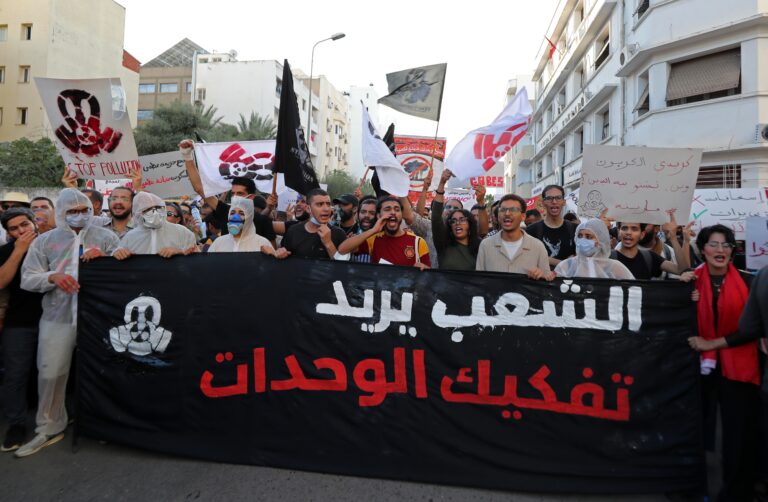
This research explores the multifaceted landscape of water justice in Tunisia, a country experiencing chronic water scarcity, institutional fragmentation, and growing socio-political tensions over resource distribution. Through a justice-centered framework that includes distributive, procedural, recognition, and capabilities dimensions, the study examines how inequalities in water access and governance disproportionately affect rural populations, small farmers, and marginalized groups. By combining a desk review of legal, institutional, and policy studies, with empirical methods, this report uncovers the systemic power imbalances and political choices that shape Tunisia’s water priorities. It also highlights the limited influence of civil society organizations (CSOs) in formal policy making, despite critical advocacy efforts. Ultimately, this research argues that achieving water justice in Tunisia requires a shift away from technocratic and donor-driven solutions toward inclusive, context-sensitive governance that puts at its center equity, public participation, and community needs.
Introduction
Tunisia stands at a crossroads in its management of a vital yet increasingly scarce resource: water. Situated in an arid to semi-arid climate zone, the country faces acute water stress exacerbated by climate change, infrastructural decay, and uneven access to water across its diverse regions. While official narratives often present water challenges as technical or environmental in nature, this research argues that these challenges are deeply political, embedded in historical exclusionary patterns and shaped by decisions that privilege economic growth and industrial needs over equitable access.
This study adopts a water justice framework to critically assess how Tunisia’s water governance system distributes resources, involves stakeholders, and recognizes the needs of marginalized populations. Drawing on interviews with civil society actors, small farmers, and public officials, as well as a desk review of the regulatory and institutional landscape, the research unpacks the lived experiences of injustice that go beyond scarcity. From urban-rural disparities to the commodification of water through export agriculture and bottled water industries, this study reveals a recurring pattern: those who are least responsible for water stress often bear its heaviest burdens.
In doing so, this research seeks not only to document water injustice but to identify pathways for more equitable governance. It contends that water justice in Tunisia can only be realized through a democratic reorientation of water policy: one that centers local voices, disrupts entrenched hierarchies, and challenges the symbolic inclusion of civil society in favor of real power-sharing. At stake is not just the allocation of a dwindling resource, but that the realization of dignity, rights of current and future generations, and collective well-being come at a time of deepening environmental and social precarity.
To this end, the research will ask how water policies are currently made in Tunisia, why past strategies have failed, and who benefits or is excluded from current practices. It will examine the extent and format of civil society participation, how CSOs envision meaningful engagement and the resources they would need, as well as what a “just transition” in water governance could look like. Finally, it will assess the role of international actors, particularly the EU, in shaping Tunisia’s water sector and explore what concrete, politically feasible steps could be taken to ensure genuine local community and CSO inclusion in building fairer water governance.