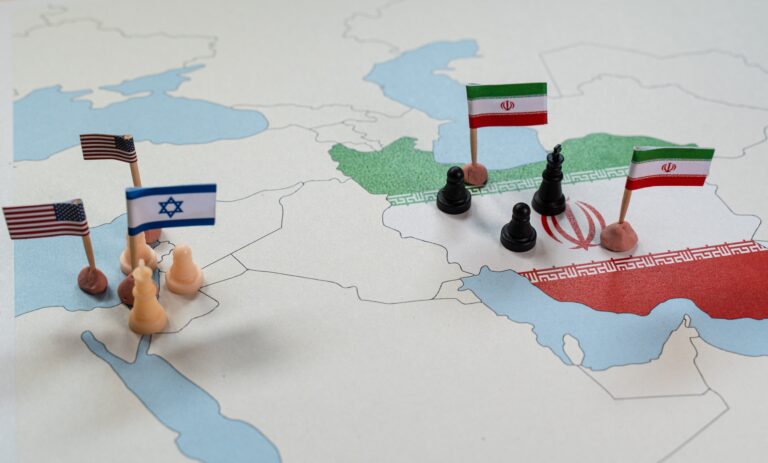



Iraqis are heading to the polls next week as the country prepares to hold new legislative elections on 11 November 2025, the sixth since 2005. As in previous rounds, the vote unfolds amid two central concerns: strengthening Iraqi state-building and adapting to regional pressures. However, this time the current regional turmoil is characterized by competing powers seeking to forge new Middle Eastern equations, including by curbing Iran’s regional influence, reinforcing the principle of respect for state sovereignty, restricting the use of arms to state institutions, and marginalizing armed militias.
In Iraq’s first legislative elections after 7 October 2023, the process represents not only a local milestone but is also part of broader regional interactions that influence and are influenced by the maneuvers to define a new Middle East, maneuvers which are conducted amid a violent and unstable juncture. Tehran views Iraq as the least affected sphere of influence within what was once known as the “Shiite Crescent”, stretching from the Caspian Sea to the Mediterranean coast.
Today, Tehran is working to repair its security and intelligence infrastructure, which the 12-day war exposed as being deeply compromised. At the same time, the “temporary” impasse in nuclear negotiations and the activation of the “Snapback” mechanism – reimposing UN sanctions on Iran – also compound Iran’s regional influence. Given these developments, the Iraqi elections may serve as both a background of confrontation and a bargaining tool that Tehran may resort to project a continued strength of its proxies in the region and demonstrate that it has not lost its entire regional arsenal, especially since Iraq remains its only significant geopolitical and economic outlet.
Despite the regional turmoil and its potential repercussions on Iraq’s political scene, elections have been scheduled to take place on time. The Independent High Electoral Commission confirmed in an announcement that preparations were complete to ensure a smooth electoral process. So far, 21.4 million voters have updated their data, and 31 coalitions and 38 political parties announced their participation in the legislative elections, which will be the first since Iran was weakened and its “crescent” of influence in Syria and Lebanon was dismantled.
This article discusses how Iran’s weakening has affected the political standing of pro-Iran blocs in Iraq and assesses their responses to the emerging regional geopolitical dynamics. It focuses particularly on Shiite forces, given their close ties to Tehran and their central weight in the Iraqi political landscape. These forces play a pivotal role in selecting the Sunni speaker of parliament, while the Iraqi political convention reserves the position of prime minister to a figure from the Shiite political bloc. In addition, they can also exert considerable influence on Iraq’s security and economic affairs.
Iraq: A Barometer of US-Iranian Tensions
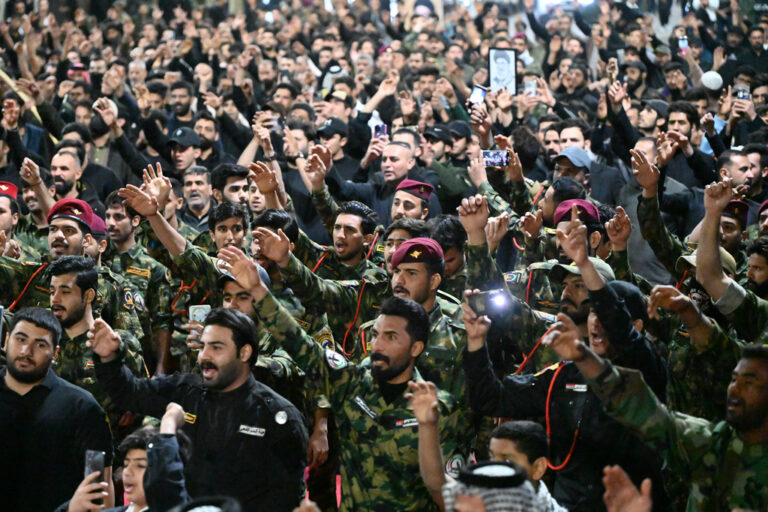
The 2021 legislative elections were an opportunity for Iran’s allies in Iraq1The alliance between Iran and a number of Shiite forces in Iraq has its roots in the eight-year war (1980-1988), when Tehran supported factions opposed to Saddam Hussein’s regime, such as the Islamic Dawa Party and the Badr Organization, and established close ties with the religious authority in Najaf. In 2021, this alliance materialized in prominent political forces, such as the Fatah Alliance, led by Hadi al-Amiri (the political wing of the Badr Organization), and the State of Law Coalition, led by Nouri al-Maliki, along with other Shiite forces. In the security field, the Popular Mobilization Forces, led by factions such as Kataib Hezbollah, Asaib Ahl al-Haq, and the Badr Organization, have been the main instrument of Iranian influence by combining military power and political influence within Iraqi state institutions. to reorganize after the setback that followed the killing of Abu Mahdi al-Muhandis, the deputy head of the Popular Mobilization Forces (PMF), and Qassem Soleimani, commander of the Quds Force of the Iranian Islamic Revolutionary Guard Corps (IRGC), in a US strike targeting them near Baghdad International Airport in early 2020. The operation marked the height of tensions between the Trump administration and Tehran. Since Washington’s withdrawal from the Joint Comprehensive Plan of Action (JCPOA), also known as the nuclear deal, Iraq has found itself at the center of US-Iranian confrontation, as it is the country where the interests and threats of both sides intersect.
The 2021 elections reflected these tensions, as social and political forces aligned with Tehran were desperate to secure the largest share of parliamentary seats. Instead, the results produced an electoral precedent: the Sadrist movement won 73 seats, robbing these forces of much of their electoral influence. The Sadrists then attempted to form a majority government and break with the principle of consensus-based cabinets (a principle based on reaching a formula that is not rejected by all major parliamentary blocs). However, political intransigence hindered this endeavor, which was directed at weakening the Iranian role in Iraq, strengthening Iraqi sovereignty, and combating corruption. The Supreme Court also played a role in further hindering the Sadrists’ initiative of forming a majority government by ruling that a two-thirds majority in parliament, rather than a simple majority, was required to form a government.
All Sadrist MPs subsequently resigned in a dramatic move, allowing their seats to be filled by members from blocs affiliated with the Coordination Framework, an umbrella coalition of Iraqi Shiite political forces formed after the October 2021 elections amid heightened political tensions. The coalition was created to preserve the unity of the Shiite position in the face of the Sadrist “revolution”. After this reshuffle, the political process continued largely according to the vision of the political forces close to Tehran, which consolidated control over the three branches, including the judiciary, and the usual consensus between the parliamentary blocs remained: a “Shiite” prime minister, a “Sunni” speaker of parliament, and a “Kurdish” president. In addition, the Muhandis General Company was established, which is seen as an investment arm of the PMF and may be Iraq’s equivalent of the IRGC’s Khatam al-Anbiya Company.
The results of the December 2023 local elections demonstrated the weight of the Coordination Framework forces, which emerged as the biggest beneficiaries of these elections, which were the first to be held in the last 10 years. In Iraq’s administrative system, provincial councils are no less important than the House of Representatives, given their authority to approve development plans and manage substantial budgets, which enable the parties controlling them to consolidate their influence and bolster their popular support by directing council resources to their constituencies.
Thus, the 7 October 2023 came at a time when the Shiite bloc aligned with Tehran enjoyed a strong standing in Iraq. However, the subsequent reshaping of a new Middle East casts a shadow on this presence, as this reshaping is based on confining weapons to the state, curbing the power of militias, and centralizing the legitimate use of force in the state. As such, these objectives conflict with the existing Iraqi political structure. Despite this, preparations for the upcoming elections are taking place under secure local conditions, in contrast to previous rounds that were marked by terrorism and electoral violence. This election round is also somewhat notable in that it is not only a contest between Sunnis and Shiites but also among Shiites themselves, as highlighted by Sadr’s “boycott” and the nature of the internal tensions within the Coordination Framework.
Sadr: The Present Absence and Reasons for the Boycott
Sadr’s decision to boycott the upcoming elections is a continuation of his withdrawal from the political process, which he initiated in June 2022 when he was at the peak of his influence in the Iraqi Shia political community. The reasons for his disengagement from the political process remain largely unchanged, most notably the proliferation of weapons and militias, security lapses, poor public services, weak anti-corruption measures, and the politicization of extremism. These issues are still relevant and tied to an elite that exploits Iraq’s resources for its own material and social gains rather than for the common good.
Sadr did not stop at boycotting the forthcoming elections; he went further by issuing a statement disowning members of his movement who chose to run. This reinforces his position as a proponent of the “Iraqi sovereignty” within the Shiite political community. The move sends a clear message to both private and public audiences: his movement disowns the outcome of these elections in advance and will not allow its name to be used in the political process until radical reforms are introduced.
Civil society was optimistic that the October 2019 Hirak could pave the way for these radical reforms. However, the “deep elite” benefiting from the status quo pushed back against many of the Hirak’s gains, most notably changes to the electoral law and a return to the St. Leger formula2The St. Lego formula allocates seats within party lists by dividing the number of votes by a series of numbers and selecting the largest. In the current electoral law, the coefficient was adjusted to 1.7, increasing the chances of large lists and decreasing the chances of independents, unlike most countries such as New Zealand, Sweden, and Bosnia and Herzegovina, which typically use a quotient of 1.4. for calculating the winning candidates. Following the success of the 2019 movement, the November 2020 adoption of the highest-winner system across multiple districts enabled 73 MPs from the Sadrist bloc to win seats in predominantly Shiite areas, alongside a number of independents. Yet, in March 2023, the House of Representatives reinstated the proportional representation method, designed to adjust the “electoral engineering” to serve the interests and position of large blocs and limit the ability of independents or smaller, less-funded groups to gain legislative representation, as the single-district system gives advantages to large political blocs.
In addition, the Electoral Commission has limited its statistics to those who have updated and registered their voter data, rather than including all eligible voters, to “maneuver” around the increasingly punitive silent boycott, as shown by the voting rates over the past decade. For example, the official turnout in the 2021 elections was around 41%, but the actual participation is less than 30% when considering all eligible voters, not just those who have updated their data. For the upcoming elections, the commission announced that 29 million people are eligible to vote, while the latest update of voter numbers is 21.4 million, meaning that 7.6 million potential voters who have not updated and registered their data will therefore not be statistically reflected in the turnout figures.
The candidate registration process has been criticized for excluding more than 600 candidates, as well as for the weak monitoring of the integrity of electoral advertising, which has been dominated by “political money” without any effective punitive measures to deter the malpractice.
“Political money” was the rationale behind the withdrawal of former Iraqi Prime Minister Haider al-Abadi’s al-Nasr coalition, which joined the Sadrist movement in boycotting the elections for largely similar reasons. The difference, however, is that Abadi and his coalition are an integral part of the “Shiite Household” and represent a significant portion of Shiite support, given his former prime ministerial role and his extensive social network. As such, he remains a key component of the Coordination Framework, which faces multiple local and electoral challenges.
The Coordination Framework: The Shiite Component Under Threat
As the shock of 7 October reverberated, all eyes turned to Iraq, the point where Iran and US interests intersect. Despite the sensitivity of the situation and Israel’s surplus power being free to target Iranian militias wherever they are, Prime Minister Al-Sudani’s government is credited with successfully insulating the country from this geopolitical rivalry. Meanwhile, Assad’s authority in Syria has collapsed, Hezbollah in Lebanon has suffered a blow that broke its chain of command and control, and even Iran itself experienced setbacks, with its nuclear program neutralized and its air defense system degraded during the 12-day war.
The leaders of the Iraqi Shiite community are aware of the seriousness and of the external threats that surround everything related to Iran’s regional influence, threats that affect the very existence of this influence. Tehran, too, recognizes Iraq’s critical importance in its strategic calculations. With its influence diminished in Syria and Lebanon and its allies struggling in Yemen, Iraq remains the last arena reflecting Iran’s regional presence.
On the other hand, Iran is keen to demonstrate its good faith and that it is genuinely moving toward changing its interventionist regional policies, particularly in Iraq, in line with regional and international expectations that condition its reintegration into the international system on specific criteria, most notably those related to the region. Therefore, according to local reports, Tehran has reduced its visible role in managing the formation of alliances of political forces affiliated with it, trying to signal that it respects Iraq’s sovereignty and that it is focused, at this stage, on addressing its internal situation and recalibrating its foreign policy. Tehran is also preoccupied with the nuclear negotiating impasse and the reimposition of “Snapback” UN sanctions, in addition to restoring its security and intelligence structures following the 12-day war and the resulting loss of confidence in these systems.
The electoral landscape of the Iranian-affiliated forces recognizes this sensitive reality, which can be traced back to the precedent of the Sadrist movement’s “rebellion” in the 2021 elections, which exposed a crisis of representation and legitimacy among the Shiite political factions. The Coordination Framework represents this alliance in the upcoming elections, fielding multiple lists that are expected to regroup under a single umbrella after the results are tallied. This approach is linked to the desire of each list to establish its political weight, which determines its position in the Framework and the consequent legitimate gains associated with representing the largest component of the Shiite political community. In essence, a process of internal apportionment (Muhasasa) is taking place within the broader apportionment that underpins the Iraqi political system. Moreover, it is also in the Framework’s interest to run multiple lists, as this increases its chances of winning the largest voting bloc, under the current electoral law, which does not favor very large or small coalitions. Thus, the Framework’s multi-list participation in the upcoming elections is a calculated electoral tactic rather than a sign of internal discord.
In reality, an examination of the nature of the interactions between the forces of the Coordination Framework reveals a significant lack of cohesion for several reasons, resulting in relative internal divergences. One major source of tension stems from the failure to pass a key legislation in parliament – due to external pressures – such as the Popular Mobilization Forces Bill, which aims to integrate the PMF into the state’s official military system, grant it broad organizational and security powers, and redefine its role within the state structure. Added to this is the ambiguity of the relationship with Washington: while some components of the Framework communicate politically through some channels with the US, others adopt an uncompromisingly adverse stance in relation to America and the West in general. The controversy over the issue of limiting arms to the state has further contributed to weakening the Coordination Framework’s internal cohesion, as some of its members remain divided on how far this principle should be applied.
The electoral coalition formed by current Prime Minister Al-Sudani is regarded as the most heterogeneous within the Coordination Framework. The so-called “Coalition for Reconstruction and Development” brings together wide array of political forces and personalities: the National Contract (led by Faleh Fayyad, head of the Hashd Authority), the Patriotic Coalition (led by Iyad Allawi, Iraq’s first interim prime minister after 2003), and Balad Sumar (led by the current Minister of Labor, Ahmed al-Asadi, who has put forward a radical program in relation to the US and the West in general). The coalition also includes Houloul (led by Mohammed al-Darraji, head of the Military Industrialization Authority and a former deputy from the Fatah Militia Alliance), and Karbala Innovation (led by Nasif al-Khattabi, the governor of Karbala, known for a series of successes), as well as 50 independent or defected MPs from blocs affiliated with the Coordination Framework, not to mention tribal leaders.
The composition of the Coalition for Reconstruction and Development reflects its diversity and inclusiveness across the Shia political spectrum. During his years as prime minister, Al-Sudani tried to offer an alternative to the members of the Coordination Framework who wished to distance themselves from it without severing ties to the broader Shia political community. His coalition, therefore, brings together major militia forces, prominent government officials who provided tangible community services due to the increase in Iraqi government spending under his government, and community leaders who have a tribal presence. Thus, this coalition is trying to appeal to the Shiite middle class of state employees and small merchants, which makes the Framework forces fear that the Coalition for Reconstruction and Development could capture the lion’s share of parliamentary seats, enabling it to dominate future government formation negotiations, and potentially recreate the political deadlock that followed the Sadrist victory in the 2021 elections.
What is particularly notable about Al-Sudani’s list – who reached the premiership through the Coordination Framework and the Dawa Party led by Nouri Al-Maliki, before differences arose between the two leaders – is that it comes in the midst of Al-Sudani’s broader efforts to give Iraq a distinct geopolitical role that distances the country from the “curse” of regional axes and alignments, specifically the so-called the “Shiite Crescent.” In this context, Al-Sudani held the Arab summit in Baghdad, met with Syrian President Ahmad al-Sharaa, and enacted financial regulations aimed at reducing the possibility of Iranian entities exploiting Iraq’s banking system to circumvent US sanctions.
Forces affiliated with the Coordination Framework and close to Iran tried to pre-empt Al-Sudani’s candidacy in a solo coalition by launching a media campaign against him. Throughout April 2025, more than 20 attacks were recorded across outlets linked to the Framework, aiming to politically “expose” him for his openness to the new Syria without coordinating with the Framework. The campaign also criticized several governmental and service-related decisions issued by his government.
In this context, Al-Sudani’s coalition – and his conduct after the election – warrant close observation. His relative distance from the core of the Coordination Framework could pave the way for unexpected developments in the formation of the next government, potentially including the emergence of the first majority government in the history of post-2003 Iraq.
What is certain in this context is that Tehran no longer possesses the charismatic leadership of Qassem Soleimani, who has been instrumental in managing its influence in Iraq. Since his death, maintaining cohesion within the Shiite bloc has been difficult, not only because of Sadr’s apparent rebellion but also due to internal fractures. Even if the Framework managed to reunite after the elections, as it seems likely, it will still lack a driving figure. This explains why the visit of Quds Force commander Ismail Qani to Iraq in July 2025 produced no significant outcome in terms of adjusting the relations among the Framework’s key actors.
In any case, the fragmentation of the Coordination Framework after the elections remains unlikely, given several key considerations, such as the central importance of Iraq in the Iranian strategic calculus. Unlike Syria and Lebanon, Iraq is located within Iran’s vital sphere and geopolitical depth, serving as its largest trade market and an economic outlet to escape the pressure of “maximum sanctions”. Moreover, the components of the Coordination Framework are fully aware that their individual political strength would inevitably be weaker outside the alliance, especially when compared to the Sunni forces, which currently display a higher degree of cohesion.
Conclusion: Restoring Sovereignty for Meaningful Elections
This paper has examined the state of Iraq’s Shia political blocs in light of the regional crisis of influence confronting Tehran. It would be misleading, however, to assume that external circumstances alone play a decisive role in shaping the electoral landscape. While regional dynamics undeniably exert influence, the decisive factor remains Iraqis’ own convictions and their belief in the importance of contributing to building a post-2003 Iraq. The “post-October 7 Middle East” is, in this sense, only one of many details and intersecting factors shaping Iraq’s current domestic politics.
Iraq’s oil-dependent economy is heading for a crisis as government spending continues to expand while the non-oil sectors underperform – a trend the IMF has already flagged as a source of future risks. Despite the decline in terrorist threats, the human rights situation has not improved: many displaced persons remain unable to return to their villages, and the fate of a large number of missing persons is still unresolved. Iraq’s overlapping crises point to the need for a structural solution that strengthens governance, restores political legitimacy, and redraws the map of political alignments to be more locally grounded and capable of offering practical programs rather than ideological rhetoric. This is what the Iraqi voter needs, as reflected in the steadily declining participation rates in successive elections.
Whatever the form of the next government, be it the customary consensus government or a majority government, which would be a first, it will have to deal with new regional realities based on the state’s recovery and assertion of its sovereignty and the confinement of arms to state official institutions, presenting both challenges and opportunities. Addressing them will require prudence, particularly amid the web of international contradictions that are converging over the Iraqi territory.
In this context, and with regard to strengthening Iraq’s sovereignty, the upcoming legislative elections differ from previous rounds. They are the first to take place in a transitional regional environment, where Iran’s regional thorn is curtailed and the region is being re-engineered according to the principles of respect for sovereignty, non-interference, and limiting arms to the state. This presents the Iraqi sovereignty movement with a potentially unprecedented opportunity to make a real transition toward the rule of law and to strengthen the foundations of citizenship and state authority.
Endnotes
| ↑1 | The alliance between Iran and a number of Shiite forces in Iraq has its roots in the eight-year war (1980-1988), when Tehran supported factions opposed to Saddam Hussein’s regime, such as the Islamic Dawa Party and the Badr Organization, and established close ties with the religious authority in Najaf. In 2021, this alliance materialized in prominent political forces, such as the Fatah Alliance, led by Hadi al-Amiri (the political wing of the Badr Organization), and the State of Law Coalition, led by Nouri al-Maliki, along with other Shiite forces. In the security field, the Popular Mobilization Forces, led by factions such as Kataib Hezbollah, Asaib Ahl al-Haq, and the Badr Organization, have been the main instrument of Iranian influence by combining military power and political influence within Iraqi state institutions. |
|---|---|
| ↑2 | The St. Lego formula allocates seats within party lists by dividing the number of votes by a series of numbers and selecting the largest. In the current electoral law, the coefficient was adjusted to 1.7, increasing the chances of large lists and decreasing the chances of independents, unlike most countries such as New Zealand, Sweden, and Bosnia and Herzegovina, which typically use a quotient of 1.4. |