


In early July 2024, media websites and social media platforms were flooded with images and videos of riots, destruction, and assault by Turks on Syrians residing in Kayseri, Turkey.
These incidents are not the first of their kind. As Syria’s neighbor to the south, Turkey has seen an increase in Syrian refugees escaping escalating violence, armed conflict, unstable conditions, and deteriorating economic and living conditions. The Syrian presence in Turkey was not a coincidence or the result of voluntary organized migration, but began with the tensions and violent bombing campaigns that affected Syrian cities and towns, especially in northern Syria. The number of Syrians registered under temporary protection in Turkey in 2018 was estimated at three and a half million. Today, according to updated statistics, that number is estimated at just over three million. Statistics do not include Syrians holding short-term [tourist], family, student, humanitarian, and work residency permits. These permits are not broken out by region and the holders of these permits are lumped together with other foreigners in official statements, which makes it hard to track specific numbers.
The Syrian refugee crisis in Turkey has been marked by increasing tensions and policy shifts. The July incident was by far the most violent the region had seen and occurred following changes in Turkish policy towards the Syrian regime. In the face of violence and tension, Syrian refugees often try to hide their identity and culture in order to blend in.
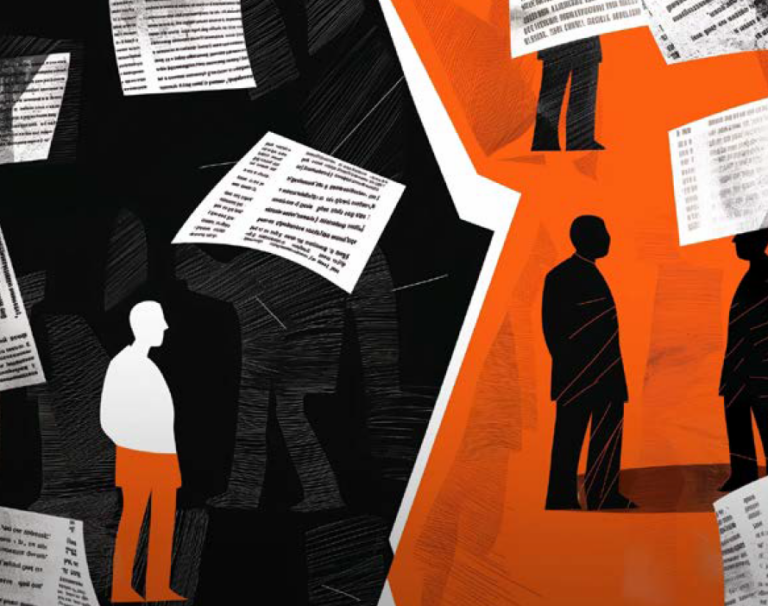
What I will explore in this paper is what is meant by the practice of disappearance and how millions of people can be subjected every day to cultural violations and cannot defend their linguistic and cultural rights.
Sanaa, a 35-year-old mother of two children (aged five and nine), was displaced from Aleppo to Gaziantep in 2016. Since then, she likes to go to the park with her two children on her day off. Going to the park helps her get out of the house. She tells us that in 2023, she was sitting in the park with her children, when another child approached her daughter and started talking to her in a sharp tone. The child hit Sanna’s daughter so Sanna intervened and pulled the other child away.
Sanna’s child only suffered a bruise to her face. What prompted the incident? When the other child, a boy, heard Sanna and her child speaking in Arabic, he asked for the swing Sanna’s child was using because he said it was not intended for Syrians. The boy used foul language before attacking Sanna’s child.
Sanna felt helpless. She said she could not go to the police because of the constant calls for deportation. She has heard stories about families who were deported because they complained to the Turkish police stations, and there is no Syrian party she can turn to, as all parties are unable to protect Syrians on Turkish soil. She feels she cannot tell her husband what happened because he may prevent her from going to the park, and that would mean complete isolation. Sanaa decided to hide what happened and used a cover-up story to explain the bruise. For now, she has decided to speak in a low voice in public places, except when necessary, so that others will not hear her using Arabic.
Hala, 26, woke up the morning after the waves of violence in Kayseri and started scrolling through her phone, and the first thing she read on her work chat was that women at work should wear a Turkish headscarf instead of a Syrian one for their safety. Hala has been working for an international organization in Gaziantep for years, she is fluent in Turkish and has studied at Turkish universities, she has a work permit but has not obtained Turkish citizenship. She says she borrowed a Turkish headscarf from her Turkish neighbor. This change meant she was not just hiding her language, but also her Syrian identity. It made her feel like she was imprisoned in an identity that was not her own in a place where no one could protect her, not even the international organization she works for.
Ahmed, 38, has lived in Istanbul for eight years. He is a father of two children and works in online marketing. Ahmed holds a temporary protection card and has a work permit, which was issued in Urfa, Turkey, where he lived for a year. The town was small and there wasn’t much work so he moved to Istanbul. Because of his proficiency in Arabic and English, he was able to quickly adapt to a marketing job in Istanbul, and it was a good job at first until inflation began to affect the cost of living. His income wasn’t enough to keep up, especially after Covid-19, so he demanded that his employer raise his monthly wage. His employer would not pay him more and there was no one he could turn to for help on the matter.
Life became more difficult for Ahmed when Turkish police patrols began searching for refugees in violation of residency conditions. With the permit Ahmed has, he is supposed to live in Urfa. However, he lives in Istanbul. The checkpoints made it difficult for him to keep his job. He joined WhatsApp groups created by Syrians to communicate and exchange information about the checkpoints to avoid them, and he became an expert on the dates of police patrols and security checkpoints. Eventually, the checkpoints became unavoidable. Ahmed has been living in fear and hiding for years to avoid being deported. He tries to blend in and not raise suspicion with his gait, movement, or speech, and says he strives to look non-Syrian.
Mohammed, 45, a businessman living in Mersin, started his own food trade business in Turkey 10 years ago. He did well and was able to buy a house for his family. During the buying process, he went to a real estate office recommended by his friend. It was an office known for its integrity and assistance to businesspeople. He went prepared with a list of houses that met his needs. The real estate broker took him to see the houses and he selected the one he liked best. The broker set a date for Mohammed to meet with the owner of the house. When the owner learned that Mohammed was of Syrian nationality, he refused to meet him, asked the real estate broker not to offer the house to Syrians, and told the broker that he preferred to sell only to Turks of Turkish descent.
Mohammed continued to look for a house but ran into this issue several more times because of his last name. He is from Beit Anbar and there is no Turkish surname for Beit Anbar, so he decided to take the step he had been postponing for a long time, which was to change his last name. At that time, he consulted several lawyers and started the legal procedures for that, and after a while, he officially became Anbaroğlu. With his Turkish language and his money, he believed that nothing would prevent him from realizing his dream, as he was now completely Turkish, and no one would know that he was Syrian unless he decided to expose himself.
Khaled, 33, tells us that he was on a family visit with his eight-month-pregnant wife in their car in Gaziantep on their way back home via University Road. On that day, the streets were crowded due to the end of a soccer match between Galatasaray and Besiktas, so the car got stuck among the angry losing fans. One of the fans noticed that the car’s license plate, which starts with the letters MA, means it is owned by a foreigner. The angry fan approached the car and started hitting the front hood, shouting in Turkish: “We don’t want Syrians here, we don’t want Syrians here”. He wanted to get out of the car to ask the fan to stop, but his poor Turkish language skills couldn’t help him, and he feared that the fan would assault him, the police would intervene, and he would become the oppressor instead of the oppressed. He and his wife prayed that the fan would stop. He wished that they, the car, and the license plate did not exist on this earth. As he hoped the fan would not shatter his windshield, he felt voiceless and without support. Eventually, the fan stopped beating the car and left the scene, leaving physical damage behind, and psychological damage to Khaled and his wife as they contemplate what lies ahead for their newborn baby.
Qasim, 35, spends hours in his small office inside his home with his elderly mother, who has been working as a visual designer for years. His life in Antioch was calm and full of life, he had Turkish and Syrian friends whose company he enjoyed, and the language was not an obstacle, as almost everyone in Antioch spoke Arabic, and people were kind to him. He had arrived with his mother three years ago after being displaced for years between several cities in Syria before he and his mother were able to escape to Turkey and settle there, until the earthquake came and he lost his home, friends, and neighbors.
Qasim tells us that what affected him the most was what happened to him in the temporary shelters built by the government for those affected by the earthquake. When the disaster struck, he fled with his mother to the nearest shelter and was overwhelmed by the masses of people from all over. Families, children, and women fled from partially destroyed places in search of water and food. His mother was tired, so he sat her down and went to order food for them. He stood in the food line, and when he got to the front, he spoke Arabic as usual, only to be met with an answer he did not expect. The clerk told him: “The Turks have priority, but you are next in line.” He was shocked by what he was told and didn’t know how to act. How could he feed his mother? Since when is a person not considered a human being in such circumstances, he wondered. He went back to sit next to his mother and started crying. A neighboring family saw him and gave them a little food. The next day, he left the center and went to Antep to stay with relatives for a few days.
He still feels like he can’t speak in public, finds it hard to ask for anything from anyone, and hasn’t socialized with others in some time. He hides in his room, not wanting to be seen. He buries himself in his work, spending his time designing and working with clients, and only goes to the supermarket when needed. He wants to be as transparent as glass, but he has also become as fragile as glass. The constant displacement has exhausted all his energy, and he can’t adapt anymore, he says.
The future does not look brighter for Syrians, and with the ongoing wars and conflicts in the region, dreams of returning remain mere hopes that do not translate into reality. The politics of invisibility that Syrians everywhere have devised are mechanisms for survival and existence. It is known that Syrians are interested in clinging to the landmarks of their cultural identity at all costs, so what can be done?
Here are a few recommendations for civil society organizations operating in Turkey for how to support and maintain social invisibility policies:
- Invest in teaching the Arabic language to children and the new generation by intensifying community and individual efforts to teach children within informal structures or in the form of volunteer initiatives or development projects.
- Organize educational and recreational activities for children by civil clubs and volunteer groups from the same cultural background to build bonds between children and bridges between them in their mother tongue.
- Support publishing and distribution networks for books printed in the Arabic language, encourage the creation of reading groups and collective thinking to transfer and exchange modern knowledge, and support the production of written and pictorial narratives about the lives of Syrians everywhere.
- Focus on the arts, such as theater, music, and culinary arts, as inclusive spaces for Syrians in places where they are threatened, and maintain these spaces as outlets for communication.
- Establish social and mental health support programs for those affected by hate and racist incidents, and open spaces for dialogue about the long-term health issues associated with these incidents and ways to treat and deal with them.
- Organize community dialogue sessions among Syrians in different geographical areas to share the mechanisms they use to preserve their identity and pass it on to their children.
- Support intangible heritage projects, especially songs, customs, ways of life, dance, and dress, and encourage affected groups to engage in these projects to preserve the heritage of the areas they come from.