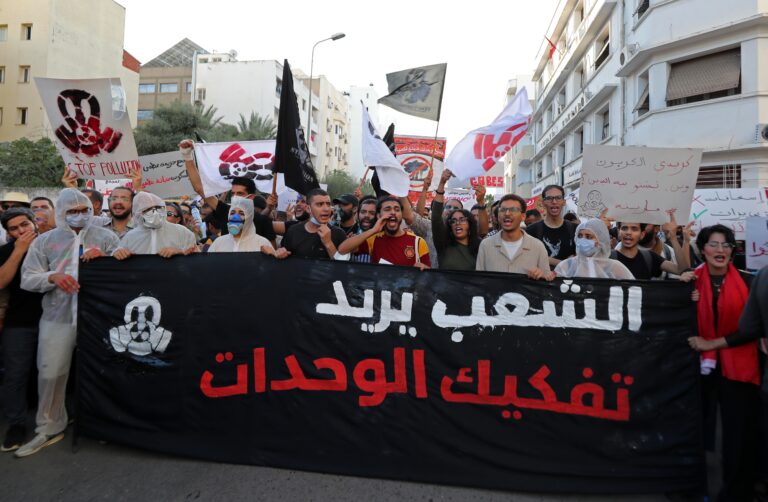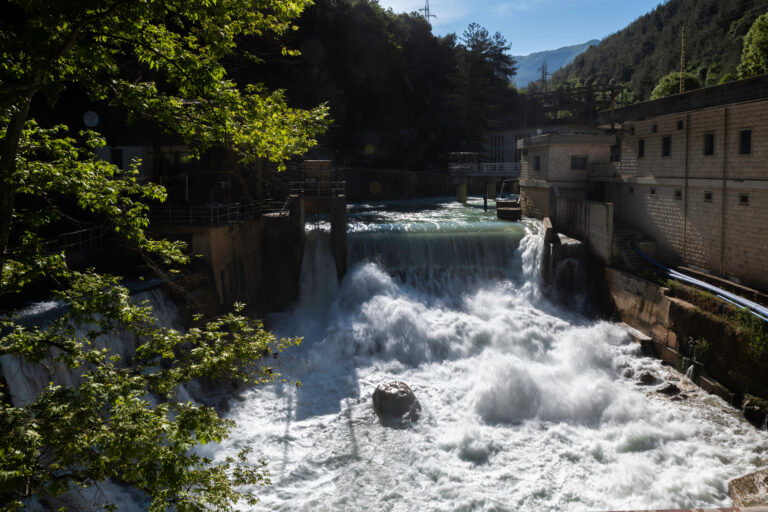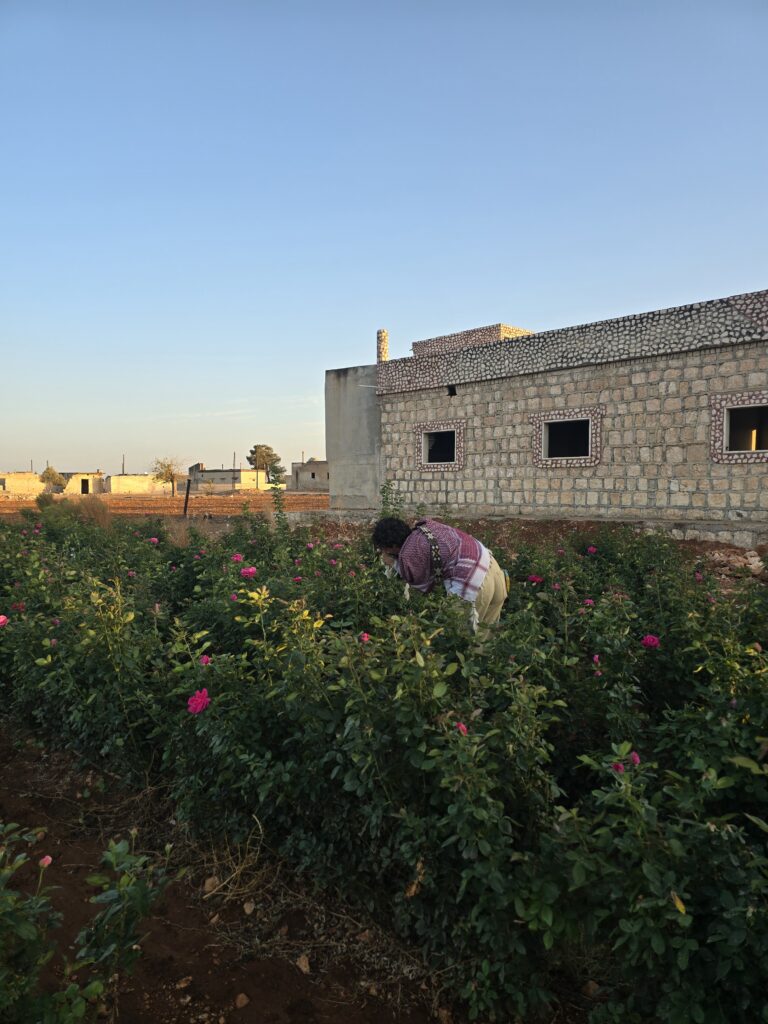

In Tunisia, food and water are inseparable political questions. Water scarcity shapes what farmers can grow, what households can access, and what the state prioritizes. At the same time, agricultural policy, including export-oriented strategies and trade agreements, shapes how land and water are used, who benefits, and who is excluded. This is why ARI is studying food sovereignty and water justice together, and why we treat “fragmented” approaches as part of the problem, not the solution.

The situation today: water scarcity is structural

Tataouine, Tataouine Governorate, Tunisia, by Mahmoud Yahyaoui

  1. Tunisia is already below the internationally used “absolute water scarcity” threshold: total renewable water resources have been estimated at roughly 400 m³ per person per year, placing the country in a chronic scarcity context.
  2. Climate change and prolonged drought have intensified the crisis. Tunisia faced multiple consecutive drought years, and official reporting documents sharply reduced inflows to dams compared to historical averages.
  3. Water stress is not only climatic; it is also infrastructural and institutional. International human rights reporting has pointed to aging networks, lack of maintenance, and high leakage rates as key drivers of recurrent water cuts. In response to extreme shortages, Tunisia introduced overnight supply restrictions (“water curfew”) in 2023.

Why agriculture sits at the center of the water question

Agriculture is where the food–water nexus becomes most visible. A large share of Tunisia’s water withdrawals goes to irrigation, estimates put agriculture at around three-quarters of total withdrawals.

This means debates about food security, farming models, and rural livelihoods cannot be separated from questions of water governance: who gets water, at what cost, with what voice in decision-making, and with what long-term ecological trade-offs.

Jendouba, Jendouba Governorate, Tunisia, Cow eating in a field, by Mahmoud Yahyaoui

What ARI set out to do:

As with our core approach, we worked in close partnership with Tunisian researchers whose work is already deeply embedded in their local contexts, researchers who understand the communities and issues they study, and who combine rigorous analysis with practical engagement on the ground.

This work is designed to do three things:

  1. Document realities in food and water governance through a justice-centered lens, grounded in lived experience.
  2. Make visible the structural drivers, including trade regimes and power imbalances, that shape policy space.
  3. Identify concrete pathways for more equitable, participatory, and ecologically viable governance, aligned with dignity, rights, and long-term resilience.

The publications  

This campaign connects three complementary studies:

  1. Food Sovereignty and the Just Transition in Tunisia - Imen Louati
  2. Toward a Fairer EU–Tunisia Agricultural Partnership - Imen Louati
  3. Thirst for Water Justice in Tunisia - Yasser Souilmi

Food: between “security” and sovereignty

Tunisia’s agricultural policy has long been shaped by an underlying tension: promoting exports (olive oil, dates, citrus, fish) while trying to reduce dependence on imports of staple foods (such as cereals). In practice, this tension has produced vulnerabilities, including exposure to global price volatility, supply disruptions, and deep pressure on public finances.

The question ARI is advancing is not only “how to produce more,” but who controls the food system, whose needs it serves, and whether it can be transformed in a way that is sustainable, equitable, and resilient, especially as climate impacts accelerate.

In this episode of our podcast series. ‘Environmental Jalsa”, journalist Chrystine Mhanna discusses Food Sovereignty in the MENA region with ARI’s Non-resident senior fellow, Dr.Julia Choucair and featured author Imen Louati.

Water justice: beyond scarcity

ARI’s water justice work argues that Tunisia’s water crisis cannot be understood as a technical shortage alone. It is shaped by governance choices, unequal distribution, recognition gaps, and barriers to participation, with rural communities, small farmers, and marginalized groups often carrying the heaviest burdens.

This shifts the policy of conversation away from narrow, technocratic fixes and toward equity, accountability, and genuine power-sharing in water governance.

Watch this episode of our latest podcast series, Environmental Jalsa, with featured author Yasser Souilmi about Water Justice and Governance in the MENA region for a deeper dive into this multifaceted issue.

What ARI set out to do

This research series is designed to do three things:

  1. Document realities in food and water governance through a justice-centered lens, grounded in lived experience.
  2. Make visible the structural drivers, including trade regimes and power imbalances, that shape policy space.
  3. Identify concrete pathways for more equitable, participatory, and ecologically viable governance, aligned with dignity, rights, and long-term resilience.

How the research was conducted: starting from the ground

ARI’s approach is built around collaboration with local expertise and accountability to the people most affected by policy choices.

Between April and December 2025, ARI and the authors combined interviews with three participatory convenings designed to refine research questions and validate emerging findings. A farmer-focused roundtable with small-scale farmers, local unions, agricultural development groups, civil society actors, and local media. A national-level consultation with civil society, researchers, unions, and media in the capital Tunis. And finally, a round-table event bringing together practitioners and experts to examine the food–water nexus and its policy implications.


Insights from these discussions directly informed all three publications, including Imen Louati’s analysis of EU–Tunisia agricultural relations. Together, these engagements ensured that the research reflects lived realities, foregrounds community priorities, and situates Tunisia’s food and water challenges within their broader governance and trade contexts.

We welcome your questions and reflections on this work. If you would like to engage further, please feel free to reach out directly to the authors by email.